Boiler Smells Like Burning: Urgent Troubleshooting Guide
Learn how to diagnose and fix a boiler that smells like burning. Quick safety steps, common causes, professional guidelines, and prevention tips to protect your home.


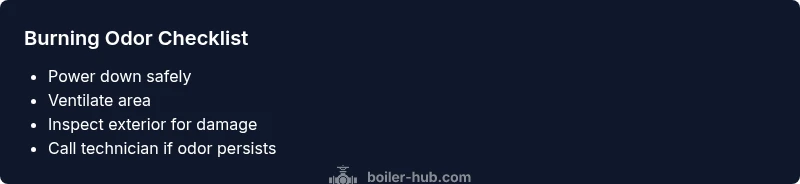
Most burning boiler odors are caused by overheating electrical components or dust burning on heating surfaces. Quick fix: turn the boiler off at the circuit breaker if safe, ventilate the area, and inspect for obvious signs of damage. If the smell persists, shut off power and call a licensed technician immediately.
What the burning smell from a boiler indicates
A burning odor from a boiler can signal several urgent issues. In many homes, the phrase 'boiler smells like burning' describes overheating components, dust on hot surfaces, or insulation that has degraded. Left unaddressed, these odors may progress to a fire risk or system failure. This guide, based on Boiler Hub Analysis, 2026, walks you through immediate actions and long-term fixes. Recognize that any burning smell should be treated as urgent: switch off power if safe and prepare to contact a licensed pro for a thorough inspection.
Immediate safety actions you should take today
First, ensure your safety and the safety of others in the home. If you detect a strong burning odor, evacuate children and pets from the area and open doors to improve ventilation. Do not touch electrical panels or attempt to disassemble the boiler. If you smell gas, leave the area immediately and call the gas emergency number. Once the area is ventilated and you have confirmed no ongoing danger, turn off the boiler at the breaker if you can do so safely and contact a licensed technician.
Common causes of burning odors in boilers
Burning odors can arise from several sources, including accumulated dust on burners, overheated electrical components, degraded insulation, or fuel-related issues. Dust on a hot surface can ignite briefly when the boiler cycles on. Overheating wires or a faulty control board can emit a plastic-like or sulfurous smell. Fuel leaks or improper venting can also create persistent, alarming odors. Understanding these causes helps you prioritize safety and professional help.
How to perform safe, basic inspections
Before touching any boiler components, ensure power and gas supplies are isolated. Check for obvious signs like charring on wiring, melted insulation, or loose wiring at connections. Look for soot near the burner or flue. While you can wipe away dust from accessible surfaces, do not attempt to disassemble heat exchangers or gas valves. If you notice any swelling, corrosion, or oil staining, stop and seek professional service immediately.
Diagnosing whether the smell is from dust, electrical, or fuel issues
A systematic approach helps you differentiate likely causes. If the odor intensifies during cold starts or after a long shutdown, dust ignition or burner debris is plausible. If the odor persists during normal operation or comes from electrical panels, seek professional electrical inspection. Gas or oil fuel odors require urgent professional assessment because they indicate potential leaks or misadjusted burners. Always monitor for smoke or unusual heat and act accordingly.
Why you should not ignore a persistent odor
Persistent burning smells may indicate dangerous conditions, including overheated wiring, leaking fuel, or blocked venting. Ignoring them can lead to carbon monoxide buildup, fire hazards, or catastrophic boiler failure. If you cannot pinpoint the source quickly or the odor returns after servicing, stop using the boiler and arrange a follow-up inspection with a qualified technician.
Preventive steps to reduce future burning smells
Regular boiler maintenance reduces the risk of burning odors. Schedule annual inspections, replace air filters, and keep the surrounding area clear of dust and clutter. Ensure proper venting and combustion air supply, and install or test carbon monoxide detectors in every living space near the boiler. Keep a clear log of maintenance tasks and any unusual odors you notice, so you can track patterns over time.
Understanding CO risk and venting safety
A burning smell can accompany hazardous gases. Proper venting and combustion air supply are essential to prevent dangerous CO buildup. If your CO detector alarms, evacuate and call emergency services. Have a professional inspect vent pipes, heat exchangers, and the combustion chamber to ensure safe, code-compliant operation.
Steps
Estimated time: 30-45 minutes
- 1
Ensure safety and power down
Move people away from the boiler area, switch off power at the circuit breaker, and shut off gas valve if you can do so safely. Do not operate or touch controls while the odor persists.
Tip: If you smell gas, evacuate immediately and call the gas emergency line. - 2
Ventilate and inspect from a distance
Open doors/windows to improve air flow. Do a quick visual check from a safe distance for signs of damage, scorch marks, or visible smoke near wiring or the burner area.
Tip: Do not touch hot surfaces; heat exchangers can stay hot for a while after shutdown. - 3
Check for obvious debris or dust
If you can safely reach the exterior, remove loose dust from accessible surfaces using a dry cloth. Do not disassemble components beyond manufacturer guidelines.
Tip: A vacuum with a brush attachment can help remove loose dust around the cabinet housing. - 4
Assess for gas/oil odors and leaks
Do not inspect fuel lines closely. If you detect a strong gas or fuel odor, leave the area and call emergency services. Fuel odors require professional intervention.
Tip: Never use open flames or electrical switches to test for leaks. - 5
Do not reset or restart the boiler yet
Waiting for a professional assessment reduces the risk of ignition or further damage. Resets may mask underlying issues.
Tip: Take photos of any signs of damage to show the technician. - 6
Call a licensed boiler technician
Explain the odor, any accompanying symptoms (smoke, heat, gas smell), and what you checked. Schedule service as soon as possible.
Tip: Ask for a written estimate and verify credentials before appointment. - 7
Await professional diagnosis and follow-up
Do not operate the boiler until a qualified technician confirms safe operation. Follow all safety and maintenance recommendations from the pro.
Tip: Keep CO detectors functional and in required locations.
Diagnosis: Boiler emits a burning odor and possibly heat or smoke
Possible Causes
- highElectrical components overheating or failing insulation
- mediumDust, debris, or insulation burning on hot surfaces
- mediumFuel leak or misadjusted burner causing fumes
Fixes
- easyTurn off the boiler at the circuit breaker (and gas valve if safe). Do not reopen panels.
- easyVentilate area and inspect accessible surfaces for obvious damage or debris
- easyClear dust from accessible components and replace filters if applicable; do not disassemble heat exchanger
- mediumIf no safe fix is evident, contact a licensed boiler technician promptly for inspection and repair
Questions & Answers
What should I do immediately if I notice a burning smell from the boiler?
Shut off power and gas if safe, ventilate, and call a licensed technician. Do not operate the boiler again until inspected.
Shut off power and gas if safe, ventilate, and call a licensed technician.
Is burning odor from a boiler always dangerous?
While not always catastrophic, a burning odor can indicate dangerous conditions such as overheating components or fuel leaks; treat as urgent and seek professional help.
A burning odor can be urgent—seek professional help.
Can I fix a burning smell myself?
Only perform safe, non-invasive checks and do not attempt to repair electrical or fuel systems yourself. Contact a qualified boiler technician for repairs.
Don’t try to repair electrical or fuel systems yourself—call a professional.
How can I prevent this issue in the future?
Schedule annual maintenance, clean dust from accessible parts, and ensure proper venting and CO detectors to reduce odor risks.
Keep up with annual maintenance and CO detectors to prevent odors.
When should I replace my boiler due to odors?
Odors persisting after service or evident wear on critical components may indicate aging equipment requiring replacement.
If odors persist after service, consider replacement.
Should I run the boiler if I smell burning while it's on?
No. If burning odor returns, shut down the device and seek professional inspection immediately.
No—shut it down and call a technician.
Watch Video
Key Points
- Shut off power if safe and seek professional help.
- Ventilate area and inspect carefully but avoid disassembly.
- Persistent odors require prompt professional inspection.
- Maintain annual boiler service to prevent odors.