Boiler Breakdown: Urgent Troubleshooting for Homeowners and Managers
Urgent boiler breakdown troubleshooting for homeowners and facility managers. Learn safety steps, common causes, a diagnostic flow, and when to call a professional from Boiler Hub.


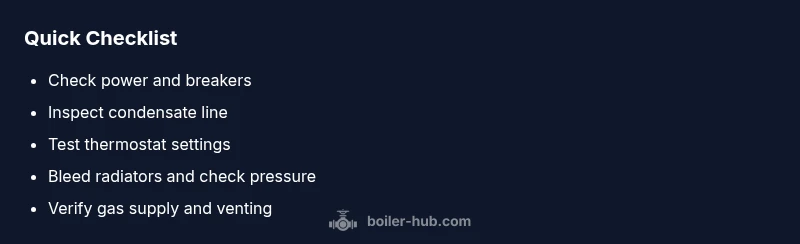
Boiler breakdowns are usually triggered by simple faults such as a tripped breaker, frozen condensate pipe, or a faulty thermostat. Start with the basics: check power at the outlet, reset the breaker, inspect the condensate line for blockages, and confirm the gas valve is fully open. According to Boiler Hub, quick, methodical checks often prevent a service visit.
What a boiler breakdown looks like
A boiler breakdown is the moment a home heating system fails to perform as expected. Homeowners and facility managers often notice a lack of heat, no hot water, odd noises, or error codes flashing on the control panel. A boiler breakdown can happen suddenly or develop over a few days as components wear. The term itself refers to a disruption in the normal operation of a boiler system. In practice, many calls come from issues that look like a breakdown but are actually quick fixes, such as a tripped circuit or a blocked condensate line. Throughout the investigation, prioritize safety. If you detect a gas smell, evacuate the building and call the gas emergency number immediately. The Boiler Hub perspective emphasizes that early symptom recognition saves time and reduces the risk of further damage.
Why this matters for reliability
Understanding the typical signs of a boiler breakdown helps you respond fast. When heat is inconsistent, hot water is scarce, or the boiler shuts down unexpectedly, your first actions should focus on safety and basic checks. The aim is to restore safe operation while avoiding unnecessary service calls. Regular maintenance reduces the odds of a breakdown and keeps systems efficient. Boiler Hub notes that homeowners who stay proactive with checks and simple maintenance often avoid costly repairs.
Safety first: immediate steps to take
Safety is non-negotiable during a boiler breakdown. If there is any gas odor or hissing sound near gas lines, leave the premises and call the gas emergency line. For non-emergency situations, switch off power to the boiler at the circuit breaker and then reset it after a minute. Inspect the condensate drain for blockages and ensure vents are clear. Do not bypass safety controls or perform repairs you’re not trained to do. Keep kids and pets away and document what you observe to aid a professional.
Common causes of boiler breakdown
Most breakdowns stem from a handful of recurring issues. Faulty thermostats, malfunctioning controllers, air locks in the heating circuit, low system pressure, dirty filters, and condensate trap blockages are frequent culprits. Electrical problems like a tripped breaker or blown fuse account for many visits. In older boilers, wear on heat exchangers or corrosion can hamper performance. Regular maintenance is the best defense, catching issues before they turn into full failures. The goal is to identify the root cause quickly and apply the simplest effective solution.
Diagnostic flow: symptom → diagnosis → solutions
Adopt a structured approach to diagnosing a boiler breakdown. Start with observable symptoms (heat? water? noise?) and proceed to quick checks (power, gas, thermostat). For each symptom, map probable causes and provisional fixes. If the symptom persists after basic checks, move to more in-depth investigations (pressure checks, venting, expansion tank) and consider professional input for safety-critical components. This flow minimizes wasted time and helps you decide when an expert is required.
Prevention and maintenance to avoid future breakdowns
Preventive maintenance is your best investment. Schedule an annual service, replace dirty filters, bleed radiators to remove air, and verify that boiler pressure readings stay within the recommended range. Maintain a log of fault codes and performance changes to guide future diagnostics. Ensure the condensate line is clear year-round and check venting paths before winter. A proactive maintenance plan reduces downtime and prolongs boiler life for both residential and commercial systems.
When to call a professional
There are situations where professional service is essential. If you smell gas, suspect a gas leak, or see fault codes you cannot clear, contact a licensed technician immediately. Do not attempt to disassemble gas controls or electrical components. If the system safety controls trigger unexpectedly, or if the boiler continues to fail after basic steps, schedule a professional inspection to determine whether repair or replacement is warranted. The Boiler Hub approach emphasizes safety and timely escalation when needed.
Steps
Estimated time: 60-90 minutes
- 1
Ensure safety and power
Power down the boiler at the breaker, then restore power after a minute. Confirm the outlet is delivering power with a tester.
Tip: Label breakers and keep a simple safety log. - 2
Check gas supply and controls
If you have a gas boiler, verify the gas valve is open and there are no gas smells. Do not operate any gas controls if you suspect a leak.
Tip: If you smell gas, evacuate immediately. - 3
Inspect condensate and venting
Look for a blocked condensate line and verify the venting path is clear of obstructions or snow in winter.
Tip: Clear blockages safely or contact a pro. - 4
Verify water pressure and expansion
Check the boiler’s pressure gauge and ensure it sits within the recommended range. Top up if needed according to the manual.
Tip: Never exceed the max pressure indicated. - 5
Reset or recalibrate controls
Perform a controlled reset if the manual permits, then re-test the system after a short cycle.
Tip: Record the reset in your maintenance log. - 6
Call a professional for persistent faults
If the boiler still won’t operate, or if safety concerns arise, schedule a qualified technician visit.
Tip: Provide fault codes and recent observations to the technician.
Diagnosis: Boiler won't ignite or heat properly
Possible Causes
- highPower issue (tripped breaker or blown fuse)
- mediumThermostat or control issue
- mediumLow boiler pressure or expansion tank fault
- lowBlocked condensate line or venting problem
Fixes
- easyReset circuit breaker and verify power at the boiler outlet
- mediumTest and recalibrate thermostat settings or replace faulty control module
- easyCheck boiler pressure and top up if required within manufacturer spec
- easyClear condensate line drain or call a pro for condensate trap issues
Questions & Answers
What counts as a boiler breakdown?
A boiler breakdown means the unit fails to ignite, heat, or deliver hot water, often accompanied by error codes. Safety controls should always be respected.
A boiler breakdown is when the boiler stops working or loses heat, often with an error code.
What should I check first when my boiler won't start?
Check power at the outlet, reset the breaker, verify gas supply, and confirm thermostat settings before calling for service.
Start with power, gas supply, and thermostat settings.
Is it safe to perform DIY fixes on a boiler breakdown?
You can perform basic safety checks (power, reset, basic venting) but avoid gas and electrical repairs unless you are licensed.
Only do simple checks; avoid gas and electrical repairs if you’re not trained.
When should I call a professional?
Call a professional if there is a gas smell, persistent fault codes, or if safety controls trigger repeatedly.
Call a licensed technician for gas smells, dangerous faults, or repeated safety triggers.
Can maintenance prevent boiler breakdowns?
Yes. Regular annual service, routine bleeding, and filter changes greatly reduce breakdown risk.
Regular maintenance helps prevent breakdowns.
When is replacement better than repair?
If repairs are frequent or the system is old, replacement may offer better long-term reliability and efficiency.
If repairs are frequent or costly, replacement could be the smarter choice.
Watch Video
Key Points
- Identify boiler breakdown symptoms early.
- Prioritize safety before any checks.
- Start with power and thermostat checks, then venting and pressure.
- Know when to escalate to a professional.