Buderus Boiler Repair: A Practical Troubleshooting Guide
A comprehensive Buderus boiler repair guide with step-by-step troubleshooting, safety tips, and maintenance strategies from Boiler Hub. Learn diagnostics, common issues, and when to call a pro.


This guide helps homeowners diagnose, troubleshoot, and safely repair common Buderus boiler issues. You’ll learn how to interpret error codes, assess ignition and combustion, verify pressure and temperature settings, and perform basic maintenance. The guide also covers essential safety precautions, required tools, and clear guidelines on when professional service is necessary.
Understanding Buderus boilers and common failure points
Buderus boilers are known for their durable cast-iron or steel heat exchangers and reliable controls, but like any complex heating system, they require regular attention. In many homes, the most frequent Buderus boiler repair needs relate to ignition problems, pressure fluctuations, circulation issues, and occasional sensor faults. The Boiler Hub team emphasizes that a solid diagnostic plan starts with knowing your model and its key components: burner assembly, heat exchanger, circulation pump, pressure relief valve, condensate line (for high-efficiency condensing models), and the control board. By mapping symptoms to these components, you can quickly identify whether the issue is electrical, mechanical, or related to the gas supply. Remember: even when issues seem small, incorrect repairs can compromise efficiency and safety. This is why a methodical approach—combined with adherence to Buderus guidelines—is essential for successful Buderus boiler repair. Throughout this article, we reference industry best practices and safety standards to help homeowners and facility managers work confidently. According to Boiler Hub, Buderus boiler repair requires careful safety planning and manufacturer-recommended practices to avoid hazardous results.
Diagnosing common Buderus boiler problems
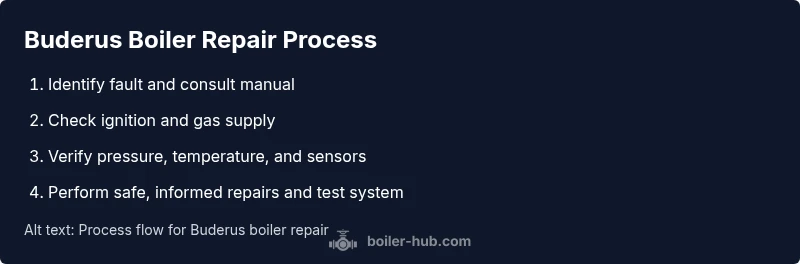
When Buderus boilers display error codes or exhibit abnormal behavior, start with a structured diagnostic checklist. First, consult the operation manual or Buderus digital resources to interpret the error code displayed on the control panel. Common signs include failure to ignite, frequent lockouts, roaring flames, uneven heating, or sudden pressure drops. Verify basics: power supply, fuses, and the thermostat signal. Then inspect the burner assembly for obstructions, the ignition electrode for wear, and the flame sensor for fouling. Check the boiler pressure using the built-in gauge; Buderus models typically run within a specific range and will show a lockout if pressure is too high or too low. Examine the circulator pump for unusual noises or sluggish flow. Don’t overlook the condensate trap and venting system, particularly on newer, high-efficiency models, as condensate buildup or vent restrictions can trigger faults. If you encounter an error code, write it down, clear it if instructed, and re-test after a short interval to confirm the issue. Boiler Hub analysis indicates that systematic diagnosis reduces unnecessary repairs and improves repair outcomes (Boiler Hub Analysis, 2026).
Safety considerations when repairing Buderus boilers
Safety is non-negotiable when dealing with gas-fired boilers. Always power down the boiler and disconnect the power supply before any inspection. If you smell gas or hear a hissing sound, leave the area immediately and contact the gas utility or a certified technician. Wear appropriate PPE: safety glasses, gloves, and non-slip footwear. Ensure proper ventilation in the boiler room, keep combustibles away, and never bypass safety devices like the pressure relief valve or the gas shutoff. Use a gas leak detector to verify there are no leaks before and after any work. Install and maintain working CO detectors in the dwelling, especially near sleeping areas. When testing electrical components, ensure the boiler is de-energized and use an insulated toolset. If you’re uncertain about a repair, consult the Buderus service guidelines and consider engaging a licensed professional to avoid dangerous mistakes.
Tools and safety prerequisites for Buderus boiler repair
Before you start, assemble the essential tools and confirm you have the right safety gear. Having a clean, organized workspace reduces the risk of accidental damage. The tools and materials listed in the dedicated block cover the basics for most Buderus boiler repairs, including basic hand tools, testing devices, and replacement parts. Always verify that your work area has adequate lighting and ventilation. If you encounter unfamiliar components or unfamiliar gas piping, stop and call a licensed professional. Remember: ongoing maintenance and safety checks help prevent costly repairs and keep your Buderus boiler performing efficiently.
Common repair pathways for Buderus boiler repair
Most Buderus boiler repair scenarios fall into a few common pathways: ignition and flame quality adjustments, pressure and temperature regulation, fault code clearing and sensor replacement, and control-board reinitialization or replacement. For ignition issues, check the spark electrode, clean the flame sensor, and ensure the gas valve operates correctly. For pressure-related faults, verify the expansion vessel's charge (if applicable) and the pressure relief valve, and ensure the system is properly bled. Sensor faults may require cleaning or replacing the temperature and pressure sensors. If the control board shows persistent errors, a software update or module replacement may be needed. Always test after each adjustment to confirm stability and safe operation.
When to call a professional and how to choose one
There are several scenarios where professional Buderus boiler repair is advisable: persistent ignition failures, gas odor or alarm activation, recurrent lockouts, or significant pressure and temperature irregularities. Look for licensed technicians with Buderus certification or strong experience with boiler brands similar to Buderus. Request a written assessment and a transparent estimate before any work begins. Check for warranty coverage on parts and labor and confirm the technician’s ability to handle venting and gas safety regulations in your area. A qualified pro can diagnose hidden issues that DIY steps might miss, preventing future breakdowns and ensuring compliance with local codes.
Preventive maintenance and long-term care for Buderus boilers
Prevention is the best cure for many Buderus boiler problems. Establish a routine maintenance schedule that includes annual professional service, seasonal checks of gas connections, venting, and ignition timing. Regularly inspect the condensate drain, pressure relief valve operation, and aquastat settings. Periodically test safety devices, including CO detectors and low-water cutoffs, and replace worn gaskets and seals to prevent leaks. Clean the boiler exterior and verify insulation on pipes to minimize heat loss. Keeping a service log with dates, parts replaced, and readings helps track wear patterns and plan proactive replacements. By prioritizing maintenance, homeowners and facility managers reduce downtime, extend boiler life, and maintain energy efficiency.
Documentation, records, and long-term follow-up
Finally, document every Buderus boiler repair task with clear notes: fault codes observed, parts replaced, settings adjusted, and the technician’s recommendations. Maintain receipts and warranty information in a dedicated binder or digital folder. Track service intervals and set reminders for annual inspections. This documentation supports future repairs and may assist when coordinating with property managers or insurance providers. A well-kept history also helps technicians quickly assess prior fixes and plan effective Buderus boiler repair without repeating unnecessary steps.
Tools & Materials
- Phillips head screwdriver(Size #2 for most Buderus panels)
- Flathead screwdriver(For adjusting trims and covers)
- Nut drivers set(Covering 1/4" to 3/8" hex nuts)
- Adjustable wrench(Gas lines and fittings)
- Pliers (needle-nose)(Small clamps and connectors)
- Multimeter (digital)(For electrical checks and safety isolation)
- Gas leak detector(Identify leaks before work)
- Soap solution spray(Bubble test for gas leaks)
- Torque wrench(Ensure proper gas line torque if required)
- Thermometer/temperature probe(Check return water temperature)
- Pressure gauge (hand-held)(Cross-check system pressure)
- Replacement gaskets or O-rings(From Buderus parts list if available)
- Soft-bristle brush or cloth(Clean sensor and igniter gently)
- Vacuum with nozzle attachment(Clean ash and dust around components)
- Safety glasses(Eye protection)
- Heat-resistant gloves(Protection when handling hot parts)
- CO detector (local to boiler room)(Immediate alert in case of elevated CO)
Steps
Estimated time: 45-60 minutes
- 1
Power down and safety check
Turn off the boiler at the service switch and disconnect power. If you must work near live electrical components, use insulated tools and verify there's no voltage with a multimeter. Confirm gas supply is shut off if any gas line access is involved. This prevents shock, fire, or gas exposure during the repair.
Tip: Always double-check the power is disconnected and the gas line is shut before touching any internal components. - 2
Inspect ignition and flame sensor
Locate the ignition electrode and flame sensor. Gently clean any carbon buildup with a soft brush or alcohol wipe. If the flame sensor is heavily corroded, replacement may be required. Re-seat connections, ensuring no loose contacts.
Tip: Do not scrub aggressively; use a light touch to avoid damaging the sensor. - 3
Check burner and gas components
Inspect the burner for debris and proper alignment. Ensure the gas valve fully opens and there are no obstructions in the gas line. If a gas odor is detected, stop immediately and contact the utility or a licensed tech.
Tip: Use a gas leak detector before re-pressurizing the line and testing. - 4
Test and adjust pressure/temperature
Check the system pressure with the built-in gauge and compare against the recommended range for your Buderus model. Adjust if within safe limits by following the manufacturer instructions and using the expansion vessel if present. Record readings for future reference.
Tip: Avoid over-pressurizing; small adjustments can prevent leaks and component wear. - 5
Reset fault codes and run a test
If the boiler displayed an error, clear the code per the manual and run a short test cycle. Observe flame color, sound, and cycling behavior. If faults recur, document the pattern and consult a professional.
Tip: Take notes of the exact codes and sequence to speed up diagnosis. - 6
Final safety check and restart
Reconnect power, light the burner according to the manual, and monitor pressure, temperature, and outlet water temperature. Verify there are no leaks and that CO detectors register normal levels. Schedule a professional service if any abnormal readings appear.
Tip: Do a final walk-around to ensure all tools are cleared and panels replaced securely.
Questions & Answers
Can I repair a Buderus boiler myself?
DIY repairs are possible for simple maintenance or non-critical issues, but gas, ignition, and venting work should be performed by a licensed technician. Incorrect repairs can create safety hazards or void warranties.
DIY repairs are limited to basic maintenance. For ignition, gas, or venting problems, hire a licensed technician.
What are common signs that I need professional Buderus boiler repair?
Persistent flame failure, gas odors, frequent lockouts, erratic pressure, or boiler not turning on after several attempts are signals to call a pro. These issues may involve gas safety or internal controls.
If you see repeated flame failures or a gas smell, call a pro. These can indicate serious safety concerns.
How often should a Buderus boiler be serviced?
Annual professional service is generally recommended to keep Buderus boilers operating safely and efficiently. Regular checks can catch wear before failures occur.
Most Buderus boilers benefit from yearly professional service to stay in top condition.
What should I do if the boiler shows error codes I don’t recognize?
Note the code and consult the Buderus manual or official resources. If the code persists, contact a qualified technician who can interpret it in the context of your model.
If you see an unfamiliar error, write it down and consult the manual or a professional.
Is it safe to reset a Buderus boiler after a fault?
Resetting can clear transient faults, but persistent faults require diagnosis. Always follow the manual and if in doubt, consult a pro before resetting.
Reset only if the manual allows it, and seek professional help for recurring faults.
What maintenance steps help prevent Buderus boiler problems?
Regularly check pressure, venting, and safety devices; keep the condensate trap clear; inspect seals and gaskets; and schedule annual professional service.
Keep up with annual service and simple checks like pressure and venting to prevent issues.
Watch Video
Key Points
- Always power down and verify gas safety before work
- Diagnose using error codes and system readings first
- Use manufacturer-recommended parts and procedures
- Know when to call a professional for gas and ignition issues
- Document maintenance to support future Buderus boiler repair