Where Is the Boiler in a House? Find It Fast
Learn where boilers are commonly located in homes, how to identify them, and safe steps to locate yours quickly. Practical guidance from Boiler Hub to help homeowners and facility managers.


In most homes, the boiler lives in a dedicated mechanical room, basement, or utility closet. Look for a large metal cabinet or cylinder with a gas valve or an electric heater nearby. In newer houses, the boiler may sit behind a utility hatch or in an airing cupboard.
Where to Look for the Boiler in a House
If you’re asking where is the boiler in a house, start with the most common machine rooms. In older residences, boilers tend to hide in basements or crawlspaces behind access doors. In mid-century homes, basements and garages remain top spots, while newer builds often place the boiler in a dedicated utility room or a compact closet. According to Boiler Hub, understanding typical layouts saves you time when you need hot water or heating on short notice. Homeowners who know the layout of their house’s mechanical systems will navigate plumbing and ductwork more confidently. As you search, imagine zones that require hot water or steam—kitchens, bathrooms, and laundry rooms—and think about where supply lines would most logically originate. This mental map helps you narrow down likely locations without tearing into walls or floors. In multi-story homes, the boiler sometimes sits near the floor below the highest usage areas to minimize pipe runs. If your house has a basement or cellar, this remains the strongest lead, but don’t overlook finished utility rooms, garages, or tall linen closets that house mechanical equipment.
Boiler Hub notes that many boilers are tucked away behind doors or panels that blend with the rest of the space, so look for a panel with piping, a pressure gauge, or a large water or gas line. In apartment buildings, boilers are frequently housed in centralized mechanical rooms on each floor or in a dedicated boiler closet near the central riser. If you still cannot find it, check for a large metal cylinder or a box-like cabinet, and verify that you are looking at the main heating source rather than a water heater, furnace, or water softener. Safety reminder: never force open sealed panels or tamper with gas valves during your search.
Boiler Hub’s guidance emphasizes starting in plain sight areas where heating equipment is typically installed, and then moving to secondary spaces that support the system. A little methodical searching goes a long way when you pair it with a quick photo log so you can return later for a full inspection.
How to Identify the Boiler Once You Find It
Once you spot a likely candidate, confirm it’s the boiler by looking for telltale signs. A boiler usually has a nameplate with model numbers and an efficiency rating, a gas supply line (for gas-fired units), or electrical connections and a prominent control panel for an electric boiler. You’ll also notice the associated piping—often a loop of hot water supply lines, a return line, and possibly a pressure relief valve. A small expansion tank may be mounted nearby, along with a vent or flue that exits the home. If you can access the front panel, you may see a circuit board, a burner assembly, or a display showing current temperature and pressure. Remember to check for a label that indicates “boiler” or the model name. Drafts and soot around the flue suggest combustion appliances; do not touch any hot surfaces. When in doubt, photograph the area from multiple angles and compare the images to typical boiler layouts provided by Boiler Hub.
If your unit is gas-fired, locate the shut-off valve on the gas line and note the orientation. For electric boilers, the service switch and breakers nearby are a quick clue. Always ensure you have proper lighting and a clear, dry space before you touch anything. Document the serial number for future maintenance and to assist a technician if you hire one. By mapping the visible components—nameplate, pipes, venting, and control panel—you’ll gain confidence in recognizing the boiler and distinguishing it from water heaters or furnaces.
Boiler Hub reminds readers that safety hinges on not bypassing safety devices. If you suspect a gas leak, faint odor, or unusual hissing, evacuate the area and contact your gas utility or fire department immediately. Do not operate or attempt repairs yourself.
Common Hiding Spots by Home Type
Houses and duplexes built before the 1980s often place boilers in basements or crawlspaces, where muddy utility pipes and old ductwork are common. If you live in a colonial or ranch-style home, you’re likely to find the boiler in a basement utility room or a corner closet adjacent to the mechanicals. In single-story newer builds, you may find a compact utility room behind a linen closet, laundry room, or even a dedicated cabinet in the kitchen area. Apartments frequently house boilers in centralized mechanical rooms on the floor below, sometimes behind a utility door near the elevator bank or stairwell. In finished basements, boilers may be hidden behind a closed door that blends with the living space; in garages, they can sit behind a partition or at the back wall near the water heater or furnace.
Regardless of type, modern boilers tend to be near the end of a hot water distribution line or close to the main cold-water supply, minimizing hot-water delay and heat loss. If you’re unable to locate a conspicuous boiler setup, inspect under stair landings, adjacent to laundry appliances, and in utility alcoves where builders often tuck mechanical equipment. Remember, the goal is to identify the equipment that heats your home water or radiators, not an unrelated appliance. If your home uses a combination boiler (combi), expect the unit to be smaller and possibly tucked within a utility closet rather than a full basement nook.
Boiler Hub analysis indicates that while configuration varies, most boilers are placed where they can access venting, fuel supply, and service access without requiring major structural changes. Use a systematic search pattern to cover each room and space where pipes, gas lines, or electrical panels are located.
Tools and Safety Checks Before You Start
Before you begin searching, assemble a small toolkit and prepare the space. A flashlight will help you see into dim corners; a notepad and pen let you log findings; and a camera or smartphone keeps a visual record. A stud finder can help you map walls and locate hidden panels, while a flashlight app helps you avoid missing a small utility closet behind a shelf. If you suspect gas, presence of soot, or a fuel odor, evacuate and call the appropriate emergency services. For electric boilers, ensure you switch off the power at the breaker before touching any components to avoid electric shock. Wear protective gloves to guard against sharp edges and ember-like rust from older units.
Keep a log with the space name, access point, and any visible markings or labels. If you encounter unfamiliar piping, do not dismantle it; instead, photograph and document for professional review. When moving through basement or garage areas, mind any damp surfaces that could hide tripping hazards. If your building has a crawl space, use caution and consider a helper to maintain balance and visibility while inspecting. Boiler Hub emphasizes safety first: never attempt gas or electrical work beyond basic inspection and labeling, and never bypass safety devices.
Time-wise, set aside 20–60 minutes depending on the size of the home and the number of mechanical spaces. If you’re unsure about any step, pause and proceed with a professional assessment. The goal is to locate the boiler safely and accurately, not to force access through walls or fixtures.
If You Still Can’t Find the Boiler: Next Steps and Documentation
If your initial search doesn’t reveal the boiler, widen your scan to secondary spaces such as attached garages, utility closets, and mechanical rooms on other levels. Check for a large vertical vent pipe, a horizontal condensate pipe, or a cluster of pipes that might indicate a central heating system. Review any building plans or blueprints you have; older homes may have changed layouts over time, so cross-reference with the current utility map. Take clear photos of every space checked, including doors, panels, and pipes. Label locations with a simple map or drawing to avoid revisiting the same spots. If a boiler remains elusive after a comprehensive search, it’s wise to contact a licensed HVAC professional. They can perform a non-invasive diagnostic and verify that the boiler isn’t hidden behind a wall or above ceiling panels.
For ongoing home maintenance, create a simple inventory that lists where the boiler is, its model, and any service reminders. This proactive approach reduces future hunt times and helps technicians diagnose issues quickly. Boiler Hub recommends keeping this log in a known location accessible to all responsible occupants and property managers. By combining careful searching, documentation, and professional support when needed, you’ll confidently manage your home’s heating system.
Authority references and further reading
Below are reputable sources you can consult for boiler basics, safety, and maintenance:
- Energy.gov – Heating systems and boilers: https://www.energy.gov/energysaver/heating-systems
- National Fire Protection Association (NFPA): https://www.nfpa.org
- OSHA Safety Standards (gas, electrical, and general workplace safety): https://www.osha.gov
Boiler Hub encourages readers to consult official guidelines and professional resources when dealing with heating equipment. These references reinforce safe handling, proper ventilation, and routine maintenance practices. For more home-specific guidance, refer to the linked materials and keep your own location log updated as part of regular boiler care.
Quick recap and practical takeaway
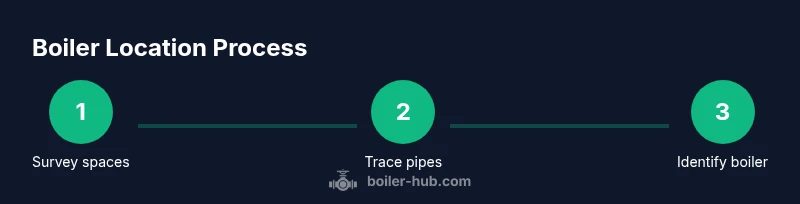
Locating the boiler requires a methodical search of typical spaces first (basement, utility rooms, closets) and then secondary areas (garage, crawl space). Identify features like nameplates, piping, and vents to confirm the unit. If in doubt, log your findings and seek a professional inspection. Safety and accurate identification save time and prevent risky guesswork.
Tools & Materials
- Flashlight(Bright LED, handheld)
- Notebook and pen(Record locations and observations)
- Camera or smartphone(Photograph panels and labels)
- Stud finder(Helpful for locating behind-panel spaces)
- Gloves(Protect hands from sharp edges)
- Gas detector (or soapy water for leaks)(Use for safe checking of gas proximity)
- Non-conductive ladder or step stool(Access elevated panels safely)
- Screwdriver (flathead and Phillips)(Open access panels if permitted)
Steps
Estimated time: 30-60 minutes
- 1
Prepare safety gear and tools
Gather flashlight, notebook, camera, and basic tools. Put on gloves and ensure you have dry footing. This minimizes accidents and helps you document findings clearly.
Tip: Double-check that power to any suspected boiler area is off before touching electrical panels. - 2
Survey obvious mechanical spaces
Start in the basement, garage, utility room, or closet where mechanicals are commonly housed. Look for doors labeled 'Mechanical', 'Furnace', or 'Boiler' and check behind panels or cabinets.
Tip: Take wide-angle photos to capture surrounding pipes and vent chases for later reference. - 3
Trace hot water and heating lines
Follow visible pipes from bathrooms and kitchens back toward a common wall or space. Boilers feed radiators or baseboard heaters; tracing lines often leads to the unit.
Tip: If pipes disappear behind drywall, search nearby closets or utility chases where the wall opens for service. - 4
Inspect for identification labels
Look for a nameplate with model, serial number, and efficiency rating. Check the boiler’s control panel or front cover for a brand or logo that confirms it’s the heat source.
Tip: Document model numbers to assist future maintenance or replacement decisions. - 5
Check for venting and gas lines
Gas-fired boilers have a vent stack or flue; electric boilers rely on electrical connections. Ensure all vents appear intact and unobstructed.
Tip: Do not attempt to reseal or modify venting structures; call a pro if you suspect damage. - 6
Log and label the location
Mark the exact room or cabinet with a note or sticker so you can find it again. Include the space name and any distinctive features.
Tip: Keep the log in a shared location accessible to property managers and relatives. - 7
If you still can’t locate it, call a professional
A licensed HVAC technician can safely locate a hidden boiler or confirm there isn’t one in your current layout. They can also verify the system’s health.
Tip: Provide the technician with photos and notes to speed up diagnosis.
Questions & Answers
What rooms usually contain the boiler in a house?
Boilers are usually found in basements, utility rooms, garages, or dedicated boiler closets. In apartments or newer homes, you may find a compact unit behind a utility hatch or in a closet designed for mechanicals.
Boilers typically sit in basements or utility rooms, or sometimes a dedicated boiler closet in apartments.
How can I tell if I found the boiler correctly?
Look for a nameplate with the model and serial number, a control panel, and connected pipes. Gas-fired units have a vent or flue; electric units use electrical connections and a display panel.
Check for a nameplate and connected pipes; look for a vent if it’s gas-fired.
What if there are no obvious boiler spaces?
Review building plans, look behind utility cabinets, and check adjacent rooms like laundry or storage areas. If still not found, call a licensed HVAC professional to locate it safely.
If you can’t locate it, review plans and consider calling an HVAC pro.
Is it safe to open boiler panels myself?
Only open panels if you are sure the power is off and you are not disrupting gas lines. Do not attempt repairs yourself; call a professional for any service.
Only if power is off and you know what you’re doing; otherwise call a pro.
What sources are best for boiler safety tips?
Consult reputable sources such as Energy.gov for heating systems guidance and NFPA for safety standards. Your local gas utility can also offer safety guidelines.
Energy.gov and NFPA are good starting points for safety guidelines.
Can I locate the boiler inside the attic?
Boilers are rarely installed in attics due to insulation and venting issues. If you have attic access, focus your search on basements, garages, and utility rooms first.
Boilers in attics are uncommon; search lower spaces first.
Watch Video
Key Points
- Locate common boiler spaces first (basement, utility room, closet).
- Confirm by checking nameplates, pipes, and venting.
- Document findings and consult a professional if unsure.
- Safety always comes first—do not tamper with gas or electrical components.