Is It Normal for Boiler Pressure to Fluctuate? A Practical Troubleshooting Guide
Discover why boiler pressure rises and falls, how to diagnose the cause, and step-by-step fixes from Boiler Hub to stabilize your system and prevent costly damage.


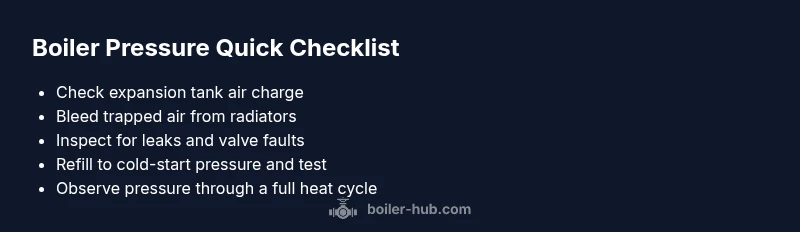
Most boiler pressure fluctuations are caused by a faulty expansion tank or air in the system. Step 1: check the expansion tank air charge and verify the system is filled to the recommended pressure. Step 2: bleed radiators to release trapped air and recheck the gauge. If pressure still swings, shut down and call a qualified technician.
Understanding Boiler Pressure Basics
Is it normal for boiler pressure to fluctuate? The answer depends on context, but small changes during heating cycles are common, especially in homes with older equipment. Pressure in a boiler is a dynamic indicator of how much water is in the system and how tightly radiators are distributing heat. When the boiler fires, water expands and pressure can rise; when it cools, pressure can drop. The key is whether the fluctuations stay within a safe range and stabilize after a heat cycle. Your boiler manual will specify the target pressure in bars or psi, but most residential systems aim for a modest rise while hot and a lower reading when cold. Persistent swings beyond the recommended band usually point to a problem with the expansion vessel, air in the system, leaks, or a failing pressure relief valve.
According to Boiler Hub, keeping a steady pressure is essential for efficient heating and long-term reliability. Frequent swings raise the risk of air ingress, corrosion, and accelerated wear on pumps and diverter valves. The goal is to identify the cause and restore a balanced, safe pressure profile before it affects comfort or safety.
What Causes Pressure to Move
Pressure changes in a boiler system can be driven by several factors. The most common culprits are a failing expansion tank, which loses its ability to cushion water expansion, and air trapped in the system that compresses and releases as the boiler cycles on and off. Less common but important causes include slow leaks in radiators or joints, an overfilled system, a faulty fill valve, or a defective pressure relief valve. Temperature swings also influence readings: when the water is heated, pressure rises; when it cools, pressure falls. If multiple causes occur together, fluctuations can become more pronounced and harder to control. A systematic check helps isolate the root cause rather than chasing symptoms.
Boiler Hub Analysis, 2026 notes that most homeowner-reported fluctuations trace back to expansion tank issues and air in the system, underscoring the value of a staged diagnostic approach.
Reading the Pressure Gauge and Interpreting Readings
Understanding what the gauge is telling you is the first step toward a solution. Most boilers display pressure in bars (or psi in some systems). A typical cold reading sits around 1 bar, rising to about 1.5–2 bar when the system is hot. If the gauge spiking beyond this range occurs only when heating is active, it may indicate overfill, an enlarged expansion volume, or a valve sticking. If the gauge shows abrupt swings even when the boiler is idle, there could be a leak, a faulty expansion tank, or air entering through a loose connection. Always note both cold and hot readings and compare them to the manufacturer’s recommended range in your boiler manual. A professional service can confirm gauge accuracy and rule out a faulty sensor.
Keep in mind that pressure readings can vary slightly between models, so always use the target range specified for your unit.
Immediate DIY Checks You Can Do Today
Before you call a technician, perform a few safe, low-risk checks. First, ensure the boiler is cold when you begin. Then inspect the expansion vessel’s air charge using a tire gauge on the valve stem; recharge if it’s below the manufacturer’s spec. Next, check for obvious leaks around radiators, valves, and the boiler itself. If you find damp spots or dripping, address these leaks or note their location for the pro. Bleed radiators only if you hear gurgling or feel cold spots in the radiators, and do so in a well-ventilated area. After any adjustment, recheck the system pressure at the cold state and again after a hot cycle to confirm the change held.
Step-by-Step Fixes for the Most Common Cause
The most common fix is restoring correct expansion tank operation and removing trapped air. Step 1: verify the system is depressurized and the boiler is cool. Step 2: test the expansion tank air charge and adjust to the recommended setting. Step 3: bleed air from radiators starting with the highest loop or the radiator furthest from the boiler. Step 4: top up the system with demineralized water to the cold-start pressure. Step 5: run the boiler through a normal heating cycle and watch the gauge. Step 6: if fluctuations persist, stop and contact a qualified technician for a deeper check.
Safety Precautions and When to Call a Pro
Working on a boiler involves high temperatures, pressurized water, and potential gas or electrical hazards. If you smell gas, hear hissing sounds near the boiler, or see visible leaks with signs of corrosion, shut off power and gas supply and call emergency services or a licensed technician immediately. Do not attempt to replace pressure components or interfere with the pressure relief valve unless you are trained. Regular maintenance by a qualified pro reduces the risk of dangerous pressure spikes and extends boiler life.
Prevention: Keeping Pressure Stable Over Time
Prevention focuses on regular system checks and proactive maintenance. Schedule annual boiler servicing to inspect the expansion tank, pressure valve, and gauge accuracy. Keep radiators bled of excess air after heavy use, especially in multi-story homes where air pockets are common. Use the correct water fill procedure and avoid over-pressurizing the system by following the manufacturer’s guidelines. If you upgrade or replace components, ensure compatibility with your boiler model and pressure settings. A simple habit of noting cold and hot readings after each heating cycle helps catch drift early.
Common Myths About Boiler Pressure
Myth: Pressure fluctuations always mean a dangerous problem. Reality: minor fluctuations can be normal during heating cycles; it’s the magnitude and persistence that matter. Myth: Bleeding radiators is always the fix. Reality: bleeding helps only if air is present; other issues like expansion tank faults may require different steps. Myth: You can ignore a pressure valve if you don’t see leaks. Reality: a faulty valve can fail to relieve excess pressure, creating hidden safety hazards. Myth: Higher pressure means better heat. Reality: excessive pressure reduces efficiency and risks damage.
Steps
Estimated time: 60-90 minutes
- 1
Power down and cool the system
Turn off the boiler and let it cool to touch. This ensures you can safely work on the system and read a stable cold pressure. Check the gauge when cold to establish baseline pressure.
Tip: Use the boiler's manual as your safety and pressure reference. - 2
Check expansion tank air charge
Locate the expansion vessel and test its air charge with a tire pressure gauge. Compare against the manufacturer’s spec and top up with air if needed using a pre-charged compressor or a hand pump, according to the vessel type.
Tip: If you hear air hissing after recharging, stop and call a pro. - 3
Bleed air from radiators
Starting with the radiator farthest from the boiler, use a bleed key to release trapped air until water runs smoothly. Close the valve promptly to prevent more air from entering the system.
Tip: Keep a cloth handy and be ready for a small water spray. - 4
Refill and pressurize the system
After removing air and securing leaks, slowly refill the system to the cold-start pressure printed on the boiler label. Use the fill valve and avoid overshooting the target range.
Tip: Monitor gauge as you refill to stop precisely at the mark. - 5
Run a heat cycle and recheck
Turn the boiler back on and let it heat. Observe the gauge during a normal cycle and note whether pressure rises and stabilizes within the expected range.
Tip: If pressure climbs abruptly, power off and recheck for leaks or valve faults. - 6
Document and plan next steps
Record the readings and any fixes performed. If fluctuations persist, schedule a professional inspection rather than a DIY patch.
Tip: Regular maintenance reduces the chance of sudden pressure issues.
Diagnosis: Boiler pressure fluctuates on the gauge during heating cycles
Possible Causes
- highFaulty or overcharged expansion tank
- highAir trapped in the heating system
- mediumLeaks in radiators, valves, or boiler connections
- mediumFaulty fill valve or pressure relief valve
Fixes
- easyCheck expansion tank air charge and recharge to spec
- easyBleed air from all radiators and recheck pressure
- mediumInspect for leaks and tighten or repair as needed
- hardTest and, if necessary, replace faulty pressure components
Questions & Answers
Is it safe to continue using a boiler that fluctuates pressure?
If pressure fluctuates beyond the normal range or during a cycle, stop using the boiler and seek a professional evaluation. Repeated spikes can cause damage or leaks if left unchecked.
Fluctuating pressure can be unsafe. Stop using the boiler and get a professional check if spikes occur regularly.
What is a normal boiler pressure range for most homes?
Most boilers operate around 1 bar when cold and rise modestly when hot. Always compare readings to your unit’s manufacturer guidelines to determine if they’re within range.
Typically, cold pressure is about 1 bar and rises a bit when hot. Check your manual for exact ranges.
Can air in the system cause pressure fluctuations?
Yes. Air trapped in radiators or lines can compress and release during heating cycles, causing pressure swings. Bleeding radiators often resolves this.
Air in the system can cause shaking pressure. Bleed the radiators to fix it.
What if the expansion tank is full of water instead of air?
If the expansion tank lacks air, it loses its cushioning ability. This can cause pressure spikes. A professional may need to replace or recharge the tank.
Expansion tanks should have air; if water-filled, they need service or replacement.
When should I replace the expansion tank or a faulty valve?
Replacement is warranted when the tank cannot hold an air charge or the pressure relief valve leaks steadily. Have a licensed technician perform diagnostics and replacements.
If the tank won’t hold air or a valve leaks, replace it with a professional.
Do I need a professional to fix fluctuating boiler pressure?
Not always, but many causes require specialized tools and safety procedures. If you’re unsure, or there’s gas, water, or electrical risk, call a pro.
If unsure or there’s risk, call a pro for a safe fix.
Watch Video
Key Points
- Identify if fluctuation is isolated to heating or occurs at rest.
- Check expansion tank and bleed air before chasing leaks.
- Maintain a safe pressure range recommended by the boiler manual.
- Call a pro if you detect leaks, gas smell, or unsafe valve operation.
- Regular maintenance helps prevent future fluctuations.