How to Light a Pilot Light on a Boiler: A Homeowner's Guide
Learn how to safely light a boiler's pilot light with step-by-step guidance, safety checks, and troubleshooting tips from Boiler Hub. This comprehensive guide covers ignition methods, thermocouples, and maintenance to keep your heating system reliable.


According to Boiler Hub, lighting a boiler’s pilot light is a manageable home-maintenance task when you follow safety steps. This quick guide helps you locate the pilot, confirm gas supply, and perform the lighting procedure. If you smell gas, stop and call emergency services.
Understanding standing pilot vs electronic ignition and why it matters
A pilot light is a small flame that stays lit to ignite the main burner when the boiler calls for heat. In older boilers, a standing pilot runs continuously, protected by a thermocouple that shuts off gas if the flame goes out. Modern boilers often use an electronic ignition, which reduces gas usage by sparking only when needed. Knowing which type you have helps you plan maintenance and anticipate potential problems. Boiler Hub analysis shows that older homes with standing pilots may experience more frequent outages due to thermocouple wear or clogged gas ports. If your boiler model is older, you’ll likely see a small flame visible in a sealed window behind the burner access panel. If your boiler uses an electronic ignition, you’ll hear a brief click when it attempts to light, followed by a steady flame when successful.
Related terms to know: thermocouple, gas valve, standing pilot, electronic ignition, burner assembly, flue vent. Understanding these parts helps you diagnose failures and avoid unnecessary calls to a technician.
The key is to stay focused on safety: never tamper with gas lines beyond the controls described in your manual, and always keep flammable materials away from the boiler area.
Safety-first: hazards and gas safety
Gas-fired appliances pose risks if not handled correctly. A faulty pilot, a lingering gas odor, or a delayed ignition can lead to incomplete combustion, carbon monoxide exposure, or a fire hazard. Before you inspect or light the pilot, ensure proper ventilation in the room, verify that CO detectors are functioning, and never work alone if you’re unsure about any step. If you detect a rotten-egg smell, a hissing sound, or suspect a gas leak, evacuate the area immediately and call the gas supplier or emergency services. Never use electrical switches or lighters near a gas leak; this can ignite accumulated gas.
In addition to the immediate safety checks, review your boiler’s safety features, such as the thermocouple and gas shutoff valve. A well-maintained system with a working CO detector and a clear escape route dramatically reduces risk during lighting.
Tools and preparations
Before you begin, gather essential tools and confirm readiness. Have the boiler manual within reach, a long lighter or match, a flashlight, protective gloves, and a non-contact gas detector if available. Ensure there is no water on the floor around the boiler to prevent slips. Clear the area of papers, rags, or other combustibles. If your boiler sits in a confined space, consider cracking a window slightly for ventilation. A calm, deliberate approach reduces the chance of mistakes and helps you identify unusual sounds or smells during the process.
Locating the pilot light and access panel
Most boilers hide the pilot and gas valve behind a small access panel on the front of the unit. Use a screwdriver to remove the panel screws or release a snap-on cover as described in your manual. Once opened, locate the metal burner assembly and a small viewing window or glass sightline where the flame should appear. Do not touch the burner or flame area with bare hands. If the panel feels hot to the touch, stop and allow the unit to cool before proceeding.
Lighting the pilot light: igniter vs manual lighting
There are two common methods depending on your boiler model: with an integrated igniter or manual lighting. If your boiler has a built-in igniter, you’ll usually switch the control knob to PILOT or LIGHT and press/hold the knob while the igniter sparks. If the boiler requires manual lighting, use a long-reach lighter and ignite the pilot flame after turning the gas valve to PILOT. In either case, keep the control depressed for 30–60 seconds after lighting to heat the thermocouple, which signals the gas valve to stay open. If the flame does not appear after repeated attempts, stop and seek professional assistance; forcing ignition can be dangerous.
Post-light checks and maintenance
Once the pilot remains lit, return the control to ON and reassemble the access panel. Turn the thermostat to a comfortable setting and observe the burner igniting reliably. Check that the flame is steady and blue with a gentle yellow tip, indicating proper combustion. Listen for unusual sounds and ensure there’s no sulfur or rotten-egg odor from the exhaust. Regularly test CO detectors and schedule annual professional servicing to address wear on valves, thermocouples, and burners.
When to call a professional
If you smell gas, or the pilot lights but goes out within minutes, or the burner flares or produces an abnormal flame color, contact a licensed technician immediately. Persistent failures after proper lighting steps may indicate a faulty thermocouple, clogged gas line, or a malfunctioning gas valve. For safety, never attempt complicated gas valve repairs yourself. A professional will diagnose and repair with suitable parts and ensure your system complies with local codes.
Authoritative resources and safety references
- Energy.gov safety guidelines for home heating systems: https://www.energy.gov/
- OSHA safety guidelines: https://www.osha.gov/
- NFPA safety information on gas appliances: https://www.nfpa.org/
Tools & Materials
- Boiler manual or model-specific guide(Keep it handy for model-specific lighting instructions and safety warnings.)
- Long-reach lighter or long fireplace match(Used for lighting the pilot without placing hands near the flame zone.)
- Protective gloves(Heat-resistant gloves reduce risk when handling hot surfaces or panels.)
- Screwdriver set (Phillips/flat-head)(To remove access panel screws if needed.)
- Flashlight(Illuminates the burner area for visibility.)
- Non-contact gas detector (optional)(Helps identify lingering gas while you work.)
- Working CO detector(Ensure safety in the home; test before starting.)
- Emergency contact list(Have local gas utility and emergency numbers readily available.)
Steps
Estimated time: 30-60 minutes
- 1
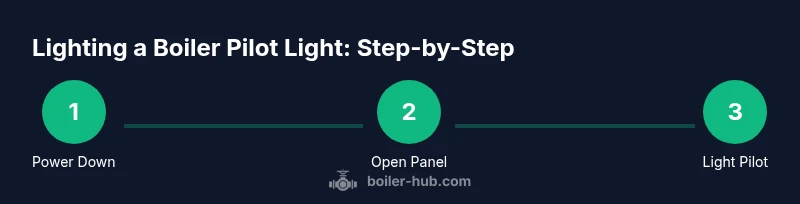
Power down and prep the area
Turn off the boiler at the power switch and set the thermostat to off. If you sense any gas odor, stop and evacuate. This initial step prevents accidental ignition during access and keeps you safer while you work.
Tip: Keep children and pets away; ensure the work area is well-ventilated. - 2
Open the burner access panel
Use a screwdriver to remove screws or unlatch the panel to reveal the burner and pilot assembly. Do not touch hot surfaces; handle the panel gently and avoid forcing anything. This gives you a clear view of the pilot and gas control.
Tip: Inspect for any signs of corrosion or damage around the panel edges. - 3
Set the gas valve to PILOT and depress the control
Rotate the gas control knob to PILOT and firmly press the knob in to hold the gas valve open. This position is required to light the pilot in most older boilers. If your model uses an electronic ignition, skip this step and proceed to lighting.
Tip: If the knob doesn’t depress fully, stop and consult the manual or call a technician. - 4
Light the pilot
With a long-reach lighter, ignite the pilot flame at the designated burner port. Keep holding the knob for 30–60 seconds after ignition to heat the thermocouple. If the flame doesn’t stay lit, do not force it—there may be a gas supply or valve issue.
Tip: Ensure the flame is steady and blue; a yellow or flickering flame indicates improper combustion. - 5
Test and reassemble
Release the knob slowly after the flame remains steady. Reinstall the access panel and turn the boiler back on. Set the thermostat to a warm setting and verify that the main burner ignites reliably when heat is called for.
Tip: Listen for a normal ignition sound and check for proper exhaust flow. - 6
Final safety check
Confirm CO detectors are functioning and the room remains ventilated for a period after lighting. If any signs of trouble persist, turn off the boiler and contact a licensed technician.
Tip: Schedule annual maintenance to keep the standing pilot or electronic ignition in good condition.
Questions & Answers
Is it safe to relight a boiler pilot light myself?
Relighting a boiler pilot can be safe if you strictly follow the manufacturer’s instructions and safety precautions. If you smell gas, or the pilot goes out repeatedly, contact a licensed technician.
Yes, but only if you follow the official manual and stay alert for gas smells. If anything seems off, call a professional.
What should I do if the pilot won’t stay lit after lighting?
A pilot that goes out after lighting can indicate a faulty thermocouple, dirty orifice, or gas valve issue. Stop attempting to relight if you suspect a gas leak and call a pro.
If the flame goes out after lighting, it’s best to get a professional to diagnose the thermocouple or gas valve problem.
Do I need to turn off the power before lighting the pilot?
Yes. Turn off the boiler's power and thermostat to prevent accidental ignition and to keep you safe while you access the pilot area.
Turn off power and set the thermostat to off before you start lighting steps.
What if I smell gas while working?
If you smell gas, leave the area immediately and call your gas utility or emergency services. Do not operate switches or light anything until you’re in a safe area.
If you smell gas, evacuate and call for help right away.
When should I replace the thermocouple or pilot assembly?
If the pilot repeatedly fails to stay lit even after cleaning and adjustments, or if the thermocouple shows signs of wear, replacement by a professional is advised.
If the pilot won’t stay lit after trying all steps, a tech should inspect and replace worn parts.
Can I light the pilot if my boiler is in a tight space or poorly ventilated?
Poor ventilation increases risk of gas buildup and CO. Improve ventilation or relocate the boiler if possible, and seek professional guidance if space safety is doubtful.
Don’t light in a cramped space; improve ventilation or get professional help if unsure.
Watch Video
Key Points
- Know your boiler type (standing pilot vs electronic ignition) to tailor lighting steps.
- Always prioritize safety: ventilate, check for gas leaks, and use CO detectors.
- Use the correct lighting method (igniter or manual) and hold the control to heat the thermocouple.
- If the pilot won’t stay lit, or you smell gas, stop and call a professional.
- Regular maintenance reduces the risk of pilot light outages and gas-related hazards.