Lighting Pilot on Boiler: Step-by-Step Guide for Safe Activation
Learn how to light the boiler pilot safely with a clear, step-by-step guide. Includes safety tips, tools, troubleshooting, and maintenance to protect your home and family.


Goal: safely light the boiler’s standing pilot. Before you start, confirm the gas supply is accessible, the area is well-ventilated, and you have the correct igniter or match. Follow the manufacturer’s instructions exactly, keep a clear exit, and never leave the area unattended while the pilot is lit. If in doubt, call a professional.
What is a boiler pilot and why it matters
A boiler pilot is a small flame that sits at the heart of many gas-fired boilers. Its purpose is to ignite the main burner whenever heat is needed. Older boilers often rely on a standing pilot, which burns continuously, while newer models may use an electronic ignition that lights on demand. Understanding how your system works helps you light the pilot safely and avoid problems such as a flame that won’t stay lit or inefficient combustion. According to Boiler Hub, safety should guide every maintenance task, including lighting the boiler pilot. When you know the exact type of ignition your boiler uses, you reduce the risk of gas leaks, exposure to flames, and carbon monoxide buildup. If your boiler model has documentation, review the section on lighting or relighting the pilot before attempting any operation. Regular awareness of the control layout and safety features will pay off in reliability and peace of mind.
Safety first: essential precautions before lighting
Before you touch any controls, establish a safe working area. Ensure good ventilation and clear access to the outside vent if your unit is in a utility closet. Verify that the area is dry and free of flammable materials. If you smell gas at any point, do not attempt to light the pilot. Leave the area immediately and call the gas supplier or emergency services. Make sure the power switch for the boiler and any nearby electrical outlets are turned off if directed by the manual. Keep a clear escape route and have a flashlight handy. These precautions protect you from gas leaks, flash fires, and CO exposure and set the stage for a safe lighting procedure.
Types of ignition systems: standing pilot vs intermittent ignition
Boilers may have a standing pilot, a constant flame that lights the burner when needed, or an electronic ignition that activates only when heat is required. Standing pilots are reliable in older systems but waste gas while idling. Electronic ignition is more energy-efficient but requires correct wiring and periodic maintenance. Knowing which system you have helps you pick the right, manufacturer-approved lighting method. The Boiler Hub team emphasizes aligning actions with the specific model and safety guidance for your unit to minimize CO risk and ensure consistent operation.
Before you begin: tools, indicators, and ventilation
Gather the required tools: your boiler’s manual, a long-reach igniter or matches, a flashlight, heat‑resistant gloves, and a means to verify gas flow or shutoff. Ensure the room is well ventilated and that the area around the boiler is free of clutter. Read any warning labels and ensure you understand the control panel layout. If your unit uses a thermocouple, check that it is clean and properly seated; a faulty thermocouple can prevent the gas valve from opening or cause the flame to go out.
Step-by-step lighting process (overview)
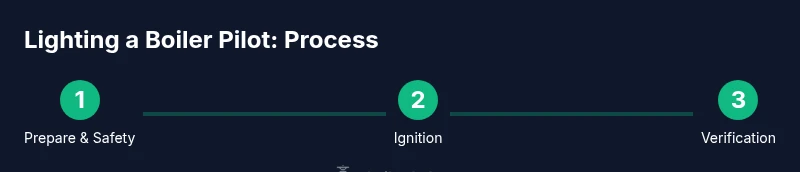
This section provides a practical overview of the steps needed to light the boiler pilot. Always begin by turning off the power (if applicable) and ensuring the gas valve is accessible. Locate the pilot assembly and follow the specific lighting procedure described in your owner’s manual. If your boiler uses an electronic ignition, the steps differ slightly from a standing pilot; use the ignition button or control knob as directed. After lighting, hold the control in the lit position for the recommended duration, then slowly release and observe the flame. If the flame remains steady, you can resume normal operation.
What to do after lighting: flame verification and thermostat settings
Once lit, visually confirm that the pilot flame is steady and blue with a defined cone. A yellow or flickering flame can indicate incomplete combustion or a problem with air supply. Recheck the gas valve and thermocouple if needed. Return the thermostat to the desired setting and monitor the boiler’s startup cycle. If the flame goes out, turn off the gas and wait for a safe period before retrying or calling a technician. Regularly verify that safety controls — including CO detectors and venting — are functioning properly.
Common issues and quick troubleshooting
If the pilot won’t light, ensure the gas line is open and the control knob is in the correct position. A misaligned thermocouple, clogged gas passage, or dirty valve seats can prevent ignition. If the pilot lights but then goes out, inspect for drafts, improper venting, or a faulty thermocouple. If you smell gas after attempting to light, evacuate and call your gas supplier immediately. In cases of persistent trouble, do not force ignition; contact a licensed technician to diagnose and repair the system.
Maintenance and long-term care to prevent pilot problems
Schedule annual boiler servicing to check ignition components, burners, valves, and venting. Clean the combustion chamber as recommended by the manufacturer, and replace worn thermocouples or igniters when the manual advises. Keep CO detectors in occupied spaces and replace their batteries regularly. A proactive maintenance plan minimizes the likelihood of pilot outages and ensures safer, more efficient operation over time.
When to call a professional: knowing your limits
Relighting a boiler pilot is often straightforward, but some scenarios require a pro. If you notice gas leaks, foul odors, persistent ignition failures, or rising CO indicators, stop and seek professional help. Gas equipment is subject to safety regulations, and a licensed technician can diagnose issues with combustion, venting, wiring, and gas pressure. The Boiler Hub team recommends contacting a qualified technician when there is any doubt about the safety or reliability of your boiler.
Quick note on safety culture and home boiler care
Maintaining safe boiler operation is a continuous process. Keep instructions accessible, store ignition tools safely, and practice regular checkups. Teach household members the basics of what to do if they smell gas or hear unusual sounds from the boiler. A small investment in routine safety reduces risk and helps you get reliable heat when you need it.
Tools & Materials
- Owner's boiler manual(Model-specific lighting procedure and safety cautions)
- Long-reach igniter or matches(Used if your boiler lacks electronic ignition)
- Flashlight(Illumination to view the pilot and gas valve area)
- Heat-resistant gloves(Protect hands when handling hot components)
- Gas detector (optional)(Helpful for persistent odor or uncertain ventilation)
- Ventilation assessment checklist(Ensure safe air exchange in the boiler area)
Steps
Estimated time: 25-40 minutes
- 1
Power and gas shutdown
If your unit has an electrical switch, turn it off. Locate the gas shutoff valve and ensure it is accessible. This prevents accidental ignition while you prepare.
Tip: Keep a clear exit path and avoid any sparks near the burner area. - 2
Access the pilot assembly
Open the service panel and locate the pilot tube, thermocouple, and gas valve. Use a flashlight to inspect for dirt or corrosion that could block ignition.
Tip: Do not touch hot surfaces; wear gloves during inspection. - 3
Decide ignition method
Identify whether your boiler uses a standing pilot or electronic ignition. The lighting method varies: push-and-hold gas control for standing pilots, or press and ignite for electronic systems.
Tip: Refer to the manual for the exact sequence specific to your model. - 4
Ignite the pilot
For standing pilots, hold the control knob in the lit position and ignite with the long lighter or matching tool. For electronic ignition, press the ignition button while ensuring gas is flowing.
Tip: Keep your face and clothing away from the flame during ignition. - 5
Hold and verify
Maintain the flame for 30–60 seconds (or as advised by the manual) to heat the thermocouple and ensure the gas valve stays open.
Tip: If the flame goes out, turn off the gas and wait a moment before retrying. - 6
Check flame quality
A healthy pilot flame is blue with a sharp cone. A yellow or flickering flame indicates incomplete combustion and a potential issue with air supply or gas flow.
Tip: If the flame looks abnormal, stop and consult the manual or a pro. - 7
Return controls to normal
Release the knob to return the gas valve to the on position (if applicable) and replace the service panel. Restore power and set the thermostat to your desired temperature.
Tip: Monitor the boiler's startup sequence for smooth operation. - 8
Test safety devices
After ignition, verify that CO detectors are active and that venting is unobstructed. Listen for unusual noises and check for gas odors.
Tip: If you smell gas, evacuate and call emergency services immediately.
Questions & Answers
Is it safe to light a boiler pilot myself?
Yes, if you strictly follow the manufacturer's instructions, maintain proper ventilation, and have no gas odors. If you feel unsure at any point, stop and call a qualified technician.
You can light it yourself if you follow the manual, ventilate, and avoid gas odors. If unsure, contact a professional.
What should I do if the pilot won’t stay lit?
Turn off the gas and power, wait briefly, and inspect the thermocouple, gas valve, and burner passages for obstructions. If the issue persists, consult a technician.
If the pilot won’t stay lit, turn everything off, check the thermocouple and gas flow, and call a pro if needed.
Why does my boiler pilot go out after lighting?
Common causes include a dirty thermocouple, drafts, incorrect gas pressure, or venting problems. Addressing these requires careful inspection and may need professional service.
A pilot that goes out can be caused by drafts or a dirty thermocouple. Check the manual and consider a service if it persists.
Do all boilers use a standing pilot?
No. Many modern boilers use electronic ignition, while some older units rely on a standing pilot. Check your model’s documentation for the exact method.
Not all boilers use a standing pilot; newer models often use electronic ignition.
How often should I have boiler ignition checked?
Annual professional maintenance is recommended by most manufacturers to ensure safe and efficient operation.
Annual service is typically advised to keep ignition and safety systems in good shape.
What safety devices should I verify after lighting?
Check CO detectors, venting, and keep a safe area around the boiler. If you notice any gas odor or CO alarm, evacuate immediately and contact authorities.
Verify CO detectors and venting, and stay alert for gas odors after lighting.
Watch Video
Key Points
- Know your boiler's ignition type before lighting
- Follow the manual and never bypass safety features
- Ventilate the area and keep exits clear during lighting
- If uncertain, contact a licensed professional