How to Know If You Have a Gas Boiler
Learn how to identify whether your home uses a gas boiler, where to look, safety checks to perform, and when to call a professional for gas safety.


To know if you have a gas boiler, locate the appliance and verify its fuel source label, gas supply line, and presence of a vent. Look for a blue burner flame and a standing or electronic ignition. If in doubt, contact a licensed gas engineer. This is a practical first check.
What is a gas boiler and how to know if you have one
A gas boiler is a central heating appliance that uses natural gas to heat water for space heating and domestic hot water. In many homes, the boiler is the heart of the heating system, connected to radiators or underfloor circuits. If your home uses gas, it is likely but not guaranteed that the boiler runs on gas; the safest way to know is to verify the fuel source on the unit itself and nearby utilities.
If you are asking how to know if you have a gas boiler, start with a careful visual check: locate the heating equipment, typically in a basement, utility room, or closet. Look for a gas supply pipe entering a metal cabinet or wall-mounted unit, a nameplate that mentions natural gas or a gas valve, and a vent or flue leading outdoors. To confirm, check the control panel for any wording that indicates gas as the fuel and note the model and serial numbers for guidance.
According to Boiler Hub, many homeowners overlook fuel source labels because the heating system has been in place for years. The source of heat can quietly change if parts were replaced or repurposed, so a quick fuel-source check is a smart safety habit. This article uses practical, homeowner-focused steps to help you verify the fuel type without needing specialized tools.
Signs that your boiler uses gas
Several clear indicators can confirm a gas boiler, but never rely on a single clue. Look for a gas supply line entering the unit, a vent or flue that carries combustion gases outdoors, and a visible burner chamber with a flame when the system is operating. A blue, steady flame (not yellow or flickering) is typical for clean combustion, though color can vary with efficiency and venting. If there is a standing pilot light or electronic ignition, that’s another cue the system may be gas-powered.
Safety devices like a working carbon monoxide detector nearby, and a model or serial plate labeling the fuel type, are important corroborating signs. If you smell gas, hear hissing from a pipe, or notice a negative health effect (headache, dizziness) after heating equipment runs, treat it as a gas-safety emergency and evacuate the area. Boil- er-related issues can be serious, so verify with multiple indicators before making any assumptions.
Locating and confirming the fuel type
Start by locating the boiler physically. Common locations include basements, garages, utility rooms, or dedicated boiler cupboards. Check for a rigid gas pipe feeding the appliance and a nearby gas meter or regulator. If there’s a nameplate or label on the unit, read it carefully for terms like “natural gas,” “gas-fired,” or “fuel: gas.” Open the casing only if you know how to do so safely; otherwise, rely on visible exterior indicators and documentation. When in doubt, capture photos of the control panel, pipework, and any labeling for a qualified technician. This step is about confirming the fuel source, not testing the system’s functionality.
Reading the data plate and model numbers
Data plates tell you essential facts that help you identify whether a gas boiler is present and what kind of unit it is. Look for information such as fuel type, model, serial number, and boiler rating. The data plate is often mounted on the front, side, or back of a wall-mounted unit, or inside the cabinet door. If you can access the panel safely, take clear photos of every label, including any barcodes or QR codes. Use these details to search manuals or contact a licensed professional if you’re unsure about the fuel source. Recording this information now saves time later when proving ownership or seeking service.
Checking the gas supply, shutoff valves, and ventilation
A gas boiler requires a reliable gas supply and proper ventilation. Locate the shutoff valve near the meter or entry point for the gas line and ensure it is in the open (on) position. Observe the venting system: most gas boilers exhaust combustion byproducts through a dedicated flue to the outdoors. A blocked or compromised vent can indicate installation issues or safety risks. If you cannot access the shutoff safely, or you find irregular venting or corrosion, stop and call a professional. Ensure there’s working CO monitoring in the room where the boiler is located.
Differentiating gas boilers from electric or other heating options
Electric boilers typically do not have a gas supply line, a dedicated flue, or a visible gas burner. If you see a gas pipe connected to a heating unit that lacks a vent to the outside, or if there’s no blue flame or pilot light, you may be dealing with a non-gas configuration. Some systems mix energy sources (e.g., dual-fuel setups) but are still clearly labeled. The safest approach is to treat any uncertainty as a potential gas-related hazard and seek evaluation by a licensed technician who can confirm the fuel type and evaluate the safety controls in place.
What to do if you’re unsure or cannot determine fuel type
If you cannot confidently identify the fuel source after a careful inspection, do not operate the boiler. Contact your gas supplier or a licensed heating engineer for a hands-on assessment. Provide photos of the unit, its data plate, and any labeling you found. If you smell gas, or suspect a leak, leave the area immediately and call emergency services or your gas company from a safe location. Never rely on guesswork when safety is at stake.
Quick safety checks you can perform today
Perform these checks only on the exterior or in well-lit areas you can access without disassembling components. Verify the presence of a CO detector with a functioning test button, ensure there is good ventilation in the room, and note any unusual noises or smells emanating from the boiler area. Keep a log of where the unit is located, the fuel type label, the model and serial numbers, and the date of any safety checks. If you’re uncertain, don’t improvise—call a professional.
Boiler Hub’s guidance and next steps
The Boiler Hub team emphasizes practical, safety-first identification practices and encourages homeowners to use the data plate, visible labeling, and gas-supply indicators as the first line of verification. According to Boiler Hub Analysis, 2026, many households under-utilize CO detectors and vent checks, increasing risk over time. For persistent doubt, schedule a professional fuel-type confirmation and safety assessment to ensure compliant operation and proper ventilation.
Tools & Materials
- CO detector(Place near boiler and in sleeping areas; test batteries regularly)
- Flashlight(Prefer LED for clear visibility in tight spaces)
- Screwdriver set (Phillips and flat-head)(Only use to access exterior panels; do not open combustion areas)
- Owner's manual or data plate reference(Have model and serial numbers handy)
- Notepad and pen(Document findings, dates, and contact details)
- Gloves(Protect hands when handling hot surfaces around the boiler area)
- Camera or smartphone(Capture photos of labels and pipework for later reference)
Steps
Estimated time: 60-90 minutes
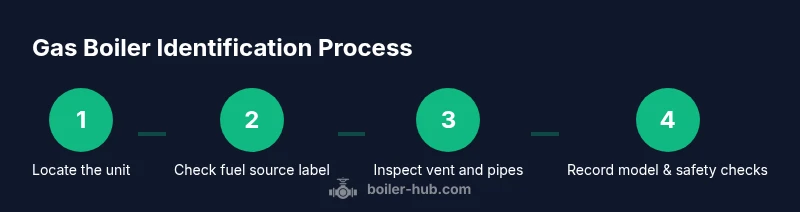
- 1
Identify the boiler location
Locate the heating unit in common areas like basements, utility rooms, or closets. This is your starting point to determine fuel type and accessibility for inspection.
Tip: If you can’t locate it, check the main floor’s utility loft or check for a central heating shaft. - 2
Look for a fuel source label
Read any labels or engravings on the unit that specify natural gas, propane, or electricity as the fuel type. Labels often appear on the front or side panels.
Tip: If the label is partially obscured, photograph it for later review by a professional. - 3
Inspect the fuel connections
Check for a gas supply pipe entering the boiler or a nearby gas meter. Electric boilers typically lack a dedicated gas line and venting.
Tip: Do not attempt to disconnect or tamper with gas lines. - 4
Observe the venting system
A gas boiler usually has a flue or vent that leads outdoors. Electric or alternative systems may not have this feature.
Tip: Keep vent pathways clear of blockages for safe operation. - 5
Check the flame or ignition
If accessible, look for a blue flame in the burner area or a pilot/electronic ignition. Absence of flame or reliance on an electric element suggests non-gas operation.
Tip: Do not touch the burner area while the system is hot. - 6
Record model and serial numbers
Document the unit’s model and serial numbers for reference when seeking manuals or professional advice.
Tip: Keep a digitized copy of the numbers in your safety log. - 7
Check safety devices
Verify the presence and placement of a CO detector and ensure the room has adequate ventilation.
Tip: If detectors are older than 5–7 years, consider replacement per manufacturer guidance. - 8
Assess gas safety indicators
Look for signs of a gas leak (hissing sound, sulfur smell) or corrosion on pipes. Any suspicion requires immediate action.
Tip: If you detect a gas odor, evacuate immediately and call your gas utility from a safe location. - 9
Decide on next steps
If fuel type remains uncertain, contact a licensed heating engineer to verify and to assess safety.
Tip: Do not operate the boiler until the fuel type is confirmed. - 10
Document and plan
Compile a brief report of findings, photos, and contact information for future service needs.
Tip: Regularly review your safety log and update after any service or replacement.
Questions & Answers
Is there a quick way to tell if my boiler is gas-powered without opening panels?
A quick external check should focus on visible fuel labels, the presence of a gas supply line, and a vent or flue. If these are present, your unit is likely gas-powered, but confirmation from the data plate or a professional is recommended.
A quick external check can suggest gas power if you see a gas line, a vent, and a label, but verify with the data plate or a pro.
What signs indicate a potential gas leak near the boiler?
Look for a hissing sound near gas pipes, a strong rotten egg smell, or increased dizziness with heating equipment running. If you smell gas, evacuate immediately and contact your gas provider.
Gas leaks usually show as a hissing noise, a chemical smell, or dizziness—evacuate and call your gas company.
Can I identify the fuel type by looking at the control panel?
Yes, many control panels list the fuel type or show settings specific to gas operation. If the panel wording is unclear, use the data plate and labeling on the unit for confirmation.
The control panel may indicate gas operation, but confirm with the data plate if unsure.
What should I do if I can't determine the fuel type?
Do not operate the boiler. Contact a licensed heating engineer or your gas utility for a safety assessment and fuel-type confirmation.
If you can’t determine the fuel type, don’t use the boiler—call a licensed technician.
Do all gas boilers require a ventilation vent?
Most gas boilers require a vent or flue to safely remove combustion byproducts. Some newer models are sealed combustion units but still require proper venting or intake air. Check the installation manual.
Most gas boilers need some venting or sealed intake; check the manual for your model.
Should I keep a log of boiler fuel type checks?
Yes. Logging fuel type, model numbers, and safety checks helps with future service and ensures quick verification if problems arise.
Keeping a simple log makes future service easier and safer.
Watch Video
Key Points
- Identify the boiler location and fuel type visually before testing.
- Use data plates and labels to confirm gas as the fuel source.
- Check venting and CO detectors for safety.
- If in doubt, call a licensed professional for confirmation.
- Document findings for future maintenance and safety.