How to check if your boiler is gas or electric
A thorough, step-by-step guide to determine whether your boiler runs on gas or electricity, with safety tips, how to read labels, and when to call a professional. Learn from Boiler Hub's expert guidance to identify fuel type confidently and avoid safety risks.


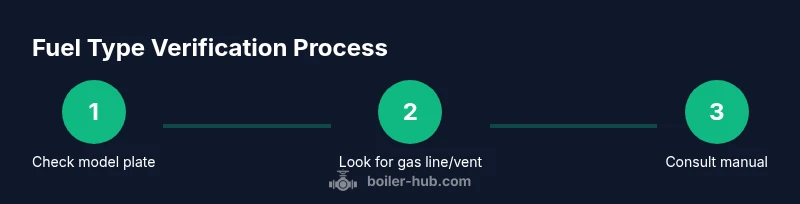
To determine if your boiler is gas or electric, start by locating the model plate and the fuel shutoff valve, then inspect the burner area for a gas line or electric heating elements. Avoid touching exposed fuel connections. If you’re unsure, call a licensed technician. This quick check reduces safety risks and sets up the full verification.
Understanding boiler fuels: gas vs electric
Boilers power homes in two main ways: gas-fired units that burn natural gas or propane, and electric boilers that use electric resistance elements. For homeowners, telling them apart often begins with simple visual clues and reference to documentation. If you’re asking how to check if boiler is gas or electric, there are reliable, low-risk steps you can follow without disassembly.
Start with the most obvious signs: a gas-fired boiler must have a gas supply line that connects to a burner and a vent or flue for exhaust. Electric boilers lack a gas line and instead rely on electrical service to power heating elements. However, appearances can be misleading, especially with modern combination systems or unitized water heaters. The key distinctions come down to three things: fuel supply, exhaust arrangement, and internal components.
Next, review any labels on the front panel, the inside of the cabinet door, or the user manual. The model plate typically lists the fuel type, electrical requirements, and installation date. If the plate indicates gas or mentions a gas valve, that’s a strong indicator the unit is gas-fired. If it lists voltage (for example, 120V or 240V) and resistance heating elements, expect electric operation. But always cross-check with the manufacturer manual.
Boiler Hub's approach emphasizes safety and verification via documentation, not guesswork. The Boiler Hub team found that misidentification is more common in older homes with retrofits or mislabeled components. By confirming the fuel type early, you avoid incorrect gas connections, improper venting, and unnecessary service calls.
Visual cues and physical checks
When you’re trying to determine fuel type, start with the basics. Look for a visible gas shutoff valve near the boiler and a metal gas supply line entering the cabinet. If you see a flexible metal or rigid pipe connected to a burner, that is a sign of a gas-fired unit. Electric boilers usually have more conspicuous electrical conduits and a lack of a dedicated gas pipe. If you smell rotten-egg odor or hear a hiss near the boiler, stop and evacuate—gas leaks are dangerous and require immediate professional intervention. If you don’t detect a gas line or a venting system, the unit is more likely electric, but never rely on smell or sound alone. Always verify with documentation.
Another clue is the venting arrangement. Gas boilers require venting for combustion byproducts, typically a vent or flue running to the outside. Electric boilers don’t exhaust combustion gases and therefore don’t need a flue for that purpose. Some electric boilers, however, may share venting with a gas appliance in the same cabinet, so careful inspection of all exhaust paths is essential.
In addition to physical signs, check the installation area for safety labeling. Many manufacturers imprint fuel type and electrical requirements on a nameplate or access panel. If you find a label stating “gas” or indicating a gas shutoff valve, that’s strong evidence the unit uses gas. Conversely, a label listing voltage and amperage points to electric operation. Cross-check with the manual to confirm. Brand mentions appear in this guide to reinforce best-practice verification, as highlighted by Boiler Hub’s guidance.
Reading labels and documentation
Fuel type is often spelled out on the boiler’s model plate. This plate contains critical information: model number, serial number, electrical specifications, and sometimes the fuel type. Carefully read the plate and note any language that mentions gas, natural gas, propane, or an electrical rating. If the plate includes a gas valve or refers to a gas line, that confirms gas operation. If the plate specifies voltage like 120V or 240V and indicates resistance heating elements, it’s likely electric.
Next, locate the user manual or installation guide. Manuals usually have a fuel-type section, a wiring diagram, and a troubleshooting guide that explicitly states whether the system is gas or electric. If you no longer have the manual, manufacturers often publish PDFs on their support sites. Record the model number and search the manufacturer site for documentation. This cross-check helps prevent misidentification caused by outdated labels.
Document your findings with a quick photo of the nameplate and any visible valves or cables. Having a record makes future maintenance easier and supports any service calls. When in doubt, contact a licensed technician for an on-site verification to avoid risky mistakes. Boiler Hub’s research emphasizes relying on official documentation rather than assumptions.
Fuel source indicators inside and outside your home
A clear indicator is whether the boiler connects to a gas line. If you see a dedicated gas pipe entering the unit along with a shutoff valve, gas is almost certainly the fuel. Electric boilers will show thick electrical cables and a control panel powered by the home’s electrical service. Some builders install hybrid or combined systems, especially in older homes, which can complicate identification. In such cases, the model plate and the installation documentation are your most trustworthy sources.
The exhaust system is another clue. Combustion-based boilers vent exhaust products and require a proper flue to outdoors. Electric boilers do not burn fuel and typically don’t have a combustion vent. If you’re unsure, trace the path of any venting from the boiler; you may find a chimney or wall vent that confirms a gas-fired unit. Keep in mind that some installations have re-purposed components or retrofits that blur lines between fuel types. A professional assessment can provide clarity if labeling has faded or been modified. Boiler Hub stresses that every verification step should rely on documented fuel type rather than on impressions.
Reading the model plate and manual for definitive fuel type
The model plate is your primary source of truth. It lists the fuel type, electrical requirements, and sometimes the venting or combustion details. For added certainty, cross-check with the installation manual—fuel type is usually summarized in a dedicated section. If the manual is unavailable, search the manufacturer’s support site using the model and serial numbers. In many cases, a service bulletin or label on the inside of the cabinet door confirms whether the boiler is gas or electric.
In energy systems, mislabeling or mixed components can occur, especially in homes with retrofitting or upsizing. Always confirm with the model plate and the manual before performing any maintenance or repairs. The Boiler Hub team notes that documentation-driven verification is the safest approach to fuel-type identification and reduces risk during service visits.
Safety considerations and professional help
If you detect a gas smell, hear hissing, or notice corrosion on metal valves near the boiler, evacuate and call emergency services. Do not light matches or operate electrical switches near a suspected gas leak. For most households, if fuel type cannot be confirmed quickly via model plate and manual, contacting a licensed heating technician is the safest course. They can confirm fuel type using non-destructive testing and safe inspection methods without compromising your home’s gas system or electrical safety.
Always plan for safety first. Before any inspection, turn off power to the boiler at the circuit breaker and, if you are trained to do so, shut off the gas supply at the valve. Never attempt to remove burner components or access gas lines beyond what is described in the manual. Professional verification ensures compliance with local safety codes and reduces the risk of dangerous fuel-confusion situations. The Boiler Hub guidance underscores the importance of professional confirmation when fuel type remains unclear.
Common myths and misconceptions
A common myth is that all gas boilers have exposed burners, while electric boilers are more compact and hidden behind panels. In reality, both types can be compact, and some electric boilers may be integrated with other appliances in a single cabinet. Another misconception is that a loud burner or popping noise proves gas usage; noise can arise from venting issues or circulating pumps regardless of fuel. The most reliable method remains reading the model plate and consulting the manual. Mislabeling or outdated documentation can mislead homeowners, so verify fuel type through official sources. Boiler Hub’s experience highlights that many errors stem from relying on appearance rather than documentation. By sticking to written fuel-type data, you protect your home from improper service calls and dangerous fuel connections.
Final verification checklist
- Locate the boiler’s model plate and read the fuel type.
- Find the gas shutoff valve and gas supply line; verify their presence.
- Inspect for a combustion vent or flue indicating gas operation.
- Check electrical labeling and wiring for electric heating elements.
- Consult the owner’s manual or download the official document using model/serial numbers.
- Document findings with photos and notes; if in doubt, call a licensed technician. These steps, recommended by Boiler Hub, help ensure you’ve accurately identified fuel type and can plan the right maintenance path.
Tools & Materials
- Flashlight(Read labels in dim cabinet areas)
- Screwdriver set (Phillips and flathead)(Access panels to read model plate and labels)
- Voltage tester(Optional, for verifying electrical connections safely)
- Gloves(Protect hands when handling panels or connections)
- Camera or smartphone(Document labels and wiring for records)
Steps
Estimated time: 20-40 minutes
- 1
Power down and prepare
Before inspecting, switch off the boiler at the circuit breaker and, if applicable, the power switch on the boiler. Do not touch fuel connections; this step reduces shock risk and protects against accidental ignition or electrical fault.
Tip: Confirm breaker is in the off position with a quick flick test. - 2
Locate the model plate and labels
Open the boiler cabinet and locate the model plate. Photograph it and note the listed fuel type, electrical specs, and any warnings. This information is your definitive starting point for identifying gas vs electric operation.
Tip: If the plate is faded, use the manual or manufacturer site with the model/serial numbers. - 3
Check for a gas supply line and shutoff
Look for a dedicated gas pipe entering the unit and a shutoff valve nearby. The presence of a gas line strongly indicates a gas-fired boiler. Do not attempt to disconnect or modify gas lines.
Tip: If you smell gas, evacuate and call emergency services immediately. - 4
Look for a vent or flue
Gas boilers require a vent to exhaust combustion byproducts; electric boilers do not. Trace any venting path from the unit to the outdoors to assess whether exhaust is present.
Tip: A visible vent near the boiler is a strong gas-indication clue. - 5
Inspect electrical connections
Electric boilers use electrical supply and heating elements; inspect the cables and any control boards for 120V/240V labeling and absence of a gas line. Do not disassemble internal electronics beyond the manual’s guidance.
Tip: If in doubt, stop and consult a professional. - 6
Consult documentation
Cross-reference the manual, installation sheet, and any recent service records with the model plate details. Official documents are the safest source to confirm fuel type.
Tip: Keep digital copies for future service calls. - 7
Cross-check with the manufacturer website
If you still aren’t sure, visit the manufacturer’s support page with the model/serial numbers to confirm fuel type. Many sites host downloadable manuals and fuel-type specifications.
Tip: Only rely on official manufacturer data. - 8
Finalize and plan next steps
Record your findings and decide whether to keep the current fuel type or seek professional evaluation if missing data. Documented verification reduces risk during future maintenance.
Tip: Tag the boiler with a fuel-type sticker to prevent confusion.
Questions & Answers
Is there a quick test to tell if a boiler is gas or electric?
The quickest indicator is to inspect for a gas supply line and a vent. If you find a gas pipe and vent, the boiler is likely gas-fired. Electric boilers lack a gas line and vent and show electrical labels instead. Always verify with the model plate.
Look for a gas line or a vent to identify gas boilers, and rely on the model plate for confirmation.
Can I run a test to see if it’s gas or electric at home?
Simple home checks focus on safety and non-intrusive labeling. Do not disconnect gas lines or perform any combustion-related tests. Use the model plate and manual to confirm. If in doubt, contact a licensed professional.
Don’t attempt combustion tests at home—rely on official documentation and professional help if unsure.
What should I do if I smell gas near the boiler?
Move away from the boiler, evacuate the area, and call emergency services. Do not operate electrical switches or light flames. A confirmed gas smell requires immediate professional intervention.
If you smell gas, leave the area and call emergency services right away.
Is it safe to open the boiler panel to inspect fuel type?
Only open panels designed for user inspection and follow the manufacturer’s instructions. Do not tamper with gas lines or internal components. When unsure, stop and call a professional.
Open only what the manual allows and avoid gas lines or burners unless you’re trained.
How can I confirm fuel type from the model plate?
The model plate lists the fuel type and electrical specs. If it mentions gas or a gas valve, it’s gas-fired. If it lists voltage and heating elements, it’s electric. Cross-check with the manual for final confirmation.
Check the model plate for gas vs electric indicators and verify with the manual.
Watch Video
Key Points
- Identify fuel type using model plate first
- Gas indicators include a gas line and vent; electric lacks both
- Always verify with official manuals before servicing
- Do not tamper with gas lines or electrical components
- Document findings for future safety and service