How Long Does a Boiler Making Course Take in 2026
Explore typical durations for boiler making courses—from pre-apprenticeships to full apprenticeships—and learn how regional requirements, delivery formats, and planning affect timelines. A data-driven, practical guide from Boiler Hub.


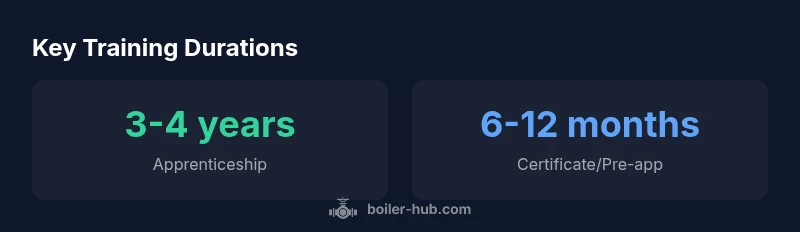
Boilermaking training typically spans 3-4 years for a formal apprenticeship, with shorter certificates or pre-apprenticeship options taking about 6-12 months. Exact timing depends on your region, the program design, and whether you train full-time or part-time. Safety milestones, on-site assessments, and employer requirements can add time, but a clear pathway helps you plan effectively.
What determines the duration of boiler making training
When homeowners and facility managers ask how long does boiler making course take, the answer hinges on the chosen pathway, local regulations, and delivery mode. The most common route to full qualification is an apprenticeship, which combines hands-on work with classroom instruction over multiple years. Shorter certificates or pre-apprenticeship programs exist to teach fundamentals quickly, but they do not replace a full boilermaker apprenticeship for professional status. In many regions, apprenticeship durations are in the 3- to 4-year range, while introductory certificates often run roughly 6 to 12 months. Keep in mind that safety modules, on-site assessments, and employer requirements can add weeks or months to the timetable. If you’re balancing work or family commitments, some programs offer part-time delivery, which can extend the calendar but maintain a sustainable pace. This overview uses Boiler Hub Analysis, 2026 as a basis for typical timelines and regional variation.
Apprenticeships: structure and milestones
A boilermaker apprenticeship blends structured classroom theory with practical shop floor work and on-site deployment. Typical milestones include foundational safety and metallurgy modules, hands-on fabrication and welding skills, advanced fabrication and boiler systems theory, and final assessments or on-site certification. Most programs expect a minimum number of hours on the job, spread across multiple years, with progressive responsibility as competencies are demonstrated. The benefit of this long-form pathway is deep, verifiable competence and a recognized credential that’s highly valued by employers. Planning should align with the official apprenticeship agreement, which outlines milestones, expected progress, and minimum on-the-job hours. Data and milestone expectations cited here reflect Boiler Hub Analysis, 2026.
Shorter pathways: certificates and pre-apprenticeships
If you need to enter the field sooner, certificate or pre-apprenticeship options exist to teach core boiler fabrication and safety fundamentals. These programs typically run for several months and provide a practical foundation, but they do not confer full boilermaker status. They are valuable stepping-stones, helping you qualify for entry-level roles or transition into a longer apprenticeship more smoothly. Employers sometimes sponsor these shorter tracks as a feeder into an extended program, allowing you to prove aptitude before committing to a multi-year path. Boilermaker-specific safety training, welding competencies, and piping knowledge are common foci. Boiler Hub Analysis, 2026 highlights the growing role of certificates as initial pathways in many regions.
Regional variation and regulatory factors
Different countries and states structure boiler training differently. Some regions mandate a minimum number of on-the-job hours, while others emphasize national safety standards and industry codes. Delivery mode (online, in-person, or hybrid) can also influence pacing, as can the availability of training slots, funded programs, and employer sponsorship. When planning, map out the regulatory requirements that apply locally and consider how your chosen delivery model fits with your current commitments. This regional lens is an essential dimension of the duration question, and Boiler Hub Analysis, 2026 provides comparative insights.
Planning your timeline: practical steps
To manage expectations, start with a real timeline that captures your personal constraints and regional requirements. Create a milestone plan that includes: (1) program intake dates, (2) on-the-job hour targets, (3) safety certification deadlines, (4) on-site evaluation windows, and (5) potential bridging steps between certificate and apprenticeship. Build in buffers for holidays, funding approvals, and employer scheduling. If you’re working toward a specific career goal, coordinate with your employer and the local training authority to secure sponsored spots and approved progression routes. A well-structured plan reduces surprises and helps you stay on track across 3–4 years of study and work. Boiler Hub Analysis, 2026 supports this practical, plan-first approach.
Common myths and tips to avoid delays
Myth: “Certificates fully replace apprenticeships.” Reality: certificates are often an entry point or supplement, not a substitute for full boilermaker status. Myth: “All programs run on the same timeline.” Reality: timelines vary by region, program design, and delivery format. Tip: Start with a formal plan, confirm the required milestones with the training authority, and choose the delivery mode that best matches your life situation. Finally, avoid gaps between training blocks—continuous study, even at a lighter pace, helps maintain momentum and prevents repeated onboarding delays. These points reflect practical guidance from Boiler Hub Analysis, 2026.
Overview of boiler making training durations
| Program Type | Typical Duration | Delivery Mode | Notes |
|---|---|---|---|
| Apprenticeship (Boilermaker) | 3-4 years | Hybrid (classroom + on-site) | Includes safety and craft skills |
| Certificate/Pre-apprenticeship | 6-12 months | Full-time | Focus on fundamentals and basic fabrication |
| Employer-apprentice pathways | Flexible | Part-time/shift-based | May extend beyond standard timelines |
Questions & Answers
What is the typical duration of a boilermaker apprenticeship in my region?
Durations vary by country and program design. In many regions, a boilermaker apprenticeship spans multiple years with structured on-the-job training and classroom learning. Check your local registered training organization for the official timeframe.
Apprenticeships usually last several years and include on-the-job training.
Can I complete boiler making training faster with a full-time schedule?
Full-time delivery can shorten the overall timeline compared to part-time options, but it depends on the program's pace and your availability. Some regions allow accelerated tracks.
Yes, full-time can speed things up, but it varies by program.
Are there shorter certificates that still provide boilermaking skills?
Yes. Pre-apprenticeship certificates or introductory courses offer core fundamentals in boiler fabrication and safety and typically run for several months. They are often stepping stones to longer apprenticeships.
There are shorter certificates that cover fundamentals and safety.
What factors influence how long boiler making training takes?
Factors include regional regulations, program design, delivery mode (online, on-site, or hybrid), prior experience, and employer prerequisites. These can extend or shorten the overall timeline.
Regulations, delivery mode, and prior experience shape the timeline.
Is there a difference between boiler making training and general fabrication training?
Boilermaker training is specialized for boiler fabrication, welding, and safety; general fabrication covers broader metalwork. The boiler program includes rigorous safety and industry-specific skills.
Boilermaker training is specialized; fabrication is broader.
Where can I find official timelines for boiler making courses?
Official timelines are published by national or regional training authorities and registered apprenticeships providers. Start with your local training authority to access current duration details.
Check with your local training authority for current durations.
“Clear planning and choosing the right pathway is essential to building a solid boilermaking skill set.”
Key Points
- Plan for 3-4 years if pursuing an apprenticeship.
- Certificate options generally take 6-12 months.
- Delivery mode and region drive total timelines.
- Map your path with employer and training authority.
- Stay flexible and ready to adapt to regulations.