Gas vs Electric Boilers: Practical Comparison
Explore the key differences between gas and electric boilers, including cost, efficiency, installation, and emissions. This guide helps homeowners and facility managers decide which fuel type suits their building best. Learn how to compare gas vs electric boilers now.


Gas-fired and electric boilers both heat water for homes, but they differ in fuel source, installation, operating costs, and emissions. In most situations, the choice hinges on fuel availability, electricity prices, and space constraints. For homeowners, gas boilers often deliver lower ongoing costs where gas is affordable, while electric boilers shine in buildings with limited fuel access or strict emissions goals. This comparison explains where each option excels and where to avoid trade-offs.
Are boilers gas or electric? Understanding the basics
Are boilers gas or electric? This is a foundational question for any home or facility considering heating and hot water. In simple terms, a gas boiler uses combustion of natural gas or propane to heat water, while an electric boiler heats water using electric resistance or heat pump technologies. The critical distinction is the energy source, but it cascades into installation, running costs, emissions, and maintenance. When readers ask “are boilers gas or electric,” they are really asking which fuel path aligns with their building, energy prices, and decarbonization targets. This section defines the two paths and sets up the framework for deeper comparisons in the following sections, including typical performance ranges, common installation constraints, and how to assess total cost of ownership over 10-15 years.
Key concepts to track as you read: fuel availability, grid reliability, and the lifecycle costs of each option. By the end, you’ll understand which path fits your building’s energy strategy and budget. The core idea is to move beyond upfront price and look at long-term value, resilience, and environmental impact.
Fuel sources and supply chains
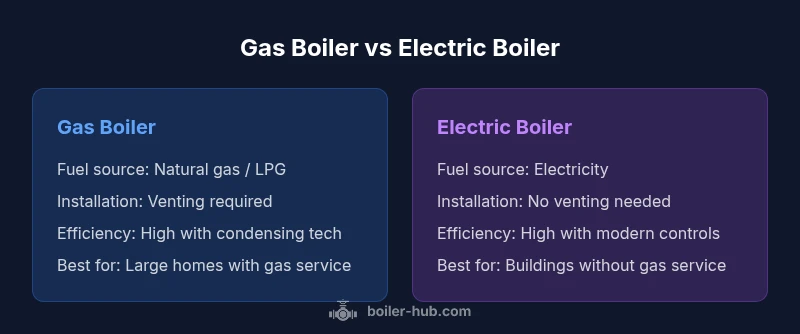
Gas boilers depend on a reliable natural gas supply and an appropriate venting system. They require a gas line, a dedicated combustion chamber, and a flue to expel combustion byproducts, which makes the installation more complex in some buildings. Electric boilers rely on the building’s electrical system and often simpler extraction environment; there is no combustion and no venting, reducing some installation barriers but raising considerations about electrical service size and panel capacity. In practice, many retrofit projects must weigh whether bringing gas to a site is feasible or whether upgrades to electrical service are more economical, especially in urban settings with stringent air quality goals. The decision is also influenced by local utility rate structures and potential incentives for efficiency upgrades.
Beyond lines and panels, think about maintenance access, noise levels, and the availability of qualified technicians for ongoing service. A well-planned installation minimizes disruption and maximizes system lifespan.
Efficiency and energy use
Gas boilers’ efficiency has improved with condensing technology, but the efficiency rating depends on fuel price and application. Electric boilers, particularly those paired with modern controls or heat pumps, can reach very high efficiency in conversion from electricity to heat, though their operating cost is tied to electricity prices. In many homes, the overall energy cost depends on how hot water demand and space heating are scheduled, as well as climate. A key nuance is that a high-efficiency gas boiler can still incur higher carbon emissions if the local gas mix is carbon-intensive, while electric boilers powered by low-emission grids can offer cleaner performance. When comparing the two, consider how you will use heat in shoulder seasons and whether you can shift demand through smarter controls.
A practical approach is to model a typical winter month with your actual weather data and tariff schedule to see which path minimizes cost while meeting comfort targets.
Installation considerations and space requirements
Gas boilers often require venting and combustible material clearances, as well as a flue and sometimes condensate drainage. This adds to installation complexity and space planning, especially in retrofit scenarios or multi-tenant buildings. Electric boilers usually do not require venting, which can simplify kitchens, mechanical spaces, and basements. However, electric boilers demand adequate electrical capacity, robust wiring, and sometimes a dedicated circuit or subpanel. Your project should evaluate spatial constraints, access for maintenance, and ability to route controls and piping with minimal disruption. If you’re upgrading an older building, you may need to rework insulation, draft-proofing, or thermal bridging to maximize any boiler’s efficiency.
Consult a licensed professional to map out routing of gas lines or electrical feeders and to confirm compliance with local codes.
Operating costs and price volatility
Operating costs for gas and electric boilers hinge on local energy prices, consumption patterns, and the efficiency of the installed system. Gas tariffs can fluctuate with supply and regulatory changes, while electricity prices are influenced by generation mix and time-of-use tariffs. In practical terms, a gas boiler might offer lower energy costs in regions with cheap gas, while electric boilers can become competitive when electricity is inexpensive or when heat pumps are part of an integrated system. For facility managers, modeling annual energy use with current tariff projections helps prevent surprises in winter bills. Remember to factor in maintenance costs and potential subsidies for energy-efficient improvements.
A proactive strategy is to forecast different price scenarios (peak vs off-peak) and compare the impact on total annual cost rather than relying on current prices alone.
Emissions and environmental impact
From an environmental perspective, the choice between gas and electric boilers depends on the carbon intensity of the fuel source and the electricity grid. Gas combustion emits carbon dioxide and methane, contributing to operational emissions, though modern condensing gas boilers are cleaner than older models. Electric boilers emit no on-site exhaust, but the overall footprint depends on the grid’s energy mix. Regions with rapid decarbonization may see electric boilers become more favorable over time, especially when paired with low-carbon electricity, rooftop solar, or community-scale generation. If your building has ambitious emissions targets, compare the full lifecycle emissions and potential for future grid decarbonization. A hybrid approach might also lower neck-up emissions while maintaining reliability.
Always document your baseline emissions and set a target trajectory aligned with your sustainability plan.
Maintenance, reliability, and lifespan
Gas boilers typically require regular service to check combustion efficiency, venting integrity, and safety devices. Electric boilers demand less routine servicing due to the absence of combustion, but components like heating elements and controls still wear over time. Lifespan expectations vary, but both types can last 10-20 years with proper maintenance. Drainage, scale buildup, and water quality influence performance for both, so water treatment and system flushing are relevant regardless of fuel. Predictive maintenance schedules can prevent costly outages and extend component life. When planning service, include the cost and availability of qualified technicians in your region and consider a maintenance contract that covers periodic inspection, cleaning, and safety checks.
Sizing, performance, and hot water capacity
Correctly sizing a boiler means balancing heat output with demand. Gas boilers often deliver higher peak outputs suitable for large homes or extensive hydronic systems, and they can provide rapid hot water when demand spikes. Electric boilers generally have lower maximum output, but high-power options or modular electric systems can scale with demand. In either case, a professional heat-load calculation, considering climate, insulation, shower patterns, and simultaneous hot water usage, is essential to avoid oversizing or undersizing and ensure consistent comfort. Don’t assume that a larger boiler always improves performance; the thermostat strategy and zoning layout matter nearly as much as capacity.
Safety, codes, and regulations
Safety considerations differ: gas systems require monitoring for gas leaks, combustion byproducts, and proper venting, along with local building codes. Electric boilers pose no combustion risk at the point of use but require electrical safety compliance, correct grounding, and protection against overloads. Regulations around emissions, energy efficiency standards, and building codes will influence which option is feasible in a given jurisdiction. Having a qualified contractor assess your site helps ensure compliance and minimizes risk. In some regions, incentives or mandates for decarbonization make electric options more attractive, while others support legacy gas infrastructure with modern controls.
When to choose gas and when to choose electric
In many installations, gas boilers win on cost and heat output for larger spaces with reliable gas access. Electric boilers shine in smaller dwellings, retrofit projects without gas service, or facilities prioritizing air quality and decarbonization with a cleaner grid. For mixed heating needs, a hybrid approach—gas for primary heating and electric for supplemental hot water or peak load—can offer a balanced solution. The choice ultimately depends on fuel availability, long-term energy prices, and sustainability goals. When in doubt, run a formal risk assessment and a cost-of-ownership forecast over 10-15 years.
Cost of ownership and long-term planning
Beyond purchase price, total cost of ownership includes installation, maintenance, energy bills, and potential upgrades to infrastructure. Gas boilers may incur higher upfront ventilation and gas line costs but can be economical over time in gas-rich regions. Electric boilers often have higher initial electrical system costs but benefit from lower maintenance and easier service access. When planning long-term, consider depreciation, tax incentives for energy efficiency, and the evolving energy market. A side-by-side cost model helps reveal the better option for your building. Align your strategy with expected grid changes, fuel price trajectories, and any incentives available for efficiency upgrades.
Alternatives and hybrids to consider
Modern homes increasingly pursue hybrids and alternatives such as heat pumps, solar thermal integration, and boiler upgrades. A gas boiler paired with a heat pump or a hybrid system can optimize efficiency and resilience, while an all-electric approach with an advanced heat pump may align with decarbonization goals. When you are deciding, evaluate comfort requirements, climate, building envelope, and available incentives. The best path often blends reliability with sustainability.
Comparison
| Feature | Gas Boiler | Electric Boiler |
|---|---|---|
| Fuel source | Natural gas / LPG | Electricity |
| Installation complexity | Requires gas line, venting and a flue; permits may be needed | Typically no venting; needs adequate electrical service |
| Energy efficiency | High efficiency with condensing gas boilers; depends on model | Very high efficiency in electric systems; depends on tariffs and controls |
| Operating cost (typical) | Lower ongoing costs where gas is inexpensive | Higher energy cost per kWh, but flat-rate opportunities exist |
| Emissions on-site | CO2 and methane depending on gas mix | No on-site emissions; grid-dependent carbon intensity |
| Space requirements | Vent and flue space; can require room for combustion appliances | No venting; relies on electrical space and clearances |
| Maintenance needs | Regular burner and venting maintenance | Less routine maintenance; checks on heating elements and controls |
| Heat output / capacity | High peak output for large homes; fast hot water when needed | Modular/high-output options; scalable for smaller to mid-size loads |
| Best for | Homes with gas service and cost-sensitive operation | Buildings without gas or aiming for decarbonization |
| Payback/cost trajectory | Lower infra costs; payback depends on gas pricing | Higher upfront electrical upgrades; long-term reliability |
Advantages
- Lower ongoing operating costs where gas is affordable
- Strong heat output for larger spaces and quicker warm-up
- Established infrastructure and large service networks
- Robust reliability with proven hardware for hydronic systems
The Bad
- On-site emissions and dependence on gas tariffs
- Ventilation, safety, and regulatory requirements
- Higher vulnerability to fuel-price volatility
- Future policy shifts may affect gas usage in some regions
Gas boilers are generally more economical where gas is available; electric boilers are preferable where gas is unavailable or decarbonization is the priority.
Gas typically wins on running costs in gas-rich areas, while electric options excel where gas access is limited or grid decarbonization is advancing. Perform a site-specific cost and emissions assessment to choose wisely.
Questions & Answers
Are boilers gas or electric cheaper to run in most residential settings?
Costs depend on local tariffs and usage. Gas often provides lower energy costs where gas is affordable, while electric boilers can be costlier to operate if electricity prices are high. A detailed energy-modeling exercise is best to determine true annual costs for your home.
Costs depend on your local energy prices and how you use heat. Gas can be cheaper where gas is affordable, but run the numbers for your home to be sure.
Do electric boilers require less maintenance than gas boilers?
Electric boilers generally require less routine maintenance because there is no combustion and venting. They still need periodic checks of controls and heating elements. Gas boilers demand regular servicing of burners and venting components to maintain efficiency and safety.
Electric boilers typically need less routine maintenance, but you’ll still service controls and heating elements. Gas boilers require more regular burner and vent checks.
Can I convert a gas-only building to an electric boiler easily?
Conversion feasibility depends on the building’s electrical capacity and the existing heating system. In many cases, you’ll need electrical upgrades or a hybrid approach. A professional feasibility study should assess panel size, wiring, and safety upgrades.
Converting often requires electrical upgrades or a hybrid setup. A professional assessment is essential.
Is a gas boiler safer than electric in every situation?
Both systems can be safe when properly installed and maintained. Gas systems introduce combustion and venting risks that require monitoring and detectors. Electric boilers carry no combustion risk but require electrical safety practices.
Gas systems add combustion risks that require venting and detectors; electric boilers remove combustion risk but need proper electrical safety.
How does emissions impact the choice between gas or electric boilers?
Gas boilers emit on-site pollutants and depend on the gas supply’s carbon intensity. Electric boilers emit no on-site emissions, but their overall footprint depends on how clean the grid is. Decarbonization plans and incentives can shift the balance toward electricity over time.
Gas emits pollutants; electric has no on-site emissions but depends on clean grid power. Consider long-term decarbonization goals.
What installation considerations are most important when choosing a fuel type?
Key factors include available space for venting, required electrical capacity, local codes, and the feasibility of extending gas lines. A site survey helps identify constraints and the best routing for piping, wiring, and controls.
Look at venting space, electrical capacity, and local codes. A site survey will reveal the best install path.
Key Points
- Compare total cost of ownership, not just upfront price
- Gas is often cheaper where natural gas is affordable
- Electric boilers simplify installation and reduce on-site emissions
- Consider grid decarbonization plans and incentives
- Use a professional load and cost model for your building