Minnesota Boiler License Exam: Complete Guide for 2026
A data-driven guide to the Minnesota boiler license exam, covering eligibility, structure, study strategies, costs, and renewal timelines. Learn with Boiler Hub’s expert guidance for a confident, compliant path to licensure.


Yes. In Minnesota, boiler license exams are typically required to operate boilers legally, and the exam is administered by the state licensing board. This quick answer highlights the prerequisites, core topics (safety, codes, inspections), exam formats, study strategies, typical costs, and renewal timelines. For detailed preparation, see Boiler Hub’s full guide.
Minnesota licensing framework
In Minnesota, boiler operation and safety are governed by state regulations that require qualified individuals to hold appropriate credentials. The Minnesota boiler license exam serves as a standardized measure of knowledge and practical competence for technicians, supervisors, and facility staff who work with regulated boilers. Boiler Hub's analysis, 2026, emphasizes that applicants should verify current requirements with the Minnesota Department of Labor and Industry (DLI) and local building officials, as rules can evolve. For homeowners and facility managers, understanding the licensing framework helps set realistic timelines and preparedness goals. This section outlines who should pursue the license, the authority responsible for administration, and how to confirm the latest prerequisites. Remember: licensing rules can change, and the most accurate guidance comes from official state resources. The broader takeaway is that preparation should be structured and aligned with regulatory expectations to minimize retakes and delays.
Minnesota boiler license exam structure
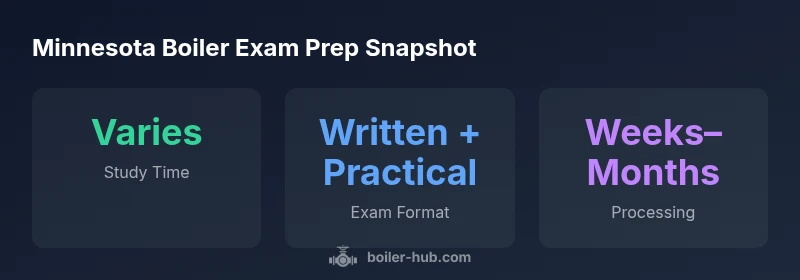
The Minnesota boiler license exam topic set typically centers on safety protocols, code compliance, and inspection procedures. While formats vary by jurisdiction and board, most candidates can expect a combination of written assessment questions and, in some programs, a practical evaluation or scenario-based tasks. Boiler Hub recommends building a study plan around core domains such as safe operating practices, regulatory requirements, and routine maintenance procedures. Practice exams are valuable for identifying knowledge gaps and familiarizing you with question wording. Always cross-check the official DLI guidance for the current structure and any district-specific components.
Eligibility and prerequisites
Eligibility generally includes basic identification, proof of employment or apprenticeship in a boiler-related role, and completion of any required training or supervision periods. Some applicants may need to submit verification of work experience and pass a background check before scheduling the exam. Since Minnesota rules can change, consult the DLI and your local authority to confirm current prerequisites, deadlines, and application steps. Planning ahead reduces the risk of delays and ensures you meet renewal or continuing education requirements after licensure.
Study resources and strategies
Effective preparation blends official materials, structured study plans, and hands-on practice. Leverage any state-approved study guides and practice tests, plus reputable third-party resources recommended by Boiler Hub. Create a weekly study calendar emphasizing safety, codes, and inspection processes, and incorporate real-world scenarios to reinforce learning. Use spaced repetition to retain regulatory details and safety thresholds. Seek out study groups or mentor guidance, especially if you are preparing while juggling work obligations. Boiler Hub’s approach emphasizes consistency, realistic practice, and aligning study topics with the exact exam outline issued by the DLI.
Exam day logistics and scheduling
On exam day, be prepared with valid photo ID, applicable scheduling confirmations, and any required admission forms. Arrive early to accommodate check-in procedures and ensure you know the exam location. If you anticipate any accessibility needs or language support, contact the administering body in advance. Payment methods and rescheduling policies vary, so review the official notice for fees, deadlines, and code-of-conduct rules. A calm, organized approach helps reduce test-day anxiety and improves focus during the assessment.
Reciprocity, renewals, and ongoing compliance
Minnesota licensing often includes renewal requirements and possibly continuing education credits to maintain license validity. Some states have reciprocity provisions, but these vary and typically require state-specific verification or additional coursework. Plan renewal timelines early and track CE requirements, documentation, and submission deadlines. Staying current with boiler safety standards and Minnesota code updates is essential for ongoing compliance and minimizing compliance-related disruptions in operations.
Costs, timelines, and logistics
License expenditures generally fall in the hundreds of dollars range, depending on whether this is a first-time license, renewal, or a specialized endorsement. Processing times can span weeks to months, influenced by application completeness and board schedules. Because costs and timelines shift with policy updates, begin by obtaining the official cost schedule and processing timelines from the Minnesota DLI and associated agencies. A proactive budgeting approach reduces last-minute stress and ensures you stay on track for licensure.
Common pitfalls and best practices
Common pitfalls include underestimating the breadth of topics, neglecting the practical component when required, and not aligning study materials with the official exam outline. Best practices are to start early, use a structured plan, practice with real-world scenarios, and verify every detail with official sources. Keep meticulous records of training, work experience, and exam confirmations to avoid administrative setbacks. Boiler Hub recommends documenting progress and adjusting study intensity based on practice-test outcomes.
Overview of Minnesota boiler license exam framework
| Aspect | What to Expect | Notes |
|---|---|---|
| Exam format | Written assessment with potential practical portion | Format varies by region |
| Eligibility | Identification, training proof, work experience | Check DLI guidelines |
| Renewal requirements | Periodic renewal with CE credits | Dependent on jurisdiction |
Questions & Answers
What is the Minnesota boiler license exam?
The Minnesota boiler license exam evaluates knowledge of safety, regulatory requirements, and operating procedures for boiler systems. It may include a written portion and, in some cases, a practical assessment. Check the official Minnesota DLI guidelines for the current format.
The Minnesota boiler license exam tests safety and code knowledge and may include a practical portion. Check official guidelines for the exact format.
Who administers the Minnesota boiler license exam?
Licensing is administered by the Minnesota Department of Labor and Industry (DLI) or the state board designated to oversee boiler credentials. Local authorities may also provide scheduling or proctoring details.
It's run by Minnesota's DLI or the relevant state board; local offices can help with scheduling.
How long does it take to obtain a boiler license after passing the exam?
License issuance timelines vary and can span weeks to months depending on processing, documentation, and board schedules. Prepare for potential delays by submitting complete materials early.
Licensing can take weeks to months after passing; be prepared for variable processing times.
Can I retake the Minnesota boiler license exam if I fail?
Most programs allow retakes after a waiting period set by the administering body. Review failed sections, adjust study focus, and schedule promptly to minimize delays.
Yes, you can retake after a waiting period. Focus on weak areas and reschedule promptly.
Are there approved study guides by Minnesota DLI for the boiler license exam?
Official guidance may reference approved materials or recommended study resources. Always cross-check with the DLI and use Boiler Hub as a supplementary guide to structure your prep.
The DLI may list approved materials; use official guides plus Boiler Hub resources to plan study.
“A solid grasp of safety, code compliance, and practical operation is essential for passing the Minnesota boiler license exam. Preparation should blend theory with hands-on practice.”
Key Points
- Know the eligibility prerequisites and exam topics
- Schedule early and plan study time
- Keep records for renewal
- Use official sources for the latest requirements
- Pair theory with practical, real-world practice