Boiler Safety Checklist: A Practical Guide for Homeowners and Managers
A complete boiler safety checklist for homeowners and facility managers. Learn how to protect your family, prevent CO risks, and extend boiler life with practical, step-by-step guidance.


Performing a boiler safety checklist helps prevent carbon monoxide exposure, equipment failure, and costly repairs. Key steps include verifying CO detectors are working, checking gas supply and venting, inspecting flame sensor and ignition, confirming pressure relief valve operation, and scheduling annual professional service. If any warning lights appear, shut off power and call a professional technician.
Why a boiler safety checklist matters
According to Boiler Hub, a well-maintained boiler isn’t just about comfort—it’s a critical safety asset in any home or facility. A dedicated boiler safety checklist helps homeowners and facility managers stay ahead of problems that can lead to dangerous CO exposure, chronic leaks, or unexpected boiler outages. Regular checks build a safer environment, reduce emergency calls, and extend boiler life by catching wear and corrosion early. The Boiler Hub team emphasizes that safety is a continuous practice, not a one-off task. By adopting a formal checklist, you create a repeatable process that can be done by different staff or family members without sacrificing quality or safety.
In practice, a safety checklist should combine quick visual checks with precise, repeatable tests. It should be easy to access, clearly assigned, and aligned with your boiler’s service schedule. Boiler Hub Analysis, 2026, suggests that consistent safety auditing correlates with fewer cofactors that lead to boiler failure, such as improper venting or neglected CO detectors. This makes a well-documented checklist not only safer but cheaper over time.
The core goal is simple: verify safety devices work, confirm safe operating conditions, and know when to call a professional. If you are ever unsure, err on the side of caution and contact a licensed technician. A solid boiler safety checklist empowers you to respond quickly, protect occupants, and keep equipment running reliably.
What to include in a boiler safety checklist
A practical boiler safety checklist touches seven core areas that cover protection, monitoring, and maintenance. Each item has a purpose and a recommended test that you can perform with basic tools. Below is a consolidated list you can adapt to most residential and light commercial boilers. You’ll want to keep this list near the boiler or in your maintenance notebook for easy access.
- Carbon monoxide detectors: Verify that detectors are present, within the recommended range, and tested monthly. Replace batteries and eventual units per manufacturer guidance. CO detectors are the frontline defense against invisible gas; failing units create a dangerous blind spot.
- Gas supply and shutoff valve: Ensure the shutoff valve is easily accessible and usable. If the valve is stiff or leaking, shut off power and gas and call a pro. A corroded or misaligned valve can lead to gas leaks or delayed shutoff.
- Venting and flue integrity: Visually inspect vent pipes for cracks, corrosion, or obstructions. Ensure there are no moisture stains or rust around joints, which can indicate leaks or blockages that reduce exhaust efficiency.
- Burner and ignition: Look for a clean flame that is blue with a gentle, steady glow. Yellow or soot buildup can indicate incomplete combustion, which increases CO production. Do not touch hot surfaces; leave adjustments to a qualified technician.
- Pressure relief valve and boiler pressure: Check the relief valve for leaks and test the valve per manufacturer guidelines. Monitor the boiler pressure gauge to ensure it stays within the recommended range. Abnormal pressure can cause dangerous system failures.
- Water level and expansion tank: Check water level indicators if present and inspect expansion tanks for signs of wear or leaks. Low water can cause overheating and damage; a blocked or undersized expansion tank can affect system balance.
- Electrical components and controls: Inspect wiring, connections, and safety interlocks. Look for exposed wires, burnt smells, or tripped breakers. Use a non-contact tester to verify circuits are safe before touching any wiring.
- Overall area safety: Clear combustible materials away from the boiler, maintain adequate clearance for service access, and ensure the space is well-ventilated. A tidy, accessible boiler room reduces accident risk during maintenance.
- Documentation and service records: Maintain a log of checks, tests, and professional service visits. The log helps track wear, trending issues, and when to schedule next maintenance.
- Emergency procedures: Post emergency contacts and a simple step-by-step plan for what to do if CO or a gas smell is detected. Clear instructions reduce response time and improve outcomes.
These items form the backbone of a robust boiler safety plan. Tailor the list to your unit’s model and your local regulations, and supplement with manufacturer-recommended checks. A relevant practical takeaway is to integrate the checklist into your regular maintenance calendar to foster consistency and reliability.
How to prepare your space before inspection
Preparation is half the service. Before you start any checks, make sure the boiler room is safe and accessible. Turn off the boiler switch at the disconnect or breaker if you need to approach electrical components, and ensure the gas supply valve is in a safe, closed position if you plan to inspect gas lines. Dim lighting conditions or clutter increase the likelihood of accidents, so tidy up the workspace and place a flashlight within reach. Explain to household members that you’ll be working in the boiler room, and ensure children and pets are kept away during checks. If you must open the boiler’s access panel, do so only if you are comfortable with basic safety protocols. If you encounter any resistance or uncertainty—especially around gas lines or electrical connections—stop and call a licensed technician. This is a safety-first task, not a DIY experiment.
Having the right tools ready can reduce time and improve accuracy. A digital manometer helps gauge pressure, a CO detector near the boiler confirms air quality, and a non-contact voltage tester ensures circuits are de-energized before you handle wiring. Keep a notebook to record readings, test results, and any anomalies. With proper preparation, your safety checks will be more consistent and reliable.
Step-by-step overview (high-level)
This section provides a concise, non-technical overview of the typical flow for a basic safety check without diving into professional-level calibration or repair techniques. Use this to guide a high-level inspection before you decide whether a full professional service is necessary. Always defer to a licensed technician for any tests that require adjusting combustion, fuel, or gas components. The objective is to identify obvious issues (like a cracked vent or a tripped breaker) and to confirm safety devices are functioning.
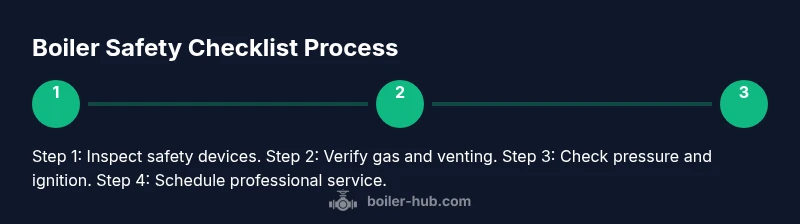
- Visually inspect the boiler room: Clear space, verify detectors, confirm access to shutoffs, and check for signs of leaks or corrosion. 2. Verify safety devices: Test CO detectors and smoke alarms; inspect the pressure relief valve for any sign of leakage. 3. Check fuel and venting: Ensure the gas line, shutoffs, and venting are intact and unobstructed. 4. Confirm operating indicators: Observe flame color, burner performance, and thermostat readings. 5. Record findings and plan action: Document issues and schedule professional service for any anomalies.
Seasonal and annual safety routines
Seasonal routines help align checks with periods of heavy boiler use (winter) or reduced operation (summer). A practical cadence can be:
- Monthly: Quick visual checks of detectors, visible gas lines for leaks, and dust accumulation around the vent.
- Quarterly: Test CO detectors, inspect flame, and review logs.
- Annually: Schedule a professional service to inspect burner pressure, vent integrity, heat exchanger condition, and safety interlocks.
Consistency matters more than intensity. If your building experiences higher loads, you may adjust frequency upward. Documenting each cycle improves reliability and supports resident or occupant safety.
Troubleshooting common warning signs and immediate actions
Be prepared to respond safely to warning signs. If you notice a strong gas odor, faint smell of rotten eggs, or any CO alarm activation, evacuate immediately and call emergency services if danger is suspected. Do not operate the boiler further; shut off the gas supply where safe and contact a licensed professional. Signs such as unusual humming noises, rumbling, or smoke also warrant professional assessment. Regularly testing detectors and sensors complements these actions and provides reassurance that the system is functioning properly.
When in doubt about a potential leak, avoid electrical switches in the boiler room, ventilate the space by opening doors, and move to a safe area while you call for help. This reduces exposure risk and ensures the situation is handled by trained personnel.
When to call a professional and what to expect
Even a well-maintained system benefits from an annual professional service. A licensed boiler technician will verify combustion efficiency, inspect heat exchangers for signs of fatigue, check venting integrity, and confirm safety interlocks are functioning properly. They may perform a combustion analysis, measure flue gases, and calibrate pressure readings with precise instruments. Expect a detailed report outlining findings and recommended actions. If you notice persistent issues—unexplained pressure fluctuations, loud noises, or repeated CO detector activations—schedule a service call promptly rather than delaying. Boiler safety is a shared responsibility that benefits from professional oversight.
Quick reference cheat sheet
- Test CO detectors monthly; replace as needed.
- Verify gas shutoff accessibility and operation.
- Inspect venting for blockages, damage, and corrosion.
- Ensure flame is blue and stable; address soot or yellow flames.
- Monitor boiler pressure and test relief valve regularly.
- Keep the boiler area clean, ventilated, and free of clutter.
- Log all checks and service visits for future reference.
- Schedule annual professional service and follow manufacturer guidance.
Final thoughts
A robust boiler safety checklist is a practical, repeatable process that protects occupants, preserves equipment, and reduces unexpected downtime. By combining regular visual checks with occasional professional testing, you can maintain safe, efficient operation year-round. The Boiler Hub team recommends integrating this checklist into your facility’s maintenance calendar for best results.
toolsMaterialsCountHint”:null},
toolsMaterials
Tools & Materials
- Gas leak detector(Place near boiler and gas lines; test monthly and replace if sensor degrades.)
- Non-contact voltage tester(Used to verify circuits before handling wiring.)
- Digital manometer or pressure gauge(Check boiler pressure; compare against manufacturer spec.)
- Approved CO detector(Place near boiler; test monthly and replace as per spec.)
- Flashlight(Sufficient illumination for dark corners and panel work.)
- Safety gloves(Protect hands from sharp edges and hot surfaces.)
- Safety glasses(Eye protection during inspections.)
- Ladder or stable step stool(Access high components safely.)
- Owner’s manual or service log(Reference for model-specific checks.)
- notebook and pen(Record readings and maintenance history.)
Steps
Estimated time: 60-75 minutes
- 1
Power down and isolate the boiler
Switch off the boiler at the disconnect switch or circuit breaker. If you must interact with gas lines, close the main gas shutoff only if safe and reachable. This prevents accidental ignition or electrical shocks while you inspect.
Tip: Always verify the boiler is de-energized before touching wiring. - 2
Test CO detectors and verify air supply
Turn on CO detectors and smoke alarms. If you have multiple detectors, test each one according to the manufacturer instructions. Ensure the room has adequate ventilation and that the intake and exhaust paths are clear.
Tip: CO detectors should be replaced every 5-7 years depending on the model. - 3
Inspect burner, flame color, and ignition
Visually inspect the burner area for soot, discoloration, or signs of corrosion. A healthy flame is blue with minimal yellow tips. If ignition is sluggish or flame is irregular, log the observation and arrange professional servicing.
Tip: Do not attempt a DIY combustion adjustment without a licensed technician. - 4
Check pressure relief valve and boiler pressure
Locate the pressure relief valve and verify it’s not leaking. Check the boiler’s pressure gauge to ensure readings stay within the recommended range for your model. If readings are outside spec, note it for the technician.
Tip: A trapped or over-pressurized system is dangerous; call for service if unsafe. - 5
Inspect venting and condensate drainage
Examine vent pipes for blockages, cracks, or corrosion. Ensure condensate drains freely to prevent water hammer or backflow risk. A blocked vent can cause dangerous gas buildup inside the unit.
Tip: Never block or seal vent openings during inspection. - 6
Document findings and plan next steps
Record all observations, readings, and any alarms. Schedule annual professional service and set reminders for future checks. Keep the log accessible for occupants and technicians.
Tip: A well-kept log helps track trends and plan preventive maintenance.
Questions & Answers
What is a boiler safety checklist?
A boiler safety checklist is a structured set of checks designed to verify that safety devices work, combustion is safe, and the boiler operates within its safe parameters. Regular use reduces risk of CO exposure, leaks, and outages.
A boiler safety checklist helps you verify safety devices, check for leaks, and ensure safe operation to prevent dangerous situations.
How often should I perform a boiler safety check?
For most homes, a quick monthly visual check plus a more thorough annual professional service covers core safety needs. High-use facilities may require more frequent testing.
Most homes should do a quick monthly check and an annual professional service.
What should I do if the CO detector goes off?
If a CO detector sounds, evacuate occupants, call emergency services if symptoms or readings are high, and ventilate the area. Do not re-enter until the area is declared safe by responders.
If CO alarms, evacuate and call emergency services; ventilate and wait for professionals.
Can I perform boiler maintenance myself?
Basic visual checks are safe, but most calibration, combustion adjustments, and parts replacement require a licensed technician to avoid risks of gas or electrical hazards.
Some basic checks are okay, but major maintenance should be done by a pro.
What are common signs that I need professional servicing?
Unusual noises, frequent cycling, soot around burners, or rising boiler pressure indicate a professional inspection is needed.
Unusual noises or smells are signs to call a professional.
Is a boiler with no power dangerous?
A boiler with no power can still pose risks if gas is leaking or controls fail. If in doubt, shut off all sources and contact a licensed technician.
No power issues can still be risky; when unsure, call a pro.
Watch Video
Key Points
- Perform monthly visual checks and detectors.
- Verify gas, venting, and pressure safety devices.
- Document findings to guide maintenance.
- Schedule annual professional servicing.
- Act immediately on alarms or abnormal readings.