Grant for Gas Boiler Replacement: What Homeowners Need to Know
Explore grants for gas boiler replacement, eligibility criteria, and step-by-step application guidance. A data-informed, homeowner-focused guide from Boiler Hub to reduce upgrade costs and boost energy efficiency.


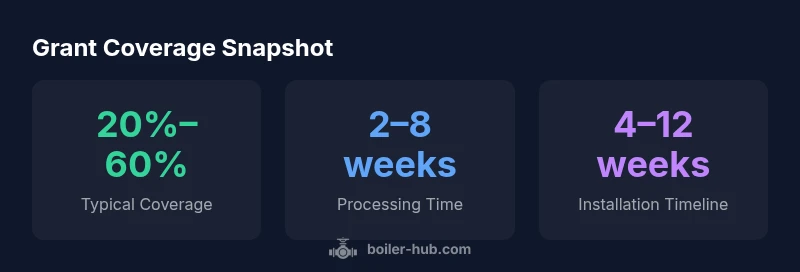
Grant for gas boiler replacement programs typically subsidize part of the upgrade cost by government, utility, or local authorities. Availability and amounts vary by region, but many programs cover a meaningful portion of the project. According to Boiler Hub, eligibility hinges on home ownership, energy assessments, and compliant installation plans, with straightforward steps to apply.
Understanding the landscape of grants for gas boiler replacement
Gas boiler replacement grants sit at the intersection of government energy policy, utility incentives, and local authority schemes. These programs are designed to help homeowners and facilities reduce energy use and greenhouse gas emissions by offsetting a portion of the upfront cost of upgrading to a more efficient, safer boiler. The landscape is dynamic: new grants emerge, rules change, and funding cycles shift depending on political priorities and fiscal health. For homeowners, this means that a grant that was available last year may be revised or replaced by a different program this year. The best way to navigate this field is to start with a precise energy plan and a clear, itemized upgrade proposal. As Boiler Hub Analysis, 2026 indicates, the most successful applicants present a strong, evidence-backed case for the upgrade, including a recent energy assessment and a detailed installation plan that demonstrates compliance with local safety and efficiency standards.
Types of grants and who can claim them
Grant programs fall into several broad categories, each with its own eligibility rules and funding mechanics. Government energy-efficiency grants often target upgrades that provide measurable emissions reductions and cost savings. Utility-based rebates or vouchers can be targeted to customers of the program’s provider and may offer tiered incentives based on boiler efficiency or fuel type. Local authority schemes frequently require you to own or occupy the property and may set income, local residency, or energy-efficiency criteria. Charitable programs and non-profit initiatives sometimes run pilot schemes, focusing on vulnerable households or underserved communities. Across these options, the goal remains the same: to offset part of the boiler replacement cost while ensuring the new unit meets or exceeds current efficiency standards. The Boiler Hub team notes that meeting the energy-performance expectations often strengthens an applicant’s case.
Eligibility criteria and documentation you’ll need
Eligibility will depend on the specific grant, but several common prerequisites appear across programs. You’ll typically need proof of property ownership, recent energy assessments (such as an EPC or equivalent), and a formal, itemized quote for the replacement work. Some programs require that the selected boiler meets minimum efficiency ratings and that a qualified installer is engaged. Documentation often includes a customer ledger or contract with the installer, a manufacturer’s specification sheet, and a plan showing compliance with safety regulations, including CO emission standards. It’s wise to prepare financial disclosures or proof of income if the program targets income-qualified applicants. Start gathering documents early, as delays often stem from missing paperwork.
Step-by-step: applying and maximizing your grant chances
Begin by identifying all potential sources in your region—government, utility, and local authorities. Compare each program’s coverage and eligibility requirements. Next, obtain two or more formal quotes for a compliant installation, and schedule an energy assessment if required. Prepare a simple, compelling grant narrative that explains energy savings, safety improvements, and long-term costs. Complete the online or paper application, attaching all requested documents, receipts, and quotes. After submission, monitor the process, respond promptly to requests for additional information, and keep a detailed log of correspondence. Finally, once approved, coordinate installation within the grant’s expected timing window to minimize delays and ensure compliance with the grant terms. Boiler Hub emphasizes keeping track of deadlines and maintaining copies of all submissions.
How grant coverage interacts with installation costs and financing
Grants rarely cover the entire project cost. Applicants should assume partial coverage and plan for the remaining balance through savings, a loan, or other financing options. A well-planned upgrade can maximize energy savings, reducing long-term operating costs and improving payback periods. When evaluating financing, compare interest rates, fees, and repayment terms to the guaranteed savings from the upgrade. Importantly, the installer’s competence matters: a higher-quality installation that meets grant requirements reduces the risk of post-installation issues that could jeopardize funding. Always confirm that the chosen contractor is eligible to participate in the grant program and that installation work aligns with the grant’s compliance criteria.
Regional variations and how to compare programs
Regional differences across countries and localities mean that eligibility, coverage, and timelines can vary dramatically. A side-by-side comparison checklist helps: program name, eligibility (property type, occupancy, income), coverage percentage or cap, required energy assessments, installation standards, documentation needs, and processing timelines. Additionally, confirm whether labor costs are included in the grant or if funding focuses on equipment only. Staying organized with a simple comparison table helps you avoid missing deadlines and ensures you select a program that aligns with your upgrade strategy. Boiler Hub recommends prioritizing programs with clear guidance, reasonable processing times, and strong support resources for applicants.
Typical grant programs for gas boiler replacement
| Program Type | Typical Coverage | Common Eligibility | Typical Processing Time |
|---|---|---|---|
| Government energy-efficiency grant | varies widely | Residence, property owner | 2–6 weeks |
| Utility rebate voucher | up to 40%–60% | Customer of the utility, homeowner | 2–8 weeks |
| Local authority scheme | up to £3,000 | Local criteria; property owner | 3–8 weeks |
Questions & Answers
What is a grant for gas boiler replacement?
A grant is a subsidy from government, utility, or local programs that helps cover part of the cost when upgrading to an energy-efficient gas boiler. Eligibility varies by program; consult official sources to confirm.
Grants help cover part of the cost; check your local programs.
Who can apply for these grants?
Homeowners and sometimes landlords may be eligible, depending on the program and property type. You typically need ownership proof, an energy assessment, and a compliant installation plan.
If you own the home and meet criteria, you can apply.
Do grants cover installation costs as well?
Some programs cover installation or labor costs in addition to the boiler unit, but many programs cap coverage to a percentage of the boiler or total project cost.
Some cover labor, others just the boiler; check the terms.
How do I apply and what documents are required?
Expect to provide proof of ownership, recent energy performance certificates, a formal quote, and details of the proposed boiler; some programs require a contractor plan.
You'll usually need ownership proof, quotes, and energy assessments.
What is the typical timeline from application to grant receipt?
Processing times vary; many programs take weeks from submission to approval, followed by scheduling installation.
Expect several weeks; plan accordingly.
How can Boiler Hub help me navigate grants?
We provide practical guidance, check eligibility, compare programs, and help prepare documentation to maximize your chances.
We’ll guide you through eligibility and paperwork.
“Grants for gas boiler replacement can significantly lower upfront costs, but eligibility and coverage differ by program. Start with a clear energy plan and gather documentation to maximize your chances.”
Key Points
- Start with a local program search before quoting a replacement.
- Collect energy assessments and multiple quotes to strengthen your case.
- Expect partial funding and plan for remaining costs in advance.
- Choose an installer eligible for the grant to ensure compliance.
- Track deadlines and keep copies of all submissions.