Boiler to Heat Pump: Upgrade Guide for Homes and Facilities
Discover how to transition from a boiler to a heat pump, including climate considerations, installation pathways, and maintenance strategies for homes and facilities.


This guide explains how to replace or pair a traditional boiler with a heat pump, covering compatibility checks, system sizing, installation pathways, and safety considerations. You’ll learn how to choose between an air-source or ground-source unit, plan a hybrid configuration if appropriate, and structure a practical timeline. Expect guidance on controls, radiators, and energy savings to inform your upgrade decision.
Why switch from boiler to heat pump
According to Boiler Hub, transitioning from a traditional boiler to a heat pump can improve comfort and energy efficiency, particularly in temperate climates and well-insulated spaces. A heat pump extracts ambient heat from air, ground, or water and uses electricity to deliver warmth via radiators or underfloor circuits. In winter, a heat pump may rely on electricity for backup heating, which remains essential in very cold periods. Hybrid systems pair a boiler with a heat pump to optimize efficiency across seasons, switching automatically based on outdoor temperature and indoor demand. For facilities, a properly designed hybrid can reduce peak electricity use and help stabilize energy costs over the lifetime of the equipment.
Key benefits include steady heat delivery, the potential for cooling in summer (with certain configurations), and the reduction of fossil-fuel combustion at the point of use. However, the switch is not automatic; it requires thoughtful planning: matching heat emitters to the heat pump's output, selecting low-GWP refrigerants where possible, and ensuring the building’s electrical service can handle the new load. Before deciding, conduct a comprehensive energy assessment, review existing control systems and thermostats, and consider climate-driven choices between air-source vs ground-source approaches. Boiler Hub emphasizes that even retrofit projects benefit from a well-structured plan focused on comfort, reliability, and long-term energy performance.
Heat pump configurations: air-source vs ground-source vs water-source
Heat pumps come in several configurations, each with its own strengths and constraints. Air-source heat pumps (ASHP) draw heat from outdoor air and are typically the most cost-effective retrofit option. Ground-source heat pumps (GSHP), also called geothermal, extract heat from buried loops or probes and usually offer higher efficiency, especially in colder climates, but require more upfront installation work. Water-source systems, though less common in residential retrofits, use nearby water bodies as a heat exchange source and can be highly efficient where space permits. When paired with a boiler, these systems can operate as hybrids, switching between heat pump and boiler to maintain comfort with optimal energy use. The choice depends on climate, property layout, available outdoor space, and how much disruption you can tolerate during installation. In many retrofits, a hybrid approach provides a practical balance: the heat pump covers the majority of space heating, while the boiler remains as a robust backup for peak cold snaps.
Consider emission targets, noise considerations for outdoor units, and the availability of skilled installers in your area. A properly designed hybrid system can deliver savings without sacrificing reliability, particularly in zones with seasonal temperature swings. Your decision should also factor in the building’s insulation quality, air sealing, and radiant distribution strategy (radiator vs underfloor), which influence how effectively the heat pump can meet demand. Climate-controlled comfort, energy costs, and long-term maintenance all hinge on selecting the right configuration for your specific conditions.
Assessing your current boiler and home energy profile
The first step is a thorough assessment of your current setup and energy use. Review your boiler’s age, efficiency rating, and any recent service history. Inspect the heating distribution system (radiators, underfloor heating, or baseboard units) to see if they can effectively operate at the lower temperatures typical of modern heat pumps. Evaluate the home’s insulation, air leakage, and window performance, since better envelope performance reduces the required heat output. Collect utility bills from the past year to understand seasonal energy patterns and peak demand. Do you have a multi-zone system or a single, open-plan space? How quickly do rooms reach comfort, and is there a noticeable temperature gradient between floors? These insights help determine whether a hybrid approach or a full replacement makes the most sense. Also plan for electrical upgrades: heat pumps demand stable, adequate power and a compatible control strategy. In short, a precise baseline helps you size the system properly and avoid oversized or undersized equipment that can erode comfort and efficiency.
Sizing, compatibility, and system integration
Sizing a heat pump correctly is critical for comfort and efficiency. Oversized systems heat spaces too quickly and turn on and off excessively, causing temperature swings and wear. Undersized units struggle to meet demand during the coldest days. Work with a qualified installer to perform a heat-load calculation for your property, considering outdoor design temperatures, radiation type, and the thermal mass of walls and floors. Compatibility with existing radiators or underfloor heating matters: many older radiators operate best at higher temperatures, which may require an upgraded radiator or a hydraulic set of controls to allow for lower supply temperatures from the heat pump. Control integration is another key factor: smart thermostats, zoning, and weather-compensation strategies should align with both the heat pump’s capabilities and the boiler’s backup role in a hybrid system. If you plan to retain the boiler, ensure appropriate interlocks and anti-backflow protections, plus safe sequencing so the heat pump takes the lead when conditions permit and the boiler steps in when demand spikes or outdoor temperatures drop.
Installation pathways and sequencing
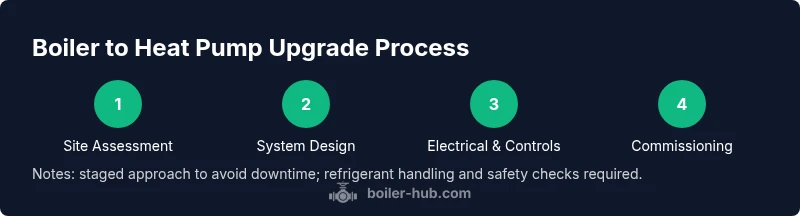
Retrofits can take several weeks and often involve multiple trades. Your installer will typically stage work from site prep to commissioning. Common steps include removing or repurposing the old boiler, installing the outdoor unit (for ASHP) or ground-loop connections (for GSHP), routing refrigerant lines, upgrading electrical service or controls, and integrating with existing radiators or underfloor circuits. If retaining the boiler, the installer will implement a hydraulic interlock or relay to prioritize the heat pump during milder weather and switch to the boiler when needed. Permits, indoor air quality considerations, and space planning (noise, vibration, and unit location) should be addressed early. Expect a few days of on-site work, plus possible relocation or minor modifications to vents, condensate drainage, or electrical panels. The objective is a seamless transition where the majority of heating is delivered by the heat pump, with the boiler serving as a reliable backup during extreme cold or during system defrost cycles.
Costs, incentives, and maintenance
Upfront costs for a boiler-to-heat-pump upgrade can vary widely based on climate, system type, home size, and retrofit complexity. In general, a retrofit can represent a significant investment, but many households and facilities experience meaningful energy cost reductions over time. Maintenance shifts from annual boiler servicing to regular heat-pump checks, refrigerant integrity, and controls calibration, with an emphasis on yearly professional inspection. Government or utility incentives may reduce the net cost, and incentives often depend on your location and program availability in 2026. Engage a qualified installer early to understand eligible credits, required permits, and maintenance plans. A well-planned project with a hybrid approach can deliver reliability, comfort, and improved efficiency for many years to come.
Upgrade planning and next steps
With climate resilience and energy efficiency under consideration, the boiler-to-heat-pump upgrade represents a meaningful shift in how buildings are heated. Start with a site assessment, obtain multiple quotes, and ask for performance data specific to your climate. Prioritize installers who provide clear sequencing plans, grid-ready electrical work, and robust controls. Ensure a credible warranty covers heat pump internals, refrigerant lines, and the boiler-backup arrangement. Finally, set a clear maintenance schedule and monitoring plan to verify energy savings over the first year. This approach helps you realize the full potential of a modern heating system while protecting comfort and reliability across the heating seasons.
Key considerations for owners
- Hybrid configurations can reduce peak demand while preserving boiler reliability.
- Proper sizing and control integration are essential for comfort and efficiency.
- Envelope improvements (insulation, air sealing) amplify heat-pump performance.
- Maintenance and professional inspections are vital for long-term performance.
Tools & Materials
- Digital multimeter(Check electrical circuits and voltage supply)
- Clamp meter(Measure current draw on the heat pump circuit)
- Voltage tester(Verify power lines before wiring work)
- Wire stripper/cutter(Prepare wiring for controls and connections)
- Leak detector(Check refrigerant lines for leaks)
- Torque screwdriver(Tighten connections to manufacturer specs)
- Manufacturer installation manuals(Refer to model-specific steps and safety specs)
Steps
Estimated time: 4-12 weeks
- 1
Assess goals and site readiness
Document heating needs, space for equipment, and potential impacts on occupants. Review current energy use and comfort gaps to determine whether a hybrid or full upgrade best fits the project. Assemble a short list of must-haves (backup heat, quiet operation, or zoning) to guide the design.
Tip: Collect last 12 months of utility bills to understand seasonal energy patterns. - 2
Engage a qualified installer
Ask for multiple quotes and verify credentials, permits, and warranty coverage. Ensure the contractor can handle the control integration and any required electrical upgrades. Request references and a written plan with milestones.
Tip: Check that the installer can provide a complete commissioning plan and post-install maintenance schedule. - 3
Select heat pump type and capacity
Choose between air-source, ground-source, or water-source based on climate, available space, and budget. Have the installer perform a heat-load calculation and verify that the selected unit can meet your design temperature with the existing emitters.
Tip: Ask for performance data specific to your climate and a COP rating at typical outdoor temperatures. - 4
Evaluate electrical and controls readiness
Assess service panel capacity, breaker sizes, and wiring for new equipment. Plan for a smart thermostat and zoning, plus any required interlocks with the boiler to enable conditional switching.
Tip: Confirm if electrical service upgrades are required and obtain a firm quotation before work begins. - 5
Prepare space and ventilation
Identify outdoor unit location with adequate clearance and minimal noise impact. Ensure indoor spaces can accommodate piping, condensate drainage, and emergency shutoffs without compromising safety.
Tip: Keep outdoor unit access clear of vegetation and debris to maintain efficiency. - 6
Install heat pump and integrate with boiler
Follow the manufacturer’s installation instructions for both the heat pump and any boiler integration hardware. Establish correct refrigerant routing, electrical connections, and control sequencing so the heat pump leads when conditions permit.
Tip: Prioritize leak testing and trap-free condensate drainage during commissioning. - 7
Commission and test the system
Run a full system test across heating and cooling modes, verify sensor signals, and confirm performance at design outdoor temperatures. Document baseline energy usage and ensure safe backup operation for winter.
Tip: Record all test results and adjust controls for stable indoor temperatures before occupancy switches. - 8
Plan maintenance and ongoing monitoring
Schedule annual professional checks for refrigerant integrity, electrical safety, and controls calibration. Set up a monitoring routine to track energy consumption and comfort metrics over the first heating season.
Tip: Create reminders for filter changes, refrigerant checks, and system recalibration.
Questions & Answers
What is the difference between a boiler replacement and a hybrid heat pump system?
A hybrid system combines a heat pump with the existing boiler, prioritizing the heat pump when outdoor temperatures are favorable and using the boiler as a backup during peak demand or very cold conditions. A full boiler replacement removes the boiler from service and relies on the heat pump for heating much of the season.
A hybrid uses both heat pump and boiler, switching automatically to save energy, while a full replacement relies on the heat pump alone.
Can a heat pump work well in cold climates?
Air-source heat pumps perform well in many cold climates but may require backup heat or a hybrid configuration for extremely cold days. Ground-source systems maintain efficiency more consistently across seasons but have higher upfront costs.
Heat pumps work well in many cold climates, especially when paired with a backup heater or a hybrid system.
Do I need new radiators or pipework?
Most existing radiators can work with lower-temperature heat pumps, but some setups may benefit from larger radiators or underfloor heating to improve heat delivery at reduced temperatures. You may also need to adjust piping for optimal flow and balance.
Your radiators might need upgrading or rebalancing to work efficiently with a heat pump.
How long does installation take?
A typical retrofit can take several days to a few weeks, depending on system complexity, permits, and space constraints. Scheduling should include a commissioning window to verify performance.
Expect several days to a few weeks for installation and testing, depending on site specifics.
Are there incentives or rebates available?
Many regions offer incentives for heat-pump upgrades, especially when paired with energy-efficiency improvements. Check local programs, utility rebates, and federal or state incentives for eligible projects in 2026.
There are often local or federal incentives for heat-pump upgrades; check current programs in your area.
What maintenance does a heat pump require?
Heat pumps require annual professional servicing, refrigerant checks, and thermostat control calibration. Regular filter changes and outdoor unit cleanliness also help maintain efficiency.
Annual professional checks plus regular cleaning and filter changes keep a heat pump performing well.
Watch Video
Key Points
- Assess site readiness before starting
- Choose the right heat pump type for climate
- Plan for hybrid if needed to balance comfort and cost
- Work with a qualified installer for sizing and controls
- Explore incentives and set up a maintenance schedule