How to Convert a Boiler to a Forced Air System: A Step-by-Step Guide
A practical, step-by-step guide to converting a boiler heating system to a forced-air setup, covering planning, ductwork, permits, and safety from Boiler Hub.


A boiler to forced air conversion is a home heating upgrade that replaces a boiler-based warm-air system with a gas furnace or electric air handler that distributes heat through ducts. It can improve comfort, speed of heat delivery, and thermostat control, but it requires careful design, ductwork assessment, and professional installation to ensure venting, emissions, and safety standards are met. Expect permitting, zoning checks, and a multi-day install.
What is a boiler to forced air conversion and why consider it?
A boiler-to-forced-air conversion replaces a boiler’s radiant or steam/very low-mass heat delivery with a ducted warm-air system powered by a furnace or air handler. The change can offer faster warming, simpler zoning, and more precise thermostat control. According to Boiler Hub, a well-planned conversion can improve home comfort when the design accounts for existing duct runs, insulation, and ventilation needs. This process isn’t a trivial swap; it involves rethinking venting paths, refrigerant and combustion safety clearances, and structural space for components. Homeowners should expect a design phase, professional installation, and potential upgrades to electrical service and gas lines if required.
When to consider converting a boiler to forced air
Conversions make sense when several conditions align: the home has accessible, ducted space, current heating costs are high due to inefficiencies, or there’s a desire for faster heat delivery and better zoning. Climate matters; in some regions, the efficiency gains from modern furnaces and properly sized ducts can offset initial costs over time. Boiler Hub analysis suggests that well-executed conversions can offer energy savings and improved comfort, particularly when air distribution is balanced and the system is correctly sized. If your home relies heavily on baseboard radiators or radiator heat, a conversion can reduce maintenance complexity and improve air filtration options.
How heat delivery differs: boiler vs forced-air systems
A boiler typically radiates heat through pipes or radiators, warming spaces evenly but sometimes slowly and with uneven room temperatures. A forced-air system pushes warm air through ducts to deliver heat quickly to rooms that need it, but it can also create air movement and noise if ducts are not well designed. Properly designed ductwork minimizes pressure loss and ensures balanced airflow to avoid cold spots. In addition, a modern furnace offers high-efficiency operation and can integrate with smart thermostats, variable-speed blowers, and air filtration upgrades for better indoor air quality.
Design considerations and system options
There are several paths to conversion. You might replace the boiler with a gas furnace and reuse or redesign the existing ductwork, or install a separated air-handling system that connects to existing ducts. Electric air handlers are an option in some climates or retrofit scenarios. A careful design phase will determine equipment sizing (BTU capacity), duct routing, and the best placement for the air handler and return air paths. Consider future needs, such as adding zoning, upgrading insulation, or pairing with a heat pump for hybrid operation.
Ductwork: sizing, sealing, and balancing
Ducts are the backbone of a successful conversion. If they’re undersized, you’ll lose efficiency and comfort; if they’re leaky, you’ll waste energy and introduce drafts. A professional should perform duct sizing per industry standards and test for leaks with pressure tests. Sealing and insulating accessible ducts reduces heat loss, while balancing returns and supply registers prevents hotspots and ensures even temperatures across rooms.
Costs, financing, and ROI considerations
Costs vary based on climate, house size, current duct condition, and equipment choice. A typical conversion involves equipment, ductwork modifications, permits, and professional installation. Financing options may include energy-efficiency rebates or low-interest loans. While upfront costs can be significant, improvements in comfort, control, and potentially energy use can offer favorable long-term returns, especially in older homes with inefficient distribution.
Permits, codes, and safety considerations
Conversions require compliance with local codes, ventilation standards, and gas safety rules. A licensed HVAC contractor should verify venting clearances, combustion safety, and electrical service adequacy. Permits may be required for changes to gas lines, electrical panels, or ductwork alterations. Keeping a detailed record of inspections helps ensure future resale and safety.
Installation timeline and what to expect during the process
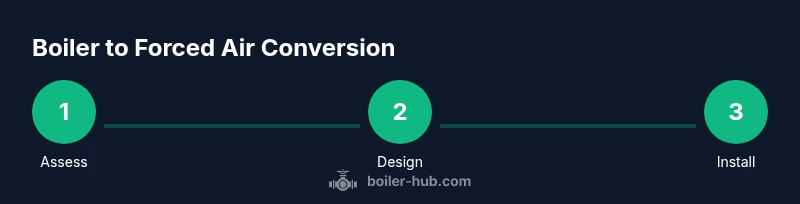
A typical project spans design, permitting, material procurement, and installation. Expect a multi-day to multi-week timeline depending on house size and complexity, especially if ductwork has to be run through attics, crawlspaces, or finished walls. Home disruption is common during installation, including temporary heating adjustments and access to mechanical rooms. A well-coordinated team minimizes downtime and ensures safety checks at each milestone.
Maintenance after conversion: keeping the system efficient
Maintenance after a conversion focuses on filter changes, blower and motor checks, and annual professional inspections. Clean ducts, sealed seams, and balanced airflow contribute to steady performance and improved air quality. Regular tune-ups help catch issues early and preserve efficiency gains over time.
Choosing a contractor and getting quotes
Select an HVAC contractor with proven experience in boiler conversions, solid licensing, and clear written estimates. Request references, verify warranties, and compare equipment options from reputable manufacturers. A thorough quote should detail equipment, ductwork changes, permits, labor, contingencies, and a clear project timeline.
Real-world scenario: what to expect in a typical project
In a representative project, design and planning take 1–2 weeks, permits are obtained within 1–3 weeks, and installation runs 3–7 days, depending on home layout. You may need to adjust thermostat programming and zone controls after the install. The Boiler Hub team recommends scheduling a post-install inspection to confirm performance targets and to address any air-quality concerns promptly.
Tools & Materials
- Gas furnace or electric air handler(Choose size to match heat load and existing ductwork)
- Ductwork materials and fittings(New runs, trunk lines, and supply/return branches as needed)
- Air distribution components(Diffusers, grilles, and balancing dampers)
- Thermostat and zoning controls(Smart thermostat with potential zoning integration)
- Ventilation and combustion safety equipment(Gas line upgrades, vent pipes, and CO detectors as required)
- Electrical service upgrade (if needed)(Ensure panel capacity for new equipment)
- Tools kit for installation(Wrenches, sheet metal screws, foil tape, duct mastic, drill, snips)
- Insulation and air sealing materials(Seal attic and crawlspace penetrations to maximize efficiency)
Steps
Estimated time: 4-6 weeks
- 1
Assess current system and goals
Evaluate the existing boiler setup, insulation quality, and duct accessibility. Define comfort targets, budget, and whether you want zoning or smart controls. This step sets the foundation for sizing and layout decisions.
Tip: Document room-by-room temperature issues to guide duct routing. - 2
Size the new equipment appropriately
A proper heat-load calculation ensures the new furnace or air handler is not oversized or undersized. Oversizing can cause short cycling and humidity issues; undersizing leads to uneven comfort.
Tip: Use one of the recognized load calculation methods or hire an HVAC pro to perform Manual J sizing. - 3
Plan ductwork and air distribution
Map out duct routes, select appropriate diffuser locations, and plan for return air paths. Ensure duct runs minimize friction losses and thermal losses.
Tip: Prioritize sealed, properly insulated ducts to maximize efficiency. - 4
Secure permits and finalize the design
Coordinate with local authorities on permits for changes to gas lines, electrical work, and duct alterations. A signed design and approved permits reduce inspection delays.
Tip: Ask your contractor for a complete permit package and inspection plan. - 5
Prepare the installation site
Clear the mechanical room or closet, ensure access to space for the air handler, furnace, and ductwork. Verify electrical outlets and gas shutoffs are accessible.
Tip: Create a staging area to keep components organized and safe. - 6
Install the furnace/air handler and ducts
Mount the new equipment, run ducts, connect gas and electrical utilities, and install venting. Use mastic sealant and duct tape as recommended by code and manufacturer.
Tip: Follow manufacturer clearances and local venting rules strictly. - 7
Integrate controls and balance airflow
Install thermostat and zoning controls; balance supply and return air to equalize room temperatures. Program scheduling and test different settings.
Tip: Use a blower with variable speed to improve comfort and humidity control. - 8
Commission and test the system
Perform start-up checks, verify ignition safety, CO detectors, and airflow. Run a full heat cycle, monitor temperatures, and address any noise or leaks.
Tip: Keep a log of test results and compensate for any imbalances.
Questions & Answers
Do I need permits to convert from boiler to forced-air heating?
Yes. Most jurisdictions require permits for changes to gas lines, electrical wiring, and duct installations. A licensed HVAC contractor can guide you through the permitting process and help ensure inspections are scheduled correctly.
Yes. Permits are usually required for gas, electrical, and duct work, and your installer will handle the process with local authorities.
Is converting always worth it, or are there better options?
Conversion can offer comfort, control, and efficiency improvements, especially when existing ducts are in good condition. In some cases, preserving the boiler with upgrades like zone controls and a modern boiler can be more cost-effective.
Conversions can be beneficial when ducts are sound and climate demand supports forced-air efficiency, but sometimes upgrades to the boiler or hybrid systems are preferable.
How long does installation typically take?
Timeline varies with home size and complexity. Expect a design phase, permitting, and 3–7 days of on-site work, plus potential delays for duct routing in finished spaces.
Most projects take a few days to a couple of weeks depending on the layout and permits.
Will I lose hot water capacity after converting to forced air?
A conversion primarily changes space heating; domestic hot water capacity is generally unaffected unless the project includes a boiler-based hot water system replacement. Verify with your installer how water heating is integrated.
Hot water supply usually remains the same unless your system combined heat and power changes.
Can I keep some boiler elements in a hybrid setup?
Yes, some homes use a hybrid approach that combines a furnace with a boiler for baseboard zones or radiant areas. This approach can optimize comfort while preserving existing investments.
A hybrid can balance efficiency and comfort by leveraging both systems where they perform best.
How do I know if my ductwork is adequate for conversion?
A professional should assess duct size, leakage, and routing. Look for signs of leaks, poor airflow, or cold spots, which indicate the need for sealing or rerouting.
A duct assessment will determine whether you need sealing or replacement to ensure good airflow.
Watch Video
Key Points
- Plan carefully: proper sizing and duct design are essential.
- Expect permits and professional installation for safety and compliance.
- Duct sealing and balancing drive comfort and efficiency.
- Maintenance after conversion preserves performance and air quality.
- Choose an experienced contractor with clear quotes and warranties.