What Boiler for Underfloor Heating: A Practical Homeowner Guide
Learn how to choose the right boiler for underfloor heating, covering sizing, fuel options, and compatibility. This guide explains insulation, flow temperatures, and installation steps to maximize comfort and efficiency.


In underfloor heating setups, the right boiler is sized to meet the heat load and works with your floor heating manifold. You’ll prioritize a condensing, modulating boiler with compatible flow temperature and sufficient output, plus good insulation. This guide helps you determine boiler type, size, and installation considerations.
Understanding the relationship between boilers and underfloor heating
Underfloor heating (UFH) delivers warmth through embedded pipes or mats, circulating water at modest temperatures. The boiler you choose must be capable of delivering sufficient heat at those lower water temperatures while keeping energy efficiency high. In practice this means prioritizing condensing, modulating boilers, and ensuring good flow temperature control. According to Boiler Hub, accurate heat-load assessment and system design are essential for comfort and efficiency in radiant floor setups. By aligning boiler output with UFH needs, you avoid oversizing that wastes fuel and undersizing that leaves rooms cold. This section explains the core concepts and how they influence boiler selection.
How underfloor heating changes boiler requirements
UFH runs at much lower water temperatures than conventional radiators. That means boilers need to deliver consistent heat at lower flow temperatures, with precise control to prevent overheating floors. A well-matched boiler works with a dedicated mixing valve or a weather-compensated control to maintain target floor temperatures across zones. Condensing boilers excel here because they reclaim energy from flue gases, improving efficiency when operating at lower temperatures. The goal is a system where boiler output rises or falls with demand without compromising comfort. In practice, this requires proper insulation, accurate zoning, and a compatible controller setup.
Sizing the boiler for your underfloor system
Sizing UFH with a boiler begins with understanding the heat load of the space and the design temperature of the floor. You’ll translate the heat-demand into a boiler output in kilowatts (kW) that can be modulated to match demand. A correctly sized boiler avoids constant on/off cycling and maintains a stable floor temperature. Factors include room size, ceiling height, window area, occupancy, and how well the space is insulated. In line with Boiler Hub analysis, focus on compatibility between the boiler’s output range and the UFH circuit requirements, along with control strategies that keep the system balanced across zones. This section helps you think through the sizing logic and what information a installer will request.
Boiler types: system, heat-only, or combi with UFH
For most UFH installations, a system boiler or a heat-only boiler paired with a hot-water store is common because it provides ample flow to multiple floor circuits. Combi boilers can work in small, single-zone setups where space is limited and flow demands are modest, but they may struggle to supply rapid, multiple-zone heat if hot water demand is high. The choice depends on your hot water needs, the number of UFH circuits, and the available space for a tank or cylinder. The aim is a reliable heat source that can deliver steady low-temperature water with robust modulation. This section compares the realities of each boiler type so you can pick what fits your home.
Key components to pair with your boiler
A successful UFH installation hinges on more than the boiler itself. You’ll typically need:
- A dedicated UFH manifold with zone valves and balancing
- A tempering or mixing valve to limit flow temperature to floors
- A compatible circulating pump with appropriate head
- A weather-compensation or room thermostat network for multi-zone control
- An expansion vessel and pressure/priming provisions Choosing components that match the boiler’s output range and your zoning plan is essential for comfort and efficiency. This section maps out the essential kit and why each piece matters.
Insulation and floor build-up impact on boiler size
Insulation quality and floor structure directly affect how much heat the UFH system loses and how much the boiler must produce. Thicker insulation, lower thermal losses, and well-sealed floors enable a smaller boiler and longer cycles at lower temperatures, which is ideal for condensing units. Conversely, poor insulation can require higher outputs and reduce efficiency. This section explains how to interpret U-values, slab construction, and radiant floor materials when sizing a boiler.
Quick sizing method for homeowners (non-technical)
If you don’t have a full heat-loss study, consult with a qualified installer who can perform a load calculation and sizing check. A practical approach is to list space types (living areas, bathrooms, bedrooms), note insulation levels, and outline your hot-water needs. The installer can translate this into a target boiler output range and determine whether a system or heat-only solution best fits your UFH layout. This section provides a practical, non-technical path to an educated initial estimate while emphasizing professional verification.
Installation considerations and professional involvement
UFH and boiler installation should be performed by a qualified professional. Look for heating engineers with experience in radiant floors, and verify that any gas or oil boiler work complies with local safety standards. A pre-install survey should cover leak checks, methane or gas safety considerations, electrical isolation, venting, and commissioning procedures. Proper documentation and warranty coverage depend on a compliant, inspected installation. This section outlines the typical steps and safety checks a pro will perform.
Maintenance, checks, and energy savings
Regular service keeps UFH boilers running efficiently. Schedule annual or biannual checks for gas leaks, burner performance, and boiler modulation range. Verify zoning controls, thermostat calibration, and pump operation. Small maintenance actions—like bleeding air from loops or ensuring flow rates remain balanced—translate into steady comfort and lower energy bills. This section emphasizes practical maintenance routines and the energy-saving mindset that accompanies a well-tuned system.
Getting quotes and planning the project
Before engaging a contractor, prepare your space profile, existing insulation data, and desired comfort outcomes. Ask for load calculations, know-your-outputs, and a detailed breakdown of components and labor. Compare proposals for boiler type, warranty terms, and service packages. This section provides a practical checklist to help you choose a reputable installer and navigate the procurement process confidently.
Tools & Materials
- Floor plans and heat-loss data(Include room names, sizes, ceiling heights, and window areas for accurate heat load estimates.)
- Insulation specification (R-value/U-value)(Current insulation levels per area and any recent upgrades.)
- Boiler datasheet and UFH manifold compatibility(Model numbers, connection sizes, and flow/return details.)
- Underfloor pipe layout drawings(Circuits, zones, and looping configuration.)
- General measurement tools and safety gear(Tape measure, level, personal protective equipment, and basic hand tools.)
- Sizing calculator or professional software (optional)(Useful for more precise calculations but not essential for initial planning.)
Steps
Estimated time: 2-4 days depending on project scope
- 1
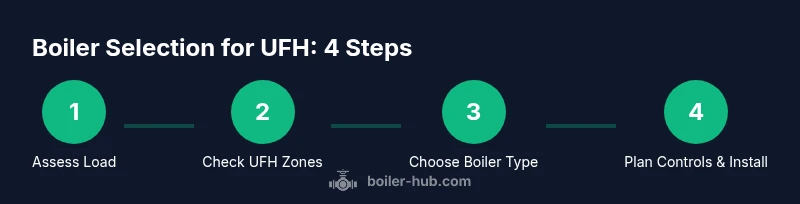
Assess space and heat load
Begin with a room-by-room assessment of how the space is used, its orientation, and any heat sources. Gather room dimensions, window areas, and ceiling height. This data informs the rough heat demand and guides boiler selection.
Tip: Document assumptions about occupancy and shade; these influence heat loss. - 2
Check insulation and floor construction
Review wall and ceiling insulation, floor insulation, and the build-up over underfloor pipes. Better insulation lowers heat losses and allows a smaller boiler to meet comfort targets, especially at lower UFH water temperatures.
Tip: Improved insulation often reduces required boiler output more than you’d expect. - 3
Decide on boiler type and approximate output
Choose between system/heat-only or combi based on hot-water needs and space. Ensure the boiler’s modulation range can cover UFH operating temperatures without excessive cycling.
Tip: Submit your plan to a qualified installer to confirm compatibility with UFH circuits. - 4
Evaluate UFH components and zoning
Map zones for comfort (living areas, bedrooms) and verify that the manifold, pumps, and mixing valve are sized for the planned boiler output.
Tip: Balanced zoning prevents hot spots and cold rooms. - 5
Plan pipe layout and manifolds
Finalize pipe routing, loop lengths, and manifold placement. Prepare drawings to share with the installer so they can assess flow balance and pump requirements.
Tip: Keep loops reasonably uniform to simplify balancing. - 6
Obtain quotes and verify qualifications
Request heat-loss calculations, warranty terms, and commissioning procedures. Verify contractor credentials and safety certifications.
Tip: Ask for a written commissioning checklist to ensure proper startup. - 7
Prepare for installation safety and energy checks
Create safe access to gas/electric connections, ensure ventilation, and plan for potential disruption during work. Schedule a post-installation test and safety sign-off.
Tip: Ensure gas-safe or qualified professionals perform hazardous tasks. - 8
Install boiler, UFH controls, and piping
Install the boiler in a ventilated area, connect UFH circuits to the manifold, install the mixing valve, and wire zoning thermostats. Follow manufacturer instructions for flow temperature limits.
Tip: Avoid bending pipes too tightly to prevent future leaks. - 9
Commission, test, and balance systems
Run the system to check water temperatures, pressure, and flow rates. Balance zones for even heat distribution and confirm safe operation.
Tip: Document test results and adjust settings for comfort and efficiency. - 10
Document results and plan maintenance
Record system data, include boiler model, serial, and settings. Schedule future maintenance to sustain efficiency and reliability.
Tip: Set reminders for annual service and check-ups.
Questions & Answers
Can I use a combi boiler with underfloor heating?
Yes, but it’s more common for smaller UFH setups or single-zone layouts. A combi must have enough flow capacity to supply hot water and UFH without sacrificing comfort. In larger or multi-zone systems, a system or heat-only boiler with a storage option is typically preferred.
A combi can work in compact UFH setups, but for multiple zones, a system boiler is usually better.
What flow temperature should UFH run at?
UFH typically operates at lower water temperatures than radiators. Your installer will set a target flow temperature that keeps floors warm without overheating. This is usually achieved with a mixing valve and intelligent controls.
UFH uses lower temperatures; your system should be tuned with a mixing valve and smart controls to keep floors comfortable.
Do I need a hot water cylinder with UFH?
Not always. If you choose a system boiler with a separate store or a heat-only setup, a cylinder can improve hot-water availability and system efficiency. If you rely on a combi boiler and only a small UFH installation, you may not need a cylinder.
A cylinder isn’t always required, but it can improve hot-water readiness in many UFH setups.
Is natural gas the best option for UFH?
Gas-fired boilers are common due to wide availability and efficiency, but fuel choice depends on your property and local energy infrastructure. Electric boilers are an option in some homes but may have higher running costs.
Gas boilers are common and efficient where available; electric options exist but cost more to run in many cases.
How long does installation typically take?
Depending on system complexity and zone count, installation can take from a couple of days to a week. A single-zone UFH with a new boiler may be on the shorter end, while multi-zone projects take longer.
Most UFH boiler installs take a few days to a week, depending on complexity.
What maintenance is required for UFH boilers?
Schedule annual service for the boiler and system checks for pumps, valves, and controls. Regular inspection of insulation, manifolds, and wiring helps sustain efficiency and comfort.
Annual boiler service plus periodic checks of pumps and controls keeps UFH running smoothly.
Watch Video
Key Points
- Size the boiler to UFH heat load, not radiator-based assumptions
- Prioritize condensing, modulating boilers for best efficiency
- Ensure proper mixing, zoning, and control for even floors
- Insulation and floor construction dramatically affect boiler size and performance