Do Boilers Use a Lot of Electricity? A Practical Guide
Discover how much electricity boilers actually use, what components drive power draw, and practical steps to reduce electrical costs without sacrificing home comfort.


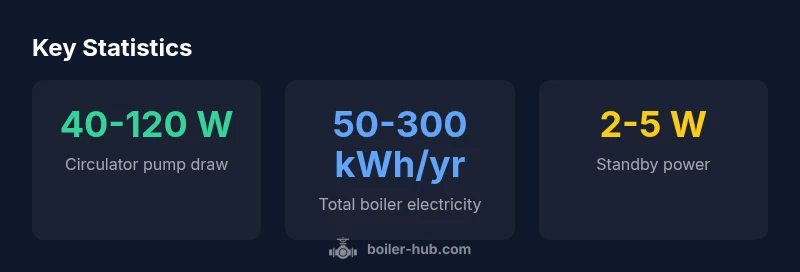
Do boilers use a lot of electricity? Not typically. In most homes, boiler-related electricity accounts for a small share of total energy use, mainly powering the circulating pump, motorized valves, ignition, and controls. Typical annual electricity for a residential boiler system ranges from a few dozen to a few hundred kilowatt-hours, depending on boiler type, run-time, and thermostat settings. Heating energy remains much larger than electrical use.
How much electricity do boilers typically use?
Do boilers use a lot of electricity? The short answer is: not usually. Electricity in a boiler system mostly powers the circulating pump, fuel valve actuators, ignition and safety controls, and the thermostat interface. While heating energy dwarfs electricity in most homes, the electrical load still matters for comfort, response time, and the annual running costs. In Boiler Hub's analysis, typical residential boiler electricity ranges from a few dozen to a few hundred kilowatt-hours per year, depending on boiler type, run-time, and how aggressively the system is controlled. The key takeaway is that electricity is a secondary cost to heating fuel, but it can be optimized with the right components and settings.
What components actually consume electricity in a boiler system?
Most of the electrical draw comes from four main areas:
- Circulator pumps: Move hot water through radiators or underfloor coils. They are often the single largest electrical load in a heating system.
- Control systems and sensors: Programmable thermostats, zone valves, and safety sensors require continuous or periodic power.
- Ignition systems (gas boilers): Electric ignition and flame sensors consume energy during start-up and maintenance checks.
- Fans or condensate pumps (in some condensing or high-efficiency models): These add small, occasional loads during operation.
Understanding which parts run and when helps homeowners target savings. In many setups, upgrading to a variable-speed pump and optimizing control sequences yields noticeable reductions in annual electricity use.
Boiler types and their electrical footprints
Gas-fired boilers, condensing boilers, combi boilers, and electric boilers each have different electrical profiles. Gas boilers rely on an ignition system, a pump, and zone valves, while condensing models add efficiency-enhancing controls and sometimes a more sophisticated fan. Combi boilers, with fewer storage tanks but more frequent circulation during short heating cycles, can show different seasonal draw patterns. Electric boilers, which actually generate heat using electricity, devote more of their energy budget to electric resistance elements alongside pumps and controls. In all cases, the majority of energy cost still comes from the heat source fuel, not electricity. The exact footprint depends on efficiency, pump type, cycle length, thermostat programming, and how well the system is balanced.
How to estimate electricity use in your home
To estimate your boiler's electrical load, start with the pump’s rated wattage and multiply by annual operating hours. Then add the standby power of the control electronics and the peak power during ignition or activation; if you have a smart thermostat, consider its continuous draw in standby mode. You can refine estimates by checking your monthly electricity bill during the heating season and correlating with your boiler’s run-time, or use a plug-in energy monitor on the circulator or power feed to the boiler. This approach yields a practical, home-specific projection rather than relying on generic numbers.
Reducing electricity use without compromising comfort
Several practical steps help lower boiler electricity consumption. First, upgrade to a high-efficiency, variable-speed circulator pump where appropriate, as it can dramatically cut pump energy use during partial loads. Second, ensure the boiler and controls are correctly sized for your home; oversized systems cycle more and waste electricity on start-ups. Third, use thermostatic radiator controls and zoning so heat is produced only where and when needed. Fourth, consider modern, energy-saving controls or smart thermostats that optimize on/off cycling. Finally, schedule regular boiler maintenance; clean burners, air adjustments, and seal checks ensure the system runs with minimal electrical waste.
Myths and misconceptions about boiler electricity
A common myth is that boilers always draw a lot of electricity during every heating cycle. In reality, most electricity is used for pumps and controls, and the load is highly dependent on run-time, boiler type, and system design. Another misconception is that electric boilers are always cheaper to run; this depends on electricity prices, fuel costs, and local climate. A thoughtful comparison of local energy prices and system efficiency is essential before choosing a boiler type.
Estimated electricity use by boiler components for typical residential systems
| Component | Typical electricity use | Notes |
|---|---|---|
| Circulator pump | 40-120 W continuously | Major driver of electrical load during heating |
| Ignition & electronics | Peak 5-50 W; standby 2-5 W | Needed for safe operation and control |
| Thermostats/valves | 5-15 W | Depends on system complexity and zones |
| Standby/monitoring | 1-3 W | Low but constant background load |
Questions & Answers
Do boilers use more electricity in winter?
Electricity use can rise in winter due to longer heating cycles, but the boiler’s electrical draw remains a relatively small portion of total energy. Proper controls and efficient pumps help keep this in check.
Yes, electricity may rise a bit in winter due to longer heating cycles, but it's still a small part of your total energy use.
Is a gas boiler more electricity-hungry than an electric boiler?
Gas boilers burn fuel to produce heat; electricity predominantly powers pumps and controls. Electric boilers use electricity for heat, so their electricity use can be higher, but overall costs depend on local energy prices and efficiency.
Gas boilers use electricity mostly for pumps and controls, while electric boilers rely more on electricity for heat, with total costs varying by price.
Can I reduce boiler electricity without sacrificing comfort?
Yes. Upgrade to a variable-speed circulator, optimize thermostat programming and zoning, and perform regular maintenance. These steps reduce run-time and standby power while keeping comfort levels stable.
Yes—better pumps, smarter thermostats, and regular maintenance cut electricity without hurting comfort.
Do electric boilers always cost more to run than gas boilers?
Not always. Electric vs gas costs depend on local electricity and gas prices, system efficiency, and usage patterns. In some regions, electric boilers can be economical with favorable electricity pricing.
It depends on local energy prices and efficiency—electric boilers aren’t automatically more expensive to run.
How can I estimate my boiler’s annual electric use?
Check the pump wattage and typical run-time, add standby power, and refine by monitoring electricity bills during the heating season or using a plug-in meter on the boiler feed.
Measure pump watts, estimate hours, and compare to your bills to get a real number.
“Electricity is a secondary cost in most boiler systems; efficiency and pump sizing have the bigger impact on annual energy bills.”
Key Points
- Circulator pumps are the primary electricity draw in most boilers.
- Total boiler electricity is typically a small fraction of annual heating energy.
- Upgrading pumps and optimizing controls can yield meaningful savings.
- Always compare total energy costs (fuel + electricity) rather than electricity alone.