Cost of a Gas Boiler in 2026: What Homeowners Should Expect
Explore typical installed costs, factors influencing price, and practical tips to save on a gas boiler upgrade in 2026. Practical guidance from Boiler Hub helps homeowners compare quotes, weigh efficiency, and plan for maintenance.


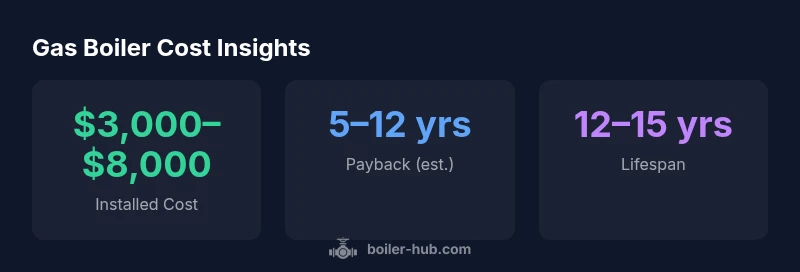
According to Boiler Hub, the installed cost of a gas boiler in 2026 typically ranges from $3,000 to $8,000, depending on boiler size, efficiency, and installation complexity. Condensing models cost more upfront but offer greater long-term savings. Labor, venting, and potential system upgrades can affect the final price band.
Why cost gas boiler varies so much
Pricing for gas boilers in 2026 is highly variable because each home presents a different heating load, venting constraints, and existing system compatibility. Options range from compact combi boilers to larger system boilers with storage tanks. Condensing models, which recover waste heat to improve efficiency, carry a higher upfront price but lower operating costs. Labor charges depend on accessibility of the boiler closet or basement, the need to route new venting, and whether a complete piping upgrade is required. Regional labor rates and permit fees can tilt the total by hundreds of dollars. When you start with a full heat-load calculation, you can predict the right boiler size and avoid oversizing, which reduces wasteful costs. The Boiler Hub Team emphasizes that the cheapest quote is not always the best value; a too-small unit will cycle excessively, while an oversized unit wastes energy and may require expensive retrofits later. For homeowners, the goal is a balance between upfront investment and long-term energy savings. According to Boiler Hub, a well-chosen, efficient gas boiler can pay back several times its upfront cost through reduced fuel use and fewer maintenance events.
Price components you should expect to see on quotes
A clear quote should break out line items such as the boiler unit price, installation labor, venting and flue upgrades, piping and radiators if required, expansion tank and circulator, thermostat and controls, system flush or water treatment, disposal of the old unit, and permits or inspections. Some contractors lump labor and materials, while others itemize every part. Watch for hidden charges like crane access or re-piping in tight spaces. Always request a line-by-line breakdown to enable apples-to-apples comparisons and to understand what exactly you’re paying for.
Sizing and efficiency: the right balance
Sizing a gas boiler correctly is essential to avoid short cycling and wasted energy. A professional heat-load calculation considers your home's size, insulation, window efficiency, and climate. Efficiency is expressed as AFUE (annual fuel utilization efficiency); condensing models typically offer AFUE in the 90s. A higher upfront cost can be justified by lower annual fuel bills, especially in colder regions or with rising gas prices. Don’t rely on a “one-size-fits-all” approach; a correctly sized unit improves comfort and reduces wear on the system. The goal is to maximize comfort while minimizing total cost of ownership over the boiler’s life.
Replacement vs new installation: what changes the bill
Replacing an older boiler in the current space can reduce some piping and venting work, but you may still need gas-line upgrades, venting changes, or electrical work. A new boiler that switches to a different configuration (for example, from a standard to a combi unit) can alter radiator needs and storage requirements, driving up upfront costs. If your home has older radiators or uneven heating, you might need modifications that add to the price but improve comfort and efficiency in the long run. Evaluate long-term benefits alongside upfront expense.
Regional costs and incentives in 2026
Costs vary by region due to labor rates, permit requirements, and model availability. Some regions offer energy-efficiency incentives, rebates, or tax credits for replacing inefficient boilers or upgrading to condensing models. Utilities sometimes provide discounted rates for participating in peak-load programs. Always check local programs to maximize value. Boiler Hub analysis notes that net prices after incentives can be substantially lower than sticker price, making region a critical factor in total cost.
Financing, incentives, and warranties
Explore financing options such as manufacturer promotions, utility-sponsored programs, or low-interest loans. Warranty coverage typically ranges from 5 to 10 years for major components, with longer coverage for heat exchangers in some models. Pay attention to what the warranty excludes (labor, certain failures, or improper maintenance) and what maintenance responsibilities are required to keep coverage valid. Read the fine print and compare warranty terms across competitors.
How to compare quotes and plan ahead
Start with at least three formal quotes from reputable installers. Ensure each quote includes venting, gas-line work, permits, and old-unit disposal. Ask about post-install service plans and annual maintenance, and request a simple payback analysis that factors in your local gas prices. Use a standardized checklist to compare features such as efficiency, warranty, and intuitive controls. Planning ahead reduces surprise costs and speeds up the replacement process when you’re ready.
Maintenance costs and long-term operating costs
Regular annual maintenance and safety inspections help prevent breakdowns and extend boiler life. Maintenance costs typically cover inspection, cleaning, and minor tune-ups; major parts replacement is less common but can occur as the system ages. A well-maintained gas boiler maintains efficiency and reliability, delivering lower operating costs over time. Boiler Hub recommends scheduling service before peak heating season to minimize disruption and ensure performance.
Authority note on cost planning
For readers who want a data-backed outlook, the approach is to base expectations on a verified heat-load calculation, model efficiency ratings, and regional pricing benchmarks. Always verify quotes with a trusted HVAC professional and consider the total cost of ownership, not just the upfront price. The Boiler Hub Team highlights that the best value comes from a balanced choice of high efficiency, proper sizing, and reliable service rather than chasing the lowest initial cost.
Estimated installed costs by boiler type (2026)
| Boiler Type | Installed Cost Range | Notes |
|---|---|---|
| Combination Gas Boiler | $3,000–$7,000 | Compact unit, no separate storage tank |
| System Gas Boiler | $4,000–$8,000 | Requires storage tank and piping |
| Labor & Installation | $1,000–$2,500 | Labor, venting, commissioning, and misc. |
Questions & Answers
What is the typical installed cost of a gas boiler in 2026?
In 2026, the installed cost for a gas boiler generally falls in the range of $3,000 to $8,000, depending on size, efficiency, and installation complexity. A higher-efficiency condensing unit may push the price higher, but operating costs often decrease over time.
In 2026, expect about three to eight thousand dollars for installation, depending on size and efficiency.
Do I need a vent or chimney upgrade when installing a gas boiler?
If your existing venting or chimney is compatible with the new boiler, upgrades may not be necessary. Most installations require at least venting adjustments and a proper exhaust path. Always confirm with your installer whether any upgrades are needed for safety and code compliance.
Your installer will tell you if venting upgrades are needed for safety and code compliance.
Is a condensating gas boiler worth the extra upfront cost?
Condensing boilers recover heat from exhaust gases, delivering higher efficiency and lower operating costs over time. Whether they're worth the extra upfront depends on your climate, usage, and fuel prices; in cold regions with high gas prices, the payback is typically favorable.
Yes, especially in cold climates with high gas prices, condensing boilers can pay off over time.
What maintenance should I budget for annually?
Most homes budget for an annual boiler service that includes safety checks, cleaning, and tune-ups. Costs vary but service visits are designed to prevent breakdowns and sustain efficiency. Consider a service plan with your installer for predictable costs.
Plan for an annual safety check and tune-up to keep the boiler efficient.
Can I finance a boiler replacement?
Yes. Many utilities, manufacturers, and lenders offer financing or promotional offers for boiler replacements. Compare terms, interest rates, and any required maintenance commitments before committing.
Yes—look for financing offers and compare terms before buying.
“Correct sizing and a high-efficiency design are essential; the real savings come from energy use over time, not just the upfront price.”
Key Points
- Prioritize proper sizing over the cheapest option
- Expect a broad cost range: $3,000–$8,000 installed
- Get multiple, itemized quotes for accurate comparison
- Higher efficiency models save money over time
- Plan for permits, venting, and potential upgrades