Understanding a New Boiler Cost in 2026
This guide breaks down the true cost of a new boiler in 2026, from upfront price ranges to long-term savings, plus practical tips to compare bids and avoid overpaying.


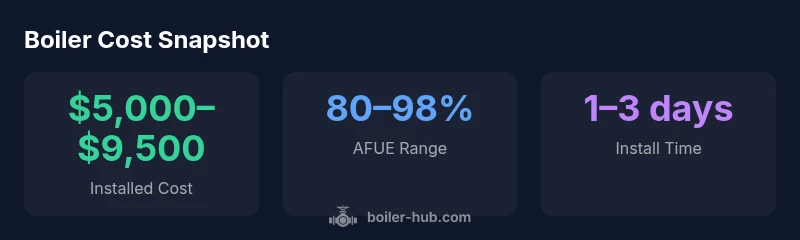
For 2026, a typical installed new boiler price (including installation) generally ranges from $5,000 to $9,500, depending on fuel type, efficiency, and installation complexity. Expect higher costs if extensive venting, retrofits, or a larger home heating load are involved. The total comes from equipment price, labor, permits, venting, and any disposal or demolition work.
Why the price for a new boiler cost varies by region and system
According to Boiler Hub, a new boiler cost varies widely by region, fuel type, and installation complexity. The upfront price you see on a quote is only part of the picture. In most markets, the line item for the boiler itself is a fraction of the total—often less than half in some scenarios—while labor, venting, permits, and disposal of the old boiler can add substantial amounts. Regional labor rates, permitting requirements, and travel time for technicians all influence the final number. Another big lever is the fuel type: a gas-fired condensing unit can cost more than a standard non-condensing model but often saves more money over its lifetime. If your home already has suitable venting and a straightforward layout, the install will be cheaper than if you need extensive retrofit work or new flues. Finally, the boiler size must meet your heating load; buying oversized or undersized equipment can inflate both upfront and ongoing costs. In short: context matters as much as components.
What drives the upfront price
Several distinct factors converge to set the installed price of a boiler. The heat source (gas, oil, electric) determines the base equipment cost as well as ongoing fuel expenses. Condensing models, which extract more heat from flue gases, are pricier but tend to pay back faster in energy savings, especially in colder climates. The boiler’s size and combustion efficiency (AFUE) dictate both the equipment price and the annual operating cost. An oversized unit wastes money up front and underperforms in mild winters, while a undersized unit struggles during peak demand and increases labor with multiple service calls. Installation complexity matters intensely: how easy it is to access your boiler room, whether new venting is required, and whether existing piping can be reused. Permits, inspection fees, and potential building-code upgrades add to the total. Finally, contractor pricing and regional demand shift quotes, so two homes a mile apart can have very different numbers even with the same model.
Fuel type and boiler technology explained
Fuel choice and technology define not only price but long-term comfort. Gas boilers are common and typically provide reliable performance; however, their cost depends on gas line accessibility and venting requirements. Oil boilers, while reliable, involve higher fuel costs and more maintenance in many regions. Electric boilers can be cheaper to install but usually more expensive to operate, depending on electricity rates. Technology choice, including high-efficiency and condensing designs, determines AFUE ratings—commonly in the 80–98% range—and thus energy use. If you expect to run a large system with radiant floor heating, you may prefer a modulating, sealed-combustion unit that adjusts output to demand; this adds to the price but improves comfort and reduces waste. Always consider the long-term energy costs alongside the installed price to understand true value.
Efficiency, AFUE ratings, and operating costs
Efficiency metrics drive both upfront costs and ongoing savings. Higher AFUE ratings generally translate to lower annual fuel bills, but that benefit depends on local energy prices, climate, and your household habits. A 2–4 point AFUE improvement might increase upfront cost by several hundred dollars but could shave hundreds of dollars off yearly fuel bills in peak season. In colder regions, the savings may be more noticeable; in milder climates, the payback period can extend. Keep an eye on seasonal efficiency (SEER) where applicable and look for boiler units with robust warranties and corrosion protection. Maintenance and service contracts also influence long-term costs; a cheaper unit might cost more over its life if parts are not readily available. The bottom line is simple: prioritize reliable performance and serviceability, then balance upfront price against your expected energy use.
Installed price ranges by boiler category
Different boiler categories sit at different price points. A standard gas-fired boiler without high-efficiency features often lands on the lower end of the spectrum, while premium condensing models push the price higher. On average, homeowners report installed costs in a broad range, with mid-tier units accommodating most homes. To give a sense of scale, a middle-range gas boiler with decent AFUE might fall in the $5,000–$9,500 range, including common installation costs. If your home requires significant venting work, additional radiators, or a refurbishment of the boiler room, the total could rise toward the higher end or beyond. For oil-fired or electric systems, expect a similar pattern but with different base equipment costs depending on local fuel prices and availability. Remember: the cheapest option upfront is not always the best value over 10–15 years.
Long-term value: energy savings and payback
Energy efficiency matters and can influence the total cost of ownership over time. High-efficiency boilers can reduce annual energy consumption by a meaningful margin, often cited as roughly 5–15% depending on usage and climate. In many markets, the payback period (the time it takes for energy savings to cover the higher upfront price) falls within 5–10 years for mid-range models, though in favorable conditions it can be shorter. Regional utility incentives and utility rate structures can tighten or widen that window. Maintenance costs also affect payback; a well-maintained unit with a longer service life minimizes replacement frequency. Boiler Hub’s analysis confirms that the combined effect of efficiency and proper sizing is the key to turning a higher upfront cost into real long-term value.
Financing options, warranties, and incentives
Many homeowners explore financing to soften the upfront burden. Options include manufacturer or installer financing, home improvement loans, or energy efficiency rebates that may be available at federal, state, or utility levels. When evaluating quotes, compare not only the installed price but also warranty terms, annual maintenance requirements, and the cost of parts and service over time. Some boilers carry longer warranties for heat exchangers or condensate systems, which can provide peace of mind and reduce risk. Check whether your local government or energy providers offer incentives for high-efficiency equipment, smart thermostats, or service plans. Collect all documentation and confirm what is covered after installation, including potential coverage for labor, parts, and replacement in the event of failure.
How to compare quotes and avoid common scams
Getting multiple bids is essential, but you also need a solid framework to compare them fairly. Use a side-by-side checklist that includes equipment type, AFUE rating, exact model numbers, installed costs, and the scope of work. Verify that bids include venting, condensate drainage, and cleanup. Watch for red flags such as unusually low estimates, vague labor descriptions, or pressure to sign on the spot. Ask for a written specification with total price and payment milestones, and insist on a clearly stated warranty. Online reviews, trade associations, and local referrals can help you identify reputable installers. Finally, consider a pre-installation assessment to verify your home’s heating load and ensure the chosen boiler matches your actual needs rather than marketing promises.
Practical steps to secure an accurate bid: a checklist
Use the following checklist during the bidding process: 1) Get three written bids from licensed contractors; 2) Provide a consistent spec sheet (brand, model, AFUE, and size) to each bidder; 3) Ask for a separate line item for equipment, labor, venting, and disposal; 4) Request an on-site heat-loss calculation and system compatibility review; 5) Confirm permit requirements and expected lead times; 6) Review warranty terms and maintenance agreements; 7) Compare financing options and incentives; 8) Check local code compliance and safety standards. By following this methodical approach, you’ll gain confidence that the quoted price reflects genuine value, not marketing hype.
Comparison of boiler options
| Boiler Type | Installed Cost Range | AFUE | Notes |
|---|---|---|---|
| Standard gas boiler | $3,000–$6,500 | 80–85% | Lower upfront cost, moderate efficiency |
| Gas-fired high-efficiency condensing | $5,000–$9,500 | 90–98% | Higher upfront, lower operating costs |
| Oil-fired boiler | $6,000–$11,000 | 85–95% | Requires oil supply and more maintenance |
Questions & Answers
What factors influence the cost of a new boiler?
The cost is driven by fuel type, boiler technology, AFUE efficiency, boiler size, and installation complexity. Regional labor rates and permitting can also shift quotes. Always compare the full scope of work, not just the boiler price.
Cost is driven by fuel type, efficiency, size, and installation complexity. Regional permits and labor also shift quotes.
Are high-efficiency boilers worth the extra upfront cost?
In most cases, yes, due to lower annual fuel bills and potential incentives. The payback period varies with climate, usage, and energy prices, but long-term savings often justify the higher initial price.
Usually yes—the energy savings and incentives often justify the higher upfront price over time.
What does installed price include?
Installed price typically includes the boiler unit, labor for installation, venting and piping work, permits, and cleanup. It should also cover basic setup and any required commissioning.
The price should cover equipment, labor, venting, permits, and setup.
How long does installation take?
Most residential boiler installations take 1–3 days depending on the home’s layout, existing piping, and whether retrofits are needed. Complex retrofits can extend that timeline.
Most installs take a day or two; complex jobs may take longer.
How can I compare boiler quotes effectively?
Use a side-by-side checklist: equipment type, AFUE, exact model numbers, installed costs, required work, warranty terms, and expected maintenance. Seek three quotes and verify references.
Create a side-by-side checklist and get three quotes to compare fairly.
Are there rebates or incentives for new boilers?
Yes, some regions offer rebates or incentives for high-efficiency boilers. Check federal and local programs, utility rebates, and any available financing options.
There are often rebates—check federal and local programs and utilities.
“A well-chosen boiler, properly sized and installed, can deliver reliable comfort and meaningful energy savings.”
Key Points
- Get multiple quotes to compare costs
- High-efficiency boilers often save energy over time
- Factor installation complexity into total price
- Consider fuel type and efficiency for payback
- Boiler Hub Analysis, 2026 guides price expectations