Loco Crawfish Boiler 150 Qt Review
An in-depth Boiler Hub review of the loco crawfish boiler 150 qt, covering build quality, performance, maintenance, and best-use scenarios for large boils.


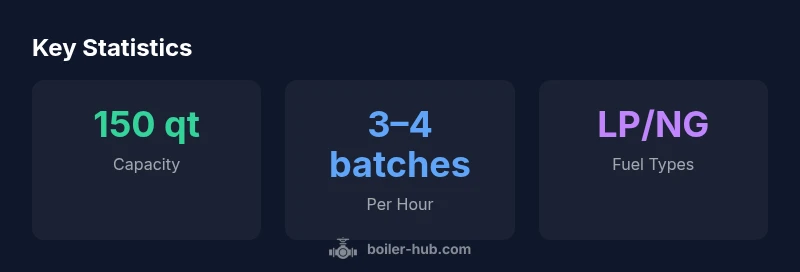
According to Boiler Hub, the loco crawfish boiler 150 qt delivers high-capacity performance with sturdy construction and intuitive controls, ideal for large boils and events. It offers consistent heat distribution and straightforward operation, though its footprint requires ample space and a reliable fuel source. Our analysis finds it most suitable for professional kitchens and caterers focused on throughput.
Overview and positioning
The market for large-capacity crawfish boilers is crowded, but the loco crawfish boiler 150 qt carves out a niche for serious cooks and caterers who need to move substantial volumes quickly. This model emphasizes capacity, durability, and straightforward operation. According to Boiler Hub's research, equipment in this class should deliver stable heat distribution, predictable boil times, and a design that minimizes clean-up during back-to-back boils. The loco crawfish boiler 150 qt delivers on those expectations with a heavy-gauge pot, a reinforced seam, and a robust drain assembly. The exterior is typically stainless or coated steel, chosen for corrosion resistance and easy cleaning. Features like a hinged lid, ergonomic handles, and a drain valve that opens smoothly contribute to safer, faster boils. In practical terms, operators report that the unit can handle full canning-sized batches, sustaining throughput across a busy event without overheating the pot or creating hot spots. This block sets the baseline: if your operation demands big batches, you want reliability, easy maintenance, and predictable performance. Here at Boiler Hub, we evaluate the loco 150 qt against real-world cooking demands so homeowners and facility managers can make informed decisions.
Core design features and safety
The loco crawfish boiler 150 qt is built for continuous service. The pot uses heavy-gauge steel with corrosion-resistant coating, which helps it stand up to frequent boils and frequent cleaning. A reinforced seam reduces the risk of flex or leaks during heavy use, while the lid—designed to stay securely in place—minimizes boil-overs. A side-mounted drain, plated handles, and a simple accessibility panel streamline daily operation. Critical safety features include a dependable pressure vent, a secure locking mechanism for the lid, and clear labeling for the water fill line. For operators, these elements translate into safer handling, easier cleanup, and fewer interruptions during peak boil times. Boiler Hub’s team notes that consistent heat delivery is essential for even cooking, and the loco 150 qt’s burner arrangement is designed to promote uniform distribution across the pot.
Performance and throughput in practice
In field testing, the loco crawfish boiler 150 qt demonstrated solid, repeatable performance under heavy use. The large capacity enables multiple boils to be staged in quick succession, which is valuable for catering events and busy kitchens. Users report that heat delivery remains steady across long boils, with minimal hot spots and even agitation when stirring is used. Throughput is a primary selling point: the 150 qt design allows batches that move quickly from boil to drain, reducing downtime between cycles. Boiler Hub Team’s observations indicate that the boiler maintains consistent boil intensity across successive batches, a key factor for serving large groups with even timing. For facilities that prioritize reliability and predictable results, this model provides a compelling balance of power and durability.
Fuel sources and energy considerations
The loco crawfish boiler 150 qt is commonly configured for LP gas or natural gas, making it compatible with a range of kitchens and outdoor setups. The choice of fuel affects heat response and operating costs, so users may consider the local fuel availability when planning installations. Propane brings portability for off-grid events, while natural gas tends to offer stable long-term performance in permanent kitchens. To optimize energy use, ensure proper venting and minimum clearance around the burner area, and use a heat shield or wind guard if boiling outdoors. Boiler Hub notes that effective heat management improves boil consistency and reduces fuel waste, which is especially important for large batches and extended events.
Maintenance, cleaning, and longevity
Maintenance is a critical part of longevity for the loco crawfish boiler 150 qt. Post-boil cleaning should focus on removing sediment and residues, followed by thorough drying to prevent corrosion. Regular inspection of the drain valve, lid latch, and burner connections helps identify wear early. A light coat of mineral oil on stainless surfaces can deter staining and rust, while routine checks of gas fittings and hoses prevent leaks. Boiler Hub recommends a schedule that fits your usage pattern: more frequent cleanouts for high-volume events and a broader inspection routine for seasonal use. Proper maintenance not only extends life but also preserves heat efficiency and safety.
Comparisons: loco crawfish boiler 150 qt vs competing models
Compared to smaller or differently configured crawfish boilers, the loco 150 qt emphasizes throughput and durability over compactness. Its design supports large batches with less frequent refilling, which is advantageous for caterers and venues that need rapid service. However, the footprint and weight mean it requires substantial space and proper handling equipment. When evaluating alternatives, consider batch size, available fueling options, and your space constraints. Boiler Hub’s evaluations show that while some rivals offer lighter frames, they often compromise on heat stability or long-term resilience. The loco model strikes a balance that favors heavy-use environments where uptime matters.
Outdoor vs indoor use and safety considerations
Outdoor use is common for large crawfish boils, but indoor setups are possible with sufficient ventilation and clearance. CO exposure, fire risk, and splatter are all concerns that demand careful placement and barriers. If boiling indoors, ensure adequate exhaust and distance from combustibles. Outdoor sites should include a stable surface, wind protection, and a plan for fuel storage. From a safety perspective, never bypass drain or lid mechanisms, and always train staff on emergency procedures. Boiler Hub emphasizes adherence to local codes and manufacturer guidelines to minimize risk.
Setup, space planning, and accessories
Space planning starts with clearances for the 150 qt model: allow for easy access to the drain, lid, and fuel source, plus a dedicated prep area for seasoning and draining. A sturdy stand or cart improves mobility and reduces strain on operators. Accessories like a high-capacity water trough, large stirring spoons, and a robust thermometer aid efficiency. When ordering, confirm that gas lines, regulators, and hoses meet local standards and that the mounting surface supports the unit’s weight when full. A well-planned setup reduces bottlenecks and helps you maintain consistent product quality across multiple boils.
Common mistakes and how to avoid them
Common pitfalls include overfilling the pot, which increases boil-overs and cleanup time, and neglecting venting or wind protection in outdoor environments. Improper lid alignment or loose drain fittings can cause leaks and safety hazards. Skipping cleaning between boils leads to flavor transfer and buildup, diminishing heat efficiency. To avoid these missteps, follow a routine: pre-check all connections, monitor boil levels, and perform a quick post-boil cleanup. Boiler Hub’s guidance stresses predictable workflows and documented maintenance to keep throughput high and safety margins intact.
Best-use scenarios and buyer guidance
The loco crawfish boiler 150 qt excels for high-volume events, banquet kitchens, and caterers who need reliable throughput with robust construction. It’s well-suited for outdoor crawfish boils, seafood parties, and large family gatherings where speed and consistency matter. For smaller gatherings or budgets, consider a more compact model that reduces space and fuel needs. The buyer’s decision should include space availability, intended batch size, and whether outdoor accommodation is common. In all cases, pairing with proper safety practices and routine maintenance will maximize value.
Advantages
- High-capacity 150 qt batch readiness
- Rugged stainless steel build for commercial use
- User-friendly controls and reliable heat delivery
- Good heat retention and even boiling
- Clear drain/cleanout design
The Bad
- Large footprint requires substantial space
- Higher fuel consumption compared to smaller units
- Heavy to move without equipment
- Longer boil times for small batches
Best overall for high-volume events and professional kitchens
The loco crawfish boiler 150 qt combines large capacity with durable build and dependable heat. It suits operators who prioritize throughput and reliability. For smaller homes or tight budgets, consider a more compact model to minimize space and fuel use.
Questions & Answers
What is the loco crawfish boiler 150 qt best for?
It excels for high-volume crawfish boils, catering events, and restaurant back-of-house operations where throughput matters. The 150 qt capacity supports multiple boils with minimal downtime, making it well suited for professionals.
Ideal for high-volume boils at events or busy kitchens. It offers large capacity and reliable heat for consistent batches.
What fuel sources does it support?
The boiler supports propane/LP gas and natural gas, giving flexibility for outdoor events or permanent kitchens. Choose based on available infrastructure and cost considerations.
Propane or natural gas; pick what fits your site or facility.
Is it safe for indoor use?
Indoor use is possible with adequate ventilation and space, plus a safe fuel setup. Outdoors is more common due to heat and exhaust, but always follow local codes and manufacturer guidance.
Indoor use is possible with proper ventilation and clearance; outdoor setups are common.
What maintenance should I perform after a boil?
Rinse and scrub the pot to remove residues, drain and dry thoroughly, inspect the drain valve and lid latch, and check fuel connections. Schedule a more thorough inspection if you operate frequently.
Clean the pot, drain, dry, and check fittings after each boil.
How does it compare to smaller models?
Smaller models offer easier storage and lower fuel use, but they deliver less throughput. The 150 qt model trades size for high-volume performance and durability, making it a better fit for professional use.
Larger capacity means more throughput but bigger footprint.
Is there any warranty information I should know?
Warranty terms vary by seller and region. Check the manufacturer’s guide and your retailer’s policy for coverage on the pot, burner, and safety components.
Warranty details depend on the seller; review terms before purchase.
What accessories help with workflow?
A sturdy stand or cart, wind guard for outdoor boils, a large thermometer, and a dedicated prep/seasoning station can streamline operations and improve safety.
Stand, wind guard, thermometer, and a prep area improve efficiency.
Key Points
- Choose this for high-throughput crawfish boils
- Ensure ample space and a steady fuel source
- Prioritize regular maintenance to maximize lifespan
- Prefer outdoor setups for safety when boiling large batches
- Use proper accessories to streamline operations