Crawfish Boiler Near Me: Local Options and Practical Guidance
Discover how to choose a crawfish boiler near you with data-driven guidance. Compare capacity, fuel, price ranges, safety, and maintenance for backyard boils and small events.


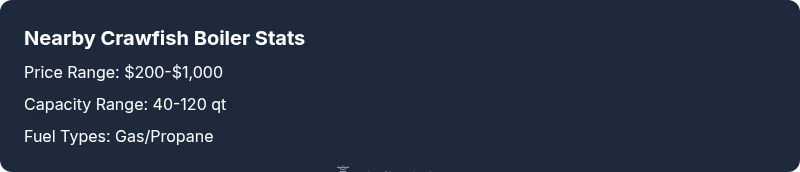
Finding a crawfish boiler near me typically means evaluating proximity, capacity, and fuel options to balance price with cooking time. In many regions, you’ll see gas-fired outdoor boilers in the $200–$1,000 range, with propane units often a budget-friendly choice for backyard boils. For accuracy, compare BTU ratings, vessel size, and safety features, and read local customer reviews before committing.
Introduction to Crawfish Boilers and Local Availability
Outdoor crawfish boils are a seasonal staple for backyard gatherings and community events. A crawfish boiler near me matters beyond mere proximity; it affects fuel availability, safety oversight, and the practicality of last-minute boil planning. According to Boiler Hub, local options matter because nearby vendors are more likely to offer timely service, spare parts, and compliant equipment for outdoor cooking. The Boiler Hub team found that buyers who begin with a local search typically save on shipping, reduce downtime, and minimize the risk of scams that hinge on distant listings. When you plan a boil for a weekend, you want a setup that heats quickly, distributes heat evenly, and can be reassembled with practical safety margins. This guide provides a data-driven framework to evaluate crawfish boilers near you, compare features, and balance upfront costs with ongoing risk management. Whether hosting a dozen friends in a backyard or coordinating a small community event, the goal is a reliable, safe boil.
Key Features to Compare in Crawfish Boilers
Crawfish boilers vary by capacity, burner design, and construction quality. Important features include vessel size that matches your guest count, heat distribution mechanisms, and the type of burner. Gas-fired outdoor boilers are common for fast boils, but propane units offer flexibility when access to natural gas is limited. Look for durable materials such as stainless steel or heavy aluminum with reinforced rivets and riveted handles for outdoor use. Safety features matter: secure lid latches, sturdy legs, stable bases, and automatic shutoffs at high temperatures. Additional considerations include ease of cleaning, built-in baskets or baskets that are easy to remove, and accessory compatibility (spigots, additional pots, and cold water immersion for dunking seafood).
How to Find Reliable Local Options
To locate crawfish boilers near you, start with a targeted search using the exact phrase crawfish boiler near me and add your city or neighborhood. Check multiple channels: local hardware stores, outdoor event suppliers, and reputable online retailers that offer local pickup. Read customer reviews focusing on reliability, delivery times, and customer service. Verify licenses or safety certifications when required by your city or state, and ask about warranties and return policies. Contact vendors to confirm stock, rental terms, and any delivery surcharges. Compare total cost, including fuel, gas lookups, and any required permits. Boiling seafood is a communal activity; local support often translates to quicker troubleshooting and on-site guidance during your boil.
Typical Configurations, Sizes, and Price Ranges
Crawfish boilers come in a range of sizes, from compact 20–40 quart setups suitable for intimate gatherings to larger 60–100 quart configurations for bigger groups. Price bands reflect capacity, fuel compatibility, and whether the unit is designed for rental or purchase. In general, local options near you can span from budget-friendly models around a few hundred dollars to premium units approaching the upper end of a thousand dollars. Always consider the total cost of ownership: fuel consumption, replacement parts, and potential maintenance. If you’re hosting frequently, investing in a robust, durable unit may reduce long-term costs and downtime.
Safety, Setup, and Environmental Considerations
Outdoor boils require careful attention to safety and footprint. Position the boiler on a flat, stable surface away from structures and dry vegetation. Ensure proper ventilation for gas-powered units, and follow all gas cylinder storage and handling guidelines if using propane. Have a water source ready to manage boil-overs and a fire extinguisher accessible. Protect cords and hoses, secure the propane tank, and never leave the boil unattended. Consider the impact on neighbors and the environment: use energy-efficient burners, manage waste responsibly, and follow local regulations for outdoor cooking equipment.
Maintenance, Longevity, and After-Sales Support
A crawfish boiler near me is an investment that pays off with regular maintenance. After boils, clean the vessel thoroughly to remove residue that can corrode metal over time. Dry all components completely to prevent rust, and apply a light coat of oil to metal surfaces after cleaning. Inspect gaskets, valves, and burners for signs of wear and replace parts promptly. Store equipment in a dry, sheltered space when not in use. Favor vendors that offer clear warranties and accessible customer service for parts or repairs to extend the unit’s life and reliability for future boils.
Quick Vendor Comparison Checklist
- Capacity vs. anticipated guest count
- Fuel type availability and fuel costs
- Built quality: material and frame durability
- Safety features: auto-shutoff, stable base, secure lid
- Accessory compatibility and ease of cleaning
- Warranty, service support, and parts availability
- Delivery options and return policies
The Boiler Hub Approach: Data-Driven Guidance
Boiler Hub employs a data-driven approach to help buyers compare crawfish boilers near me. We aggregate regional price ranges, common fuel choices, and typical delivery windows to create a starter framework for your search. Our analysis emphasizes not only initial cost but total cost of ownership, including fuel consumption and maintenance. We also consider local safety standards and warranty coverage that can significantly affect long-term satisfaction. By focusing on objective criteria and real-world user feedback, we guide you toward practical, low-risk decisions when selecting a crawfish boiler near you.
Conclusion and Where to Start
In summary, locating a crawfish boiler near you involves balancing proximity, capacity, fuel type, and price with a clear eye on safety and support. Begin with a local search, verify certifications, and request a side-by-side comparison of warranties and included accessories. The Boiler Hub team recommends starting with a short list of nearby vendors, checking recent reviews, and arranging a test boil if possible. With data-driven evaluation, you can confidently select a crawfish boiler near me that delivers on taste, efficiency, and reliability for your next boil.
Typical vendor configurations for crawfish boilers near me
| Vendor Type | Avg Price Range | Typical Capacity (qt) | Fuel Type(s) | Delivery/Lead Time | Warranty |
|---|---|---|---|---|---|
| Local outdoor equipment shop | $180-$700 | 40-100 qt | Gas/Propane | 2-5 days | 1 year |
| Online specialty retailer | $200-$900 | 60-120 qt | Gas/Propane/Electric | 3-7 days | 1-2 years |
| Rental/Event supplier | $150-$500 | 20-60 qt | Gas | 1-3 days | Varies by vendor |
Questions & Answers
What is a crawfish boiler near me and why should I choose local options?
A crawfish boiler near me means you buy or rent equipment from nearby vendors, which reduces delivery time, lowers transport costs, and simplifies support during the boil. Local options typically offer quicker troubleshooting, easier pickup, and better access to spare parts. Always verify safety standards and warranty terms with the vendor.
A crawfish boiler near me is a local option for buying or renting equipment. Local vendors often provide quicker support and simpler pickup, which helps during the boil.
Which fuel type is best for crawfish boils?
Gas-fired boilers are most common for outdoor crawfish boils because they heat quickly and are widely available. Propane is a flexible alternative where natural gas lines are unavailable. Consider fuel costs in your region and the availability of propane tanks or gas hookups when choosing a model.
Gas-fired boilers heat quickly and are widely available, with propane as a flexible alternative where gas lines aren’t handy.
How do I estimate the right size boiler for my event?
Estimate size by guest count and boil duration. A typical backyard boil might suit a 40-60 quart unit for small groups, while larger gatherings may require 80-120 quart equipment. Factor in pot stacking options, heat distribution, and whether you’ll run more than one burner at once.
Choose a size based on how many people you’re serving and how long you’ll boil. For small groups, a 40-60 quart unit often works well.
What safety features should I look for?
Look for a stable base, secure lid, automatic shutoff, and easy access for cleaning. Ensure proper ventilation and stable mounting on outdoor surfaces. Check for clear warranty terms and service support in case of gas leaks or burner issues.
Prioritize stability, secure lids, automatic shutoffs, and clear warranty terms to stay safe during your boil.
Can I rent a crawfish boiler near me for events?
Yes. Rental options are common through event suppliers and local outdoor gear shops. Compare rental duration, delivery charges, setup support, and whether the rental includes fuel and accessories. Confirm return policies and any damage waivers before booking.
Rentals are available from event suppliers. Check duration, delivery, and included accessories before booking.
What maintenance is needed after a boil to extend life?
Rinse and scrub the vessel to remove salt and spice residues, dry thoroughly, and apply a light protective coating to metal surfaces. Inspect gaskets and burners for wear, and store in a dry location. Regular maintenance reduces rust and improves longevity.
Rinse, dry, and inspect parts after boils. Store properly to extend the boiler’s life.
“A reliable crawfish boil starts with proximity, capacity, and clear safety policies. Prioritize local options that offer accessible support and straightforward warranties.”
Key Points
- Start local: proximity reduces downtime and parts delays.
- Match fuel type to availability and cost in your area.
- Prioritize safety features and warranty coverage for outdoor cooking.
- Consider total cost of ownership, not just upfront price.
- Use our data-driven checklist to evaluate vendors near you.