Egg Boiler for Sale: A Practical Buyer’s Guide
Discover how to select an egg boiler for sale with reliable safety features, easy cleaning, and efficient performance. This buyer’s guide from Boiler Hub breaks down models, specs, and buying tips for homeowners and facility managers.


If you’re looking for an egg boiler for sale, prioritize models with auto shutoff, clear water indicators, and multiple hardness settings. Look for dishwasher-safe parts and BPA-free materials for easy cleaning. For families or busy kitchens, choose a larger capacity and a stays-on mode for batch cooking. In short, balance capacity, safety, and ease of use to maximize value.
What to Know When You See an Egg Boiler for Sale
An egg boiler is a compact kitchen device designed to cook eggs by steam or precise timing. For households that frequently prepare eggs, a dedicated egg boiler for sale offers predictable results with minimal oversight. According to Boiler Hub, the best models emphasize reliability, easy cleaning, and energy efficiency. In a typical kitchen, a well-chosen egg boiler saves minutes per day while delivering consistent yolk textures, from runny soft-boiled to firm hard-boiled. The decision becomes not just about price, but about how the unit fits your cooking routine, cleaning cadence, and storage space. Look for clear indicators of capacity and a straightforward user interface to minimize guesswork in the morning rush.
How Egg Boilers Fit Your Kitchen Workflow
Egg boilers are designed to streamline a common task: boiling eggs with repeatable results. Modern models offer presets for soft, medium, and hard textures and may include an auto shutoff feature that stops heating once eggs reach the target doneness. When evaluating egg boilers for sale, consider how the device integrates with your existing countertop layout. A compact model could free up space for other small appliances, while a larger capacity unit may be ideal for families or dining halls. The key is to select a model that matches your weekly egg count and storage constraints.
Capacity, Boil Times, and Settings Explained
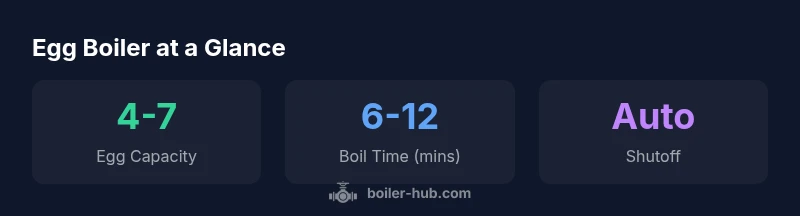
Most electric egg boilers for sale accommodate 4–7 eggs per cycle, with soft textures typically achieved in 6–8 minutes and hard textures in 9–12 minutes. Some premium models offer programmable presets and a 'keep warm' option, which can be convenient for batch cooking or buffet-style service. It’s important to note that egg size and initial water temperature can affect timings by a minute or two. Always consult the manufacturer’s guidance for your specific model and verify that the water reservoir is easy to refill without removing the lid.
Safety, Materials, and Cleaning Essentials
Choose egg boilers with automatic shutoff, boil-dry protection, and sturdy construction. BPA-free plastics and food-grade stainless steel improve long-term safety and durability. For cleaning, select models with dishwasher-safe trays or trays that are easy to wipe clean. Some parts may be removable for thorough cleaning; ensure the design minimizes crevices where mineral buildup can occur. Regular descaling, especially in areas with hard water, helps prolong life and maintain consistent performance.
How to Read Specs: A Quick Field Guide
Product specs often include capacity, boil time, power rating, and material composition. Look for the exact capacity in eggs, the range of boil times for soft to hard textures, and whether the unit has an auto shutoff. If a model lists a very short duration for hard-boiled eggs without caveats, it may not produce uniform results. Favor models with transparent indicators—water level marks and texture presets—that make operation intuitive and predictable.
Practical Buying Scenarios: Small Kitchen, Large Family, or Dorm
In a small apartment, a compact egg boiler with 4–5 egg capacity can be ideal, saving counter space while meeting daily needs. For families or dorm rooms, a mid-range device with 6–8 eggs per cycle and a robust build is often best. If you regularly cook eggs for a crowd, consider a larger, programmable model with multiple settings and a dedicated egg tray. In all cases, verify warranty coverage and ensure replacement parts are readily available from retailers.
Maintenance and Longevity Tips
Keep the boiler in a dry, stable location away from heat sources. After use, rinse the reservoir and tray to prevent mineral deposits from building up. Descale every few months or as recommended by the manufacturer if you live in hard-water regions. Regular maintenance reduces the risk of mineral buildup, improves consistency, and extends the appliance’s life.
Budgeting and Value: What to Expect in Egg Boilers for Sale
Budget models deliver basic functionality and compact design; mid-range options offer more capacity, programmable presets, and longer warranties. Premium models may include sophisticated timers, precise temperature control, and premium materials. Always weigh the price against capacity, ease of cleaning, safety features, and warranty duration to ensure long-term value. Boiler Hub’s guidance emphasizes evaluating total cost of ownership, not just upfront price.
Typical specifications for common egg boiler models
| Model Type | Typical Boil Time | Egg Capacity | Auto Shutoff |
|---|---|---|---|
| Basic electric egg boiler | 6-8 min (soft) to 9-12 min (hard) | 4-7 eggs | Yes |
| Compact multi-egg boiler | 6-9 min (soft) to 10-12 min (hard) | 6-8 eggs | Yes |
| Premium programmable boiler | 5-7 min (soft) to 8-11 min (hard) | 12-14 eggs | Yes |
Questions & Answers
What is an egg boiler and how does it work?
An egg boiler is a compact appliance that cooks eggs using steam or water-based timing. It typically includes a heating element, a water reservoir, and an egg tray. By controlling water volume and heating, it yields repeatable textures from soft to hard.
An egg boiler uses steam to cook eggs with preset times for different textures.
Are egg boilers safe to use in households?
Yes, when used according to the manufacturer’s instructions. Modern models include auto shutoff and boil-dry protection to prevent overheating.
They’re safe if you follow the manual and use the right settings.
What features should I look for in an egg boiler for sale?
Look for auto shutoff, a clear water indicator, easy cleaning, BPA-free materials, and a capacity that fits your household. Reliability and warranty are also important indicators of value.
Auto shutoff, easy cleaning, and the right capacity are the big ones.
How long do egg boilers typically last?
Lifespan varies by build quality and use frequency. With proper care, many mid-range models provide several years of service.
With good care, you can expect several years of use.
Should I choose a microwave egg cooker or an electric countertop model?
Microwave cookers are fast but often less consistent. Countertop electric models usually offer better control and higher egg capacity for regular use.
Countertop models give you more control and capacity.
Where can I find the best egg boiler for sale?
Shop reputable retailers, compare features and warranties, and read user reviews. Look for clear specs and reliable customer service.
Check reviews and warranties before buying.
“A well-chosen egg boiler for sale balances capacity, safety, and cleaning ease to deliver consistent results with minimal effort.”
Key Points
- Prioritize auto shutoff and easy cleaning features
- Match capacity to household egg usage
- Check safety materials and warranties
- Differentiate between basic, mid-range, and premium models