Is Egg Boiler Good? A Practical Review for Home Kitchens
An analytical review of egg boilers: how they work, energy use, maintenance, and value for different households. Learn how to choose, use, and care for an egg boiler with practical tips from Boiler Hub.


Is egg boiler good? For many households, yes. An egg boiler can deliver consistent doneness with less hands-on supervision than stove-boiled eggs, reducing water use and potential mess. It shines in busy kitchens and small spaces, but benefits depend on design, ease of cleaning, and how often you cook eggs. If you value convenience and repeatable results, an egg boiler is worth considering.
Is Egg Boiler Good for Your Kitchen?
When deciding whether an egg boiler is good for your kitchen, you should evaluate how often you cook eggs, your available counter space, and how much you value consistent results. According to Boiler Hub, households that routinely prepare eggs in small to medium batches often gain time-saving benefits and less water waste compared with traditional stovetop boiling. The real-world payoff comes from predictable hardness levels (soft, medium, hard) and minimal supervision once the unit is set. If your mornings are rushed or you have limited stove space for other tasks, an egg boiler can be a smart addition. However, if you rarely cook eggs, the upfront cost and cleaning effort may not be worth it.
In practice, the decision hinges on your current routine and willingness to adapt. A good egg boiler should slot into your workflow without introducing new bottlenecks. For many, it’s a small, quiet helper that keeps eggs consistently cooked, especially when you’re feeding kids who prefer pale yolks or fully set whites. Boiler Hub’s analysis suggests that the value of an egg boiler grows with batch size and frequency, making it worth a careful read of product specs and real-user reviews before buying.
How Egg Boilers Work
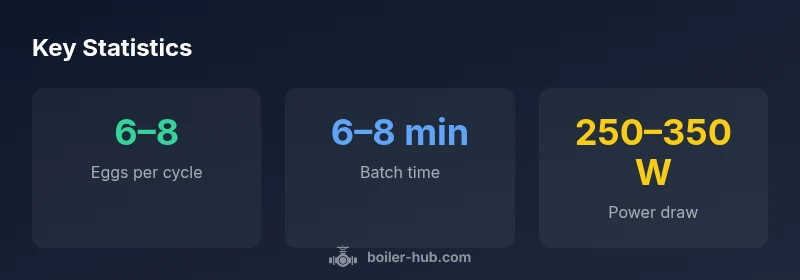
Egg boilers rely on a fixed water reservoir and a heating element to generate steam or boil water, with an integrated timer to halt cooking once the eggs reach the desired doneness. Most models require you to place eggs on a rack or in cups, select a doneness level (soft, medium, hard), and press start. The device then automatically shuts off and may switch to a keep-warm mode. The exact timing depends on egg size, initial temperature, water amount, and the specific mechanism (steam-based vs. direct boiling). In general, you’ll see a 6–9 minute cycle for a standard dozen eggs, with some compact models taking a bit longer due to smaller heating elements. A few units offer flexible layouts so you can boil different numbers of eggs without wasted water.
Design Variants and Practical Impacts
There are several common designs: compact cup-style devices, multi-egg trays, and stackable configurations. Cup-style units are affordable and easy to store but may cap the number of eggs and struggle with extra-large varieties. Stacked or all-in-one trays maximize capacity and can accommodate different egg shapes, but they can be bulkier and a bit more cumbersome to clean. Removable trays and dishwasher-safe components simplify maintenance, while clear water-level indicators help you avoid overfilling. The right design depends on your batch size, counter space, and cleaning tolerance. If you value quick grabs in the morning, a compact model that fits under a cabinet could be ideal; if you frequently juice up weekend batches, a larger tray with easy cleaning may be worth the extra footprint.
Pros and Cons of Using an Egg Boiler
Pros:
- Consistent doneness across batches with minimal supervision
- Reduced water usage compared with stovetop boiling
- Compact footprint that saves counter space
- Integrated timers and auto shut-offs reduce oversight
Cons:
- Cleaning narrow crevices can be fiddly and time-consuming
- Limited versatility; mainly for eggs
- Some models use plastic lids or coatings that some users may want to avoid
- Not all models handle very large or very small eggs equally well
Energy Use, Safety, and Maintenance Considerations
Compared with boiling eggs on the stove, energy use per egg can be lower in small batches, but total energy depends on batch size and device efficiency. Most egg boilers include safety features such as auto shut-off, cool-touch exteriors, and non-slip bases to prevent accidents in households with kids. Maintenance is typically straightforward: rinse the reservoir after use, wipe the exterior, and descale periodically if you have hard water. Avoid aggressive cleaners that could damage coatings. Regularly check seals and lids for wear, and replace trays that become warped. Choosing a model with durable materials and simple maintenance routines aligns with Boiler Hub guidance on long-term value.
How to Choose the Right Egg Boiler for Your Home
Begin with your typical egg consumption and batch size. Look for capacity specifications (eggs per cycle), available settings for doneness, and lid design that stays cool to touch. Read independent reviews focusing on reliability and ease of cleaning. Compare models that offer dishwasher-safe components or removable trays. Check warranty length and spare-part availability, as these affect long-term value. If you want added versatility, verify whether the unit includes extra features like poaching trays or yogurt cups. Finally, consider your counter space and whether you prefer a compact single-purpose unit or a larger multi-use model.
Cleaning, Care, and Longevity Tips
A regular cleaning routine helps you extend the life of an egg boiler. After each use, empty and rinse the reservoir, wipe the exterior, and dry thoroughly. Avoid immersing the base in water; use a damp cloth for the exterior. Descale if mineral buildup forms, following manufacturer recommendations. Inspect seals and gaskets for wear and replace worn parts when needed. Store the unit in a dry spot with the lid left slightly ajar to prevent moisture buildup. With proper care, many devices last several years and remain reliable for daily use.
Real-World Use Cases and Setup Scenarios
Consider household size and egg-prep habits. A family of four that eats eggs daily may benefit from a mid-sized model that can handle 6–8 eggs per cycle, with a quick-start timer to fit school-morning schedules. A single professional or student might prefer a compact unit that fits under a cabinet and keeps breakfast tidy. In shared kitchen spaces, a durable, easy-to-clean model can standardize egg prep and reduce stove time for other tasks. If you frequently need precise doneness (soft vs. hard yolks), select a unit with reliable timing and clear status indicators.
Alternatives and Final Thoughts
If you rarely cook eggs, a stove-top boil or microwave method may be simpler and cheaper. Microwave techniques can achieve quick results but can produce uneven textures if not monitored carefully. For those who want multi-function convenience, look at devices that combine boiling with steaming for vegetables or other small foods. Overall, an egg boiler offers a reliable, hands-off option for controlled egg prep. The Boiler Hub team recommends weighing convenience against cleaning effort and price to decide if it fits your kitchen workflow.
Advantages
- Consistent doneness with minimal supervision
- Reduces water usage compared with stovetop boiling
- Compact footprint preserves counter space
- Built-in timers and safety shut-off features
The Bad
- Cleaning narrow crevices can be fiddly
- Limited versatility beyond eggs
- Some models use coatings some users wish to avoid
- Performance varies with egg size and batch size
Egg boilers are a solid convenience for quick, repeatable eggs in small to medium households
For many home kitchens, an egg boiler delivers reliable results with less supervision and potential water savings compared to stove boiling. It excels in busy mornings and for users who cook eggs in batches. The Boiler Hub team recommends evaluating batch size, counter space, and cleaning willingness before purchasing.
Questions & Answers
What is an egg boiler and how does it differ from boiling eggs on the stove?
An egg boiler is a small kitchen appliance that uses steam or boiling water to cook eggs to a set doneness. It offers consistent results with minimal supervision, unlike stove boiling which depends on heat control and timing. For frequent egg prep, a boiler can save time and reduce water waste.
An egg boiler is a dedicated device for eggs that makes timing predictable and cleanup easier than boiling on the stove.
Can an egg boiler handle large or small eggs effectively?
Most egg boilers are designed to handle standard large and medium eggs. Very large or extra-small eggs may affect doneness or require adjusting water amounts. Check the product’s capacity guidelines and any doneness calibration notes before purchase.
Most models handle standard eggs well; check size ranges before buying.
Are egg boilers safe for households with children?
Yes, when used with the provided lid and safety features like auto shut-off. Look for cool-touch exteriors and stable bases to prevent accidental burns. Never leave the unit unattended with young children during operation.
They’re generally safe if you use models with proper safeguards and keep the area tidy.
How do I descale and maintain an egg boiler?
Descale according to the manufacturer’s instructions, usually with a mild solution and warm water. Regular cleaning of the reservoir and removable trays prevents mineral buildup that can affect performance. Dry components before storage to prevent mold.
Follow the manual for descaling and keep trays clean for best results.
Is an egg boiler worth the price for a single person?
For a single person, the payoff depends on how often you cook eggs and your space. If you value quick, consistent results and minimal cleanup, even a small model can be worthwhile. If eggs are a rare part of meals, the cost may not justify ownership.
If eggs are a regular part of your routine, it can be worth it.
What features should I look for in a reliable egg boiler?
Look for capacity, adjustable doneness settings, reliable auto shut-off, easy cleaning (removable trays), dishwasher-safe parts, and a durable lid. A good warranty and readily available spare parts improve long-term value.
Focus on capacity, safety features, and ease of cleaning.
Key Points
- Choose an egg boiler if you cook eggs daily or in small batches
- Look for 6–8 egg capacity and reliable auto shut-off
- Prioritize ease of cleaning and removable trays
- Consider compact designs to maximize counter space
- Factor in warranty and spare-parts availability