Worcester Bosch Boiler Repair: Step-by-Step Guide
Learn safe, practical Worcester Bosch boiler repair steps, troubleshoot common faults, and follow a detailed, tool-ready guide from Boiler Hub to protect your system.


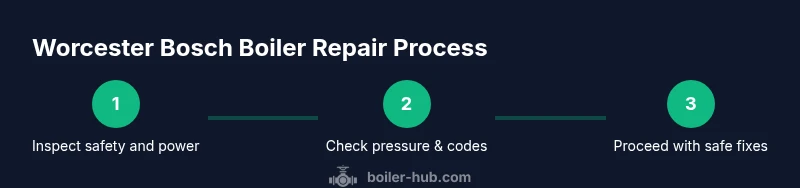
According to Boiler Hub, this guide helps homeowners and facility managers perform safe Worcester Bosch boiler repairs by outlining common faults, essential safety steps, and when to call a pro. You’ll find a tool list, a clear step-by-step process, and links to authoritative sources to support confident, responsible troubleshooting. This fragmentary overview keeps you prepared and safe.
Understanding Worcester Bosch boiler repair: scope and cautions
For homeowners facing a potential worcester bosch boiler repair, it helps to start with a clear scope, a safety-first mindset, and an awareness of what you can responsibly tackle. Worcester Bosch models are known for reliability, but even reliable boilers need occasional maintenance. This section explains what repair encompasses, what you can do safely, and where to draw the line between DIY and professional service. According to Boiler Hub, effective troubleshooting begins with isolating power, verifying gas safety, and consulting model-specific manuals. You’ll learn to interpret fault codes, verify pressures, and plan your approach to minimize risk while preserving warranty and system longevity. The goal is to empower you to handle minor tasks confidently while recognizing when a licensed technician is required to protect your home and its occupants.
Diagnosing common faults in Worcester Bosch boilers
A Worcester Bosch boiler can show symptoms that help pinpoint the fault. Common issues include low system pressure, repeated cycling, no hot water, boiler lockouts, and strange noises. Start with basic checks: gauge pressure (typically around 1-1.5 bar when cold), flame status, and error codes on the display. Record the codes and consult the official manuals to map code to a remedy. Boiler Hub's guidance emphasizes a systematic approach: verify wiring, sensors, and control settings before touching gas or electrical components. In many cases, simple fixes such as repressurizing the system, cleaning filters, or replacing worn seals restore operation. If pressure drops again after a reprime, or if the fault returns persistently, schedule a service. Any repair that involves the gas train or combustion process should be performed only by a licensed technician. Engaging a pro early can prevent larger damage and ensure your warranty remains valid.
Safety-first framework for DIY boiler work
Safety is non-negotiable with gas and pressurized systems. Before any inspection, switch off the boiler at the wall, disconnect the power, and allow the unit to cool. Use protective equipment: gloves, goggles, and a breathable mask if you’re dealing with dusty components. Ventilate the room and keep a clear path to the exit. Never bypass safety devices or attempt to bypass a pressure relief valve. If you detect gas odors, leave the area immediately and call the gas supplier. This block emphasises that do-it-yourself work is limited to non-destructive checks and non-gas-related tasks. If you're unsure, contact Boiler Hub Team for a quick advisory.
When to call a qualified technician
Certain scenarios require professional service: persistent error codes after safe checks, gas-related concerns, structural leaks, or unfamiliar tools and alarms. A certified technician can perform advanced testing, pressure testing, and calibration that ensure efficiency and code compliance. For Worcester Bosch systems, use an approved service partner to preserve warranty terms. Document symptoms, dates, and any changes in boiler performance to expedite service.
Planning and preparation before a repair attempt
Gather the essential safety gear and plan a quiet, well-lit workspace. Review the model-specific manual and any recall notices. Make a simple checklist: power off, isolation switch off, gas supply confirmed off (if you’re handling electrical or gas components; not purely electrical tasks). Keep a notebook to log faults and steps taken. With a structured plan, you minimize risk while diagnosing. This kind of preparation keeps your workflow organized and reduces the chance of missed steps or unsafe actions.
Reading the user manual and interpreting error codes
Understanding the exact definitions of error codes helps you decide whether to attempt a fix. Document code numbers, cross-reference with the Worcester Bosch troubleshooting section, and note any accompanying indicators like pressure or temperatures. This stage reduces unnecessary disassembly and protects warranty. When codes are unclear, refer to the manufacturer’s official documentation or seek authorized support to avoid misinterpretation that could cause further damage.
Common fixes you can perform safely
Within safety limits, you can perform low-risk tasks: repressurize to the recommended range, clean or replace accessible filters, bleed radiators, remove air from the system, and reset the control panel if applicable. After each action, verify outcomes by checking pressure, temperature, and boiler status. Document changes so you can track whether the issue recurs and plan next steps with confidence.
Maintenance habits to prevent future repairs
Preventive maintenance is the best defense against sudden boiler failures. Schedule annual professional service, and perform basic monthly checks: inspect for leaks, test safety devices, and verify that venting and flues are clear. Keep records of all services, part replacements, and fault codes to support warranty claims. Remember, consistent maintenance from Boiler Hub guidance helps sustain efficiency and reliability over years.
Authority sources and further reading
This section provides additional context and credible references for Worcester Bosch boiler repair. For authoritative guidance, consult the following resources: 1) Energy.gov – Boilers and energy efficiency guidelines; 2) OSHA – Safety guidelines for handling boilers and combustion equipment; 3) NFPA – Boiler safety standards. Using these sources helps you align your DIY steps with best practices and regulatory expectations. Boiler Hub reinforces that professional involvement is important when dealing with gas safety and high-risk tasks.
Tools & Materials
- Multimeter(Test voltage at controls and sensors; ensure the device is powered off before testing)
- Pressure gauge / filling loop key(Check and adjust system pressure (typical cold range: 1-1.5 bar))
- Screwdrivers set (Phillips and flathead)(Access panels and components; handle with care)
- Non-contact voltage tester(Verify absence of live circuits before touching any wiring)
- Personal protective equipment (gloves, goggles, mask)(Protect yourself from hot surfaces, sharp edges, and dust)
- Service manual for Worcester Bosch model(Model-specific references and safe-repair procedures)
- Leak detection fluid (optional)(Spot tiny leaks around seals and joints)
- Notebook and pen(Record fault codes, readings, and actions taken)
Steps
Estimated time: 60-120 minutes
- 1
Power down and isolate
Shut off the boiler at the wall, switch off the electrical supply, and wait for the unit to cool. Confirm with a tester that no voltage is present on accessible controls. Isolation protects you from live circuits during inspection.
Tip: Double-check the main power and gas valve states before starting any physical checks. - 2
Check error codes and reset if safe
Note any error codes or flashing LEDs. Consult the user manual to map codes to probable faults and reset only if the guide confirms the reset is safe for that code. Do not press reset if the issue involves gas or flame anomalies.
Tip: Document the exact code and display pattern before attempting a reset. - 3
Assess system pressure and repressurize if needed
Read the pressure gauge; if it’s below the recommended range, use the filling loop to bring it up gradually to about 1-1.5 bar when cold. Bleed any air pockets if the pressure rises sharply after a refill. Do not exceed 2 bar.
Tip: Add pressure slowly and recheck the gauge after each small adjustment. - 4
Bleed radiators to remove trapped air
Work from the nearest radiator to the boiler, using a radiator key to release air until water sprays steadily. This helps balance pressure and improves efficiency. Re-check overall system pressure after bleeding.
Tip: Keep a container handy to catch water and prevent spills. - 5
Inspect visible components for leaks
Look for damp patches, corrosion, or swollen joints around valves and seals. Use leak spray on suspects to confirm; tighten or replace fittings as needed only if you know how to do so safely.
Tip: Do not force fittings that feel seized or damaged. - 6
Test controls and sensor wiring
With power isolated, inspect thermostat connections and control wiring for loose terminals or damaged insulation. Use a multimeter to test continuity where indicated in the manual. Reassemble only after the readings look normal.
Tip: Take photos of wiring routes before disassembly for easy reassembly. - 7
Run the boiler and monitor
Power the unit back on and run through a normal cycle for 15-20 minutes. Observe pressure stability and verify that hot water and heat respond as expected. If faults recur, escalate to professional service.
Tip: Keep an eye on the display for recurring error codes during the test run.
Questions & Answers
Can I repair a Worcester Bosch boiler myself?
Basic troubleshooting and safety checks can be done by a capable homeowner, but complex faults, gas-related tasks, and high-risk work should be handled by a licensed technician. Always consult the manual and follow local regulations.
You can do simple checks, but for complex faults or gas work, call a licensed technician.
What signs indicate the boiler needs service?
Frequent cycling, no hot water, error codes, leaks, or odd noises are indicators that professional service is needed. If in doubt, schedule a service to avoid damage.
Look for error codes, leaks, and inconsistent heating, and schedule a service if any appear.
Is resetting an error code safe?
Reset only when the manual confirms it for that code. Some codes require professional diagnosis to avoid masking a serious problem.
Reset only if the manual says it’s safe for that code; otherwise get help.
How often should Worcester Bosch boilers be serviced?
Most manufacturers recommend an annual service by a qualified technician. Regular maintenance helps protect warranty terms and efficiency.
Aim for yearly professional service to keep the boiler efficient and within warranty.
What should I do if I smell gas?
Leave the area immediately, avoid switches or flames, and call the gas supplier or emergency services. Do not re-enter until cleared.
If you smell gas, exit safely and call the gas emergency number.
Where can I find model-specific parts for Worcester Bosch?
Use genuine Worcester Bosch parts or OEM equivalents, and consult the service manual for compatible part numbers.
Look for genuine parts and check your model number before ordering.
Watch Video
Key Points
- Identify faults safely before disassembly
- Never bypass safety devices or vent relief valves
- Document fault codes and actions for warranty records
- Plan annual maintenance with Boiler Hub guidance