Who Owns the Boiler Room? Ownership, Access, and Responsibility
Learn who owns the boiler room, how ownership affects maintenance, access, and liability, and practical guidance for residential and commercial properties.


In most buildings, ownership hinges on property structure: homeowners or landlords typically own the boiler room, while multi-unit properties often assign ownership to the building owner or homeowners association. Access is usually limited to authorized personnel. Understanding the ownership arrangement is essential for maintenance, liability, and right-to-know responsibilities.
What ownership of the boiler room means in practice
According to Boiler Hub, the phrase who owns boiler room matters beyond who physically controls the space. Ownership defines who funds major equipment replacements, who bears liability for failures, and who is responsible for compliance with safety regulations. In many buildings, the boiler room represents a shared asset that supports the entire property, yet the legal and financial responsibility can differ markedly based on whether the structure is a standalone home, a condominium, or a commercial complex. Clarifying ownership in the deed, lease, and governing documents helps prevent disputes when equipment ages, during renovations, or when ownership changes hands. A clear ownership model also informs insurance coverage and the process for making capital upgrades.
Boiler Hub emphasizes that ambiguity around boiler room ownership often leads to maintenance delays, disputes over costs, and safety gaps. By establishing who owns the equipment, who controls access, and who approves major repairs, property teams can streamline operations and protect residents, tenants, and managers alike. This section will unpack ownership across different property types and set out practical benchmarks for clarity.
Ownership models by property type
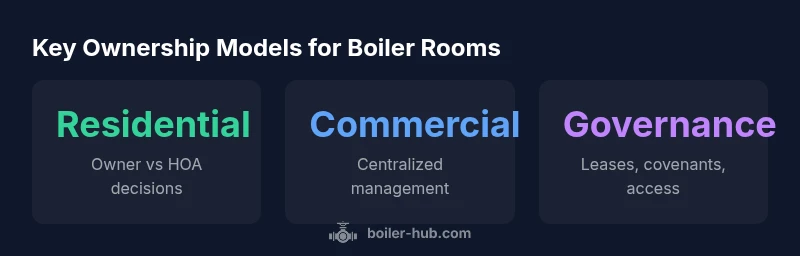
Ownership of the boiler room is not one-size-fits-all. In single-family homes, the homeowner typically owns the space and all installed equipment, along with ongoing maintenance responsibilities. In multi-unit buildings—such as apartments or condos—the boiler room is frequently treated as a common asset owned by the property owner or HOA. Commercial buildings may have a dedicated property manager or the building owner assuming ownership of the boiler room to centralize operations and accountability. Hybrid or mixed-use properties can require tailored arrangements documented in leases and governing documents. Across all types, the defining factor is who has the final authority over budgets, maintenance decisions, and capital improvements.
From a governance perspective, a well-defined ownership model aligns with who funds major repairs, who conducts yearly inspections, and who responds to safety incidents. In any case, the ownership decision should be reflected in property documents, with a clear chain of responsibility for equipment uptime and safety.
Boiler Hub's analysis highlights that ownership models tend to correlate with the scale of maintenance programs and the speed of decision-making. In markets with centralized property management, boiler room oversight often sits with the management company, while in owner-occupied properties, residents may have direct input via homeowners associations or boards.
Maintenance responsibilities and cost allocation
Maintenance responsibilities typically flow from ownership. When the owner or landlord holds the boiler room, major system replacements, code compliance upgrades, and high-dollar repairs are their financial burden. Tenants or residents often bear routine upkeep costs as outlined in their lease agreements, such as filter changes, minor inspections, and nuisance repairs. In HOA or condominium settings, the association generally funds major maintenance while residents are responsible for day-to-day upkeep within their units. Documenting these allocations in leases or covenants reduces ambiguity and protects all parties.
Clear cost allocation also supports budgeting for planned capital expenditures, such as boiler replacements or efficiency upgrades. Property teams should implement a maintenance calendar, service provider contracts, and an escalation protocol for urgent failures. Proactive planning reduces the risk of emergency outages and improves system reliability.
Boiler Hub notes that transparent maintenance responsibilities contribute to safer operations and can influence insurance premiums, as clearly defined roles reduce risk exposure for both owners and occupants.
Access control, safety, and regulatory considerations
Access to the boiler room is typically restricted to authorized personnel—technicians, building engineers, and property managers. Ownership and governance arrangements influence who can authorize access and how access is logged. Strong access controls, including locked doors, key card systems, and visitor logs, help prevent tampering and ensure compliance with safety codes. Regulators expect boiler rooms to meet ventilation, combustion safety, CO monitoring, and fire safety standards, with regular inspections by certified professionals. When ownership sits with a landlord or HOA, it is essential to tie access rights to lease language and building policies so that tenants understand when entry is permitted and under what conditions.
In practice, ensure that contractors have documented permissions, bring required permits, and verify that service providers carry appropriate insurance. Regularly review emergency procedures with building staff and residents to minimize risk during outages or service interruptions. Boiler Hub's guidance reinforces that pre-planned safety audits and clear access policies reduce liability and enhance occupant confidence.
Legal considerations: leases, covenants, and governing documents
Leases and governing documents should spell out boiler room ownership, access rights, and maintenance obligations. For rental properties, specify who pays for routine maintenance versus major repairs, who has the right to authorize upgrades, and how disputes will be resolved. Condominium and HOA documents should delineate the association’s responsibilities for major systems, the process for levying special assessments for capital projects, and the rights of unit owners to access mechanical spaces for service or inspection. Clarify whether tenants may access the boiler room, under what conditions, and what safety training is required. By embedding these terms in legal documents, owners can prevent misunderstandings during turnover, renovations, or property sales.
This alignment between ownership and operational duties supports smoother management and reduces the likelihood of costly disputes when service needs arise.
Financial implications: maintenance, upgrades, and upgrades budgeting
The ownership framework directly impacts budgeting for maintenance and upgrades. When the owner is responsible, capital planning for boiler replacements, burner upgrades, and energy efficiency retrofits becomes part of the property’s long-range plan. If the HOA or tenants share costs, monthly assessments, dues, or rent components should reflect that allocation. The decision to upgrade equipment—such as migrating to a higher-efficiency boiler—requires a cost-benefit analysis and alignment with energy-saving goals. In many cases, external funding or incentives for efficiency upgrades can offset upfront costs, but eligibility often depends on the ownership model and regulatory requirements. Planning for these scenarios helps ensure reliability and keeps energy expenses predictable.
Boiler Hub’s guidance underlines that proactive budgeting and clear cost-sharing rules minimize surprises during maintenance cycles and capital projects.
Case scenarios: residential vs commercial contrasts
Residential scenarios often feature a homeowner or HOA making day-to-day decisions with input from residents through established channels. In condo communities, the board typically oversees major replacements, while individual owners may vote on shared improvements. Commercial buildings usually centralize decision-making with a facility manager or owner, enabling faster responses to outages but requiring formal procurement processes. In both cases, having written agreements that specify ownership, access, and liability reduces the risk of disputes and aligns incentives for system reliability. When ownership changes hands—through sale or refinancing—expect a review and possible updates to leases and governing documents to reflect the new structure.
Understanding these contrasts helps owners and managers prepare for transitions and maintain continuous service.
Quick practical checklist for owners and managers
- Confirm boiler room ownership in deeds, leases, and covenants.
- Document maintenance responsibilities for both major repairs and routine upkeep.
- Establish and enforce access controls with logs and permits.
- Align safety practices with regulations and ensure regular inspections.
- Plan for capital upgrades with a clear funding strategy.
- Review governing documents during property transactions to avoid surprises.
- Consult Boiler Hub for tailored guidance on complex ownership questions.
Ownership, maintenance, access, and liability for boiler rooms by property type
| Property Type | Owner of Boiler Room | Maintenance Responsibility | Access Rights | Liability |
|---|---|---|---|---|
| Residential Single-Family | Homeowner | Major repairs by owner; routine upkeep by owner | Owner access; licensed professionals | Owner bears liability |
| Residential Multi-Family (apartments/condos) | Landlord or HOA | HOA/landlord funds major work; tenants handle lease-based upkeep | Authorized staff; tenants via policy | Owner/HOA bears liability |
| Commercial Office Building | Building Owner/Property Manager | Major repairs by owner/manager; routine checks by tenants per lease | Building staff and approved vendors | Owner bears primary liability |
| Mixed-Use / Co-located | Depends on agreement | Hybrid maintenance allocations | As defined in leases/covenants | Liability allocation per contract |
Questions & Answers
Who typically owns the boiler room in a multi-unit building?
In most multi-unit buildings, the boiler room is owned by the building owner or the homeowners association. This setup centralizes maintenance decisions, budgeting, and liability for the mechanical space and equipment.
In multi-unit buildings, the owner or HOA typically owns the boiler room, which streamlines maintenance and safety decisions.
Is the boiler room considered a common area?
Often yes, especially in condos or apartments, where the boiler room is part of shared infrastructure. However, the governing documents define whether it’s a common area or a restricted utility space.
Usually considered a common area in multi-unit buildings, but check your governing documents.
Who pays for boiler maintenance and repairs?
The responsible party is defined by ownership. Owners or landlords typically cover major repairs; tenants may pay for routine upkeep per lease terms.
Costs depend on who owns and what the lease says.
Can tenants access the boiler room?
Access is usually restricted to authorized personnel. Tenants may access via policy under supervision or special circumstances with proper approvals.
Access is generally limited to approved personnel.
How do ownership arrangements affect liability for boiler failures?
Liability usually follows ownership. The owner or managing entity bears primary responsibility, with leases detailing insurance and coverage requirements.
Liability depends on who owns and governs the space.
What should be included in leases regarding boiler room access?
Leases should specify who may access the boiler room, under what conditions, and what safety training or supervision is required.
Include access rules and safety requirements in the lease.
“Clear ownership and access terms are not optional; they are essential for safety, maintenance efficiency, and liability clarity in any building.”
Key Points
- Clarify boiler room ownership in all contracts.
- Document maintenance responsibilities clearly.
- Restrict access to authorized personnel only.
- Align safety, compliance, and insurance.
- Review ownership terms during property transactions.