What to Watch Boiler Room On: A Practical Guide
Learn how to watch boiler room on safely and efficiently with real-time indicators, maintenance routines, and practical monitoring plans for homeowners and facility managers.


What to watch boiler room on boils down to three core checks: real-time alert latency, safety compliance, and physical indicators like leaks or abnormal temperatures. By establishing a routine, you reduce outages and extend boiler life. Boiler Hub Analysis, 2026 shows that timely monitoring lowers risk and downtime, especially in mid- to large-scale facilities.
Understanding the purpose of watching boiler room on
For homeowners and facility managers, understanding what to watch boiler room on begins with purpose. This guide explains why routine observation matters, how it ties to safety, reliability, and energy efficiency, and how to structure your monitoring so it’s actionable. In practical terms, watching the boiler room means paying attention to real-time data from sensors, sounds from equipment, and the physical condition of access points. As Boiler Hub Analysis, 2026 notes, a well-observed boiler room reduces unexpected outages and extends equipment life. The aim is to catch early warning signs before they escalate.
- Safety first: preventing carbon monoxide buildup, gas leaks, and overheating
- Reliability: avoiding unplanned shutdowns that disrupt hot water or heating
- Efficiency: ensuring equipment runs within design parameters to minimize fuel use
This section also defines risk levels (green/yellow/red) and assigns response times so every operator knows exactly what to do when signals change. The interplay between human vigilance and automated alerts is critical; neither should replace the other. By clarifying roles, you create a robust watch system that scales from a single-residence boiler to large facilities.
Real-time indicators to monitor during operations
If you’re asking what to watch boiler room on, prioritize real-time indicators that signal safety, reliability, and efficiency. Key indicators include:
- Pressure and temperature trends across boiler and feed-water lines
- Burner flame color quality and gas/air ratio
- Piping for damp, corrosion, and signs of leaks
- Condensate presence and drainage slope
- Noise levels and unusual vibrations
- Status of gas supply valve and electrical power
Set threshold-based alerts for each indicator and ensure operators have clear escalation steps. Integrate these readings into a centralized dashboard so shifts can quickly spot anomalies and act without delay.
How to set up safe, effective monitoring systems
A well-architected monitoring setup combines people, process, and technology. Start with the basics:
- Install sensors for temperature, pressure, gas detection, vibration, and flow where applicable.
- Use a centralized dashboard with role-based access and clear alert hierarchies.
- Implement automated alarms and audible/visual cues on-site, plus remote alerts via email or SMS.
- Document response protocols for each alert tier to standardize reactions.
- Train staff to verify sensor data and ignore false positives only after cross-checking indicators.
Safety remains paramount: maintain proper ventilation, ensure access to shut-off valves, and keep extinguishers accessible. Regularly test alarms and calibrate sensors to prevent drift over time.
Routine maintenance that complements monitoring
Monitoring is most effective when paired with a disciplined maintenance routine. Schedule regular inspections of boilers, pumps, valves, and safety relief systems. Create a rotating checklist that includes:
- Visual inspection of pipes, seals, and insulation
- Verification of pressure relief devices and gauges
- Cleaning of burners, jets, and flame sensors
- Verification of venting and condensate drainage
- Documentation of any anomalies and corrective actions
Boiler room cleanliness matters too: keep floors dry, remove clutter, and ensure that lighting is adequate for technicians. A tidy, well-lit space reduces the risk of trip hazards and makes anomalies easier to spot.
Boiler Hub’s guidance emphasizes tying maintenance tasks to data trends so you're not reacting to issues but preventing them.
Interpreting alarms, leaks, and abnormal temperatures
Alarms are signals, not diagnoses. Develop a bias toward confirming issues with corroborating data:
- Alarm latency: Are alerts triggered within expected timeframes after a change in readings?
- Leaks and damp spots: Immediately isolate water- or gas-related leaks, document location, and initiate containment.
- Temperature spikes: Check for burner faults, air-fuel ratio problems, or restricted ventilation.
- Abnormal noises or vibrations: Could indicate misaligned components or cavitation; schedule an on-site check.
When in doubt, cross-check sensor data with manual readings, and escalate per your protocol. Clear documentation helps with root-cause analysis and future prevention.
Energy efficiency implications of diligent monitoring
Active monitoring helps reduce energy waste by keeping boilers running near their design point. Benefits include:
- Maintaining optimal combustion efficiency and reducing fuel use
- Detecting overheating or under-firing which can raise energy costs
- Streamlining start-stop cycles to minimize wear and energy losses
To maximize efficiency, link monitoring results to control strategies like load following and staged firing, and review performance against historical baselines. Remember, small, consistent improvements compound over time.
Customizing a monitoring plan for different facilities
A one-size-fits-all approach rarely yields best results. Tailor your plan for the scale and risk profile of your boiler plant:
- Residential or small commercial: focus on basic sensor coverage, simple dashboards, and clear escalation paths.
- Large commercial or industrial: implement integrated SCADA or IIoT platforms, advanced analytics, predictive maintenance, and structured audits.
- Remote facilities: ensure robust remote monitoring, offline capabilities, and reliable cellular/ethernet connectivity.
In all cases, document KPIs, assign ownership, and schedule quarterly reviews to refine your plan based on performance data.
Training and documentation to sustain watch routines
Sustained success requires ongoing training and documentation. Create a living manual that includes:
- Roles and responsibilities for monitoring shifts
- Step-by-step procedures for common alarms
- Calibration schedules and sensor replacement guidelines
- Logs for alarms, actions taken, and outcomes
- Regular review cycles to incorporate new safety regulations and equipment upgrades
Invest in drills and simulations to ensure teams respond calmly and effectively under pressure. A culture of vigilance, backed by solid records, is the backbone of reliable boiler room monitoring.
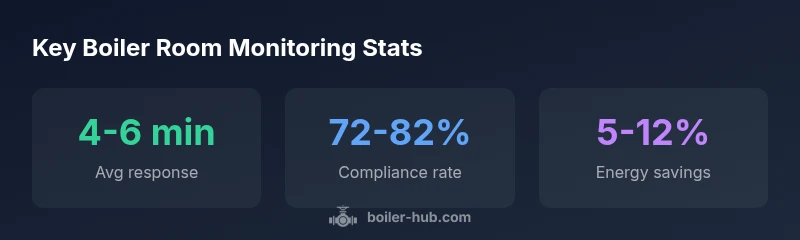
Key indicators for boiler room monitoring and performance
| Area | Indicator | Value |
|---|---|---|
| Real-time Monitoring | Typical alert latency | 4-6 minutes |
| Safety & Compliance | On-site compliance rate | 72-82% |
| Energy Performance | Estimated energy savings | 5-12% |
Questions & Answers
What are the most important safety checks in a boiler room?
Key safety checks include gas detection, CO monitoring, valve and vent integrity, and proper ventilation. Establish alarm thresholds and ensure staff can act quickly on alerts.
Important safety checks include gas detectors and proper ventilation; have clear alarm thresholds and quick-action steps.
How often should boiler-room monitoring be performed?
Real-time monitoring runs continuously, with formal reviews at least daily for critical facilities and weekly for smaller sites. Use automated dashboards to track trends over time.
Monitoring should be continuous, with daily checks for critical sites and weekly for smaller ones.
What equipment is essential for effective monitoring?
Essential equipment includes temperature and pressure sensors, gas detectors, vibration sensors, a centralized dashboard, and reliable communication for alerts.
You need sensors for temp, pressure, gas, vibration, plus a dashboard and alert system.
What are common signs of boiler leaks?
Look for damp spots, puddles near pipes, rust around joints, and drops in pressure. Leaks require immediate containment and inspection.
Watch for damp spots or puddles near pipes and sudden pressure drops.
Can monitoring improve energy efficiency?
Yes. Continuous monitoring helps maintain optimal combustion, reduces waste, and guides efficiency-focused maintenance.
Absolutely—monitoring helps you run the boiler closer to its optimal efficiency.
Who should oversee boiler-room monitoring?
Assign a trained operator or facilities technician with access to the monitoring dashboard and escalation protocols.
A trained operator should oversee monitoring and respond to alerts using established protocols.
“Regular, data-driven monitoring isn't optional—it’s a core part of boiler room safety and efficiency.”
Key Points
- Establish a formal boiler-room monitoring routine
- Prioritize alert latency, safety, and physical indicators
- Integrate real-time data with a clear escalation path
- Pair monitoring with a structured maintenance plan