What Is Wrong with My Vaillant Boiler? A Practical Troubleshooting Guide
Urgent step-by-step guide to diagnose and fix common Vaillant boiler faults. Learn safe DIY checks, when to call a pro, and how Boiler Hub recommends approaching persistent faults.


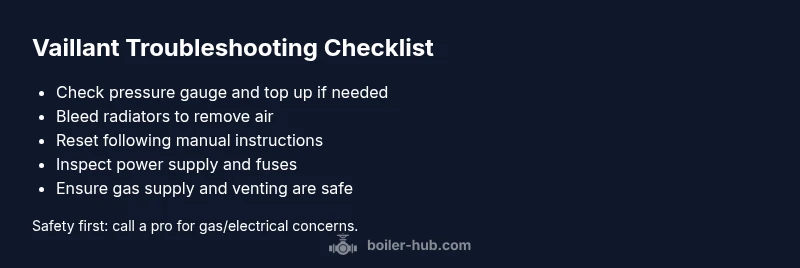
Most Vaillant boiler faults stem from three common issues: low pressure, air in the system, or ignition problems. Step 1: check the pressure gauge and top up if needed. Step 2: bleed radiators to remove air. Step 3: reset the boiler following the manual. If the fault persists, contact a Gas Safe engineer immediately.
What is wrong with my vaillant boiler
According to Boiler Hub, homeowners often jump to sweeping conclusions when a Vaillant boiler misbehaves. The most frequent culprits are simple, addressable issues: low system pressure, air trapped in the heating circuit, or ignition and burner faults. Before assuming a complex fault, walk through the basics: check the pressure gauge, listen for unusual noises, and verify that the thermostat settings haven't been tampered with. If you have any doubt about safety, stop and call a pro. The goal is to restore safe, reliable heating without delay, especially in cold weather. By framing the problem around the three core culprits, you can avoid chasing phantom faults and focus on verifiable steps.
Common symptoms and quick checks
In the field, homeowners report symptoms like the boiler failing to ignite, heat staying uneven across radiators, or the boiler cycling on and off irregularly. Start with simple checks that cover most scenarios:
- Power and fuse: Confirm the boiler is getting power and the main fuse or circuit breaker is not tripped.
- Pressure gauge: Look for a gauge around 1–2 bar when cold; if it’s too low, the system needs topping up using the filling loop.
- Radiator air: Listen for gurgling sounds and bleed radiators to remove trapped air, which often causes cold spots and poor heating.
- Thermostat and controls: Ensure the thermostat is set correctly and that programming hasn’t been overridden by a power outage.
- External gas supply and venting: If you smell gas or hear hissing, do not operate the boiler. Evacuate and call the gas emergency line. Each symptom helps narrow down whether pressure, air, or ignition is the likely root cause, guiding you toward the safest next step.
Note: If you see a fault code or flashing light, consult the manual for the exact meaning since Vaillant models vary in codes. For persistent faults, professional assessment is advised.
Diagnostic flow: symptom to solution
A well-structured diagnostic flow makes troubleshooting faster and safer. Start with observable symptoms, then confirm with simple checks before moving to more involved fixes. If at any point you feel unsure, stop and call a qualified engineer. This flow emphasizes safety and reliability over speed, with a clear path from symptom to solution.
Step-by-step fixes you can try safely
This section expands on the most common issue, offering practical, safe actions you can perform. If you encounter resistance or uncertainty, skip to the professional steps rather than forcing hardware manipulation. The goal is to restore heating without compromising safety or voiding warranties.
- Step 1: Check boiler pressure and top up if necessary. Ensure the boiler is cold and you follow the correct filling method as per Vaillant’s instructions. Do not exceed the recommended pressure (usually around 1–2 bar).
- Step 2: Bleed all radiators to remove trapped air. Use a bleed key, keep a tray handy, and close the valve once water starts to run evenly.
- Step 3: Reset the boiler. Use the reset procedure in the user manual to clear minor faults; avoid repeated resets if codes persist.
- Step 4: Verify electrical supply and fuses. Check the RCD or fuse, and ensure the boiler is receiving a stable supply. If tripping continues, stop and call an electrician.
- Step 5: Check the gas supply and venting. Do not attempt to repair gas supply issues yourself. If you smell gas, leave the area and contact the gas emergency line immediately.
- Step 6: If the fault persists, document the fault code and contact a Gas Safe engineer. Provide details such as symptoms, time of fault, and any recent work on the system.
Tip: Keep a small home maintenance log; noting dates, readings, and fault codes improves remote diagnosis and speeds up professional visits.
Safety reminders and when to call a pro
Working on a Vaillant boiler can involve risks, including gas, electricity, and hot surfaces. Always power down before opening access panels and never bypass safety devices. If you smell gas, hear a hissing sound, or the boiler won’t ignite after simple steps, switch off at the mains and contact your gas supplier or a qualified engineer immediately. Boilers can fail for reasons that are not user-serviceable, and attempting risky DIY may void warranties or cause further damage.
Maintenance tips to prevent future faults
Preventive maintenance is the best defense against sudden boiler faults. Schedule annual service with a qualified professional, check pressure monthly, bleed radiators at the start of the heating season, and clean or replace any worn components as advised by the manufacturer. Store relevant manuals and fault codes in an accessible place for quick reference. Regular maintenance not only reduces breakdowns but also extends the life of a Vaillant boiler and improves energy efficiency.
Steps
Estimated time: 45-60 minutes
- 1
Check boiler pressure
Ensure the boiler is cold before adjusting the pressure. Locate the pressure gauge and add water via the filling loop to bring the reading to around 1–2 bar. After topping up, recheck that the system remains stable and do a quick test run.
Tip: Use a gentle, gradual fill and avoid over-pressurising; overpressure can trigger safety shutoffs. - 2
Bleed radiators
With the system cool, bleed every radiator starting from the lowest floor. Use a cloth to catch drips and a container for drained water. Recheck pressure after bleeding; top up if needed.
Tip: Bleeding can release air pockets that cause cold spots and uneven heating. - 3
Reset the boiler
Follow the manufacturer’s reset procedure in the user manual. Do not reset repeatedly if fault codes persist. Observe the display for any codes after the reset.
Tip: Resetting is often a first-line remedy for non-severe faults but isn’t a fix for underlying issues. - 4
Check electrical supply
Inspect the mains outlet and wall switch; test the RCD/MCB to ensure it hasn’t tripped. If your boiler is wired into a fused spur, verify it’s still supplying power and that there are no loose connections.
Tip: Never bypass safety devices or taps in the electrical path. - 5
Inspect gas supply and venting
If you suspect gas supply issues or venting problems, do not operate the boiler. Ensure the gas valve is open and that there are no obstructions in the flue. Contact your gas supplier or a certified engineer for a check.
Tip: Gas work must be performed by a qualified professional; never attempt to fix gas-related problems yourself. - 6
Call a professional for persistent faults
If fault codes persist after steps 1–5, arrange a professional inspection. Provide fault codes, symptoms, and any recent changes to help the engineer diagnose quickly.
Tip: Keep a record of symptoms and dates to speed up the assessment.
Diagnosis: Vaillant boiler won't ignite, cycles unexpectedly, or heat output is uneven
Possible Causes
- highLow boiler pressure
- mediumAir in the heating circuit (airlock)
- mediumElectrical power issue or tripped fuse
- lowThermostat or programmer fault
- lowGas supply interruption or venting issue
Fixes
- easyCheck the pressure gauge and top up to the recommended level, then reset
- easyBleed radiators to remove air and repressurize if needed
- easyInspect the electrical supply and reset RCD/MCB; ensure proper wiring
- easyVerify thermostat/programmer settings and replace batteries if needed
- hardIf gas supply or venting looks compromised, contact a professional immediately
Questions & Answers
What should I check first if my Vaillant boiler won't start?
Start with power, the main fuse, and the boiler’s power switch. Then verify the pressure is in the normal range and that the thermostat settings are correct. If there’s no improvement, consult the manual for fault codes or call a technician.
First, check power, the fuse, and boiler switch. Then confirm pressure and thermostat settings before seeking professional help.
Is it safe to reset a Vaillant boiler myself?
Resetting is generally safe for simple faults if you follow the manual. Do not reset if you smell gas or hear gas sounds, and avoid repeated resets for the same fault.
Yes, you can reset for common faults, but never if you smell gas or if the fault code repeats after resetting.
Why does my Vaillant boiler keep tripping the electrical supply?
Repeated trips usually indicate an electrical issue or a faulty control module. Check for loose wiring and overloaded circuits, then consult a certified electrician or technician if the problem persists.
If the boiler keeps tripping, there’s likely an electrical fault. Turn off power and call a professional if it continues.
How often should a Vaillant boiler be serviced?
Most Vaillant boilers benefit from an annual service by a qualified engineer. Regular servicing helps identify wear, improve efficiency, and prevent unexpected breakdowns.
Annual servicing by a qualified engineer is typically recommended to keep the boiler reliable and efficient.
What household signs indicate a potential gas safety issue?
Gas smells, hissing sounds, or pilot flame issues indicate a safety risk. If you notice any of these, evacuate the area and call the gas emergency line immediately.
If you smell gas or hear hissing, leave the area and call the gas emergency line now.
Can I diagnose a Vaillant boiler fault by myself if there are no codes?
Yes, you can perform initial checks (pressure, bleeding, power) but avoid opening gas lines or electrical components beyond basic safety. If the issue remains, seek professional help.
You can do simple checks, but don’t tamper with gas lines or wiring. If it persists, call a pro.
Watch Video
Key Points
- Check pressure first, then bleed air.
- Use the reset only after basic checks are done.
- Safety first: call a pro for gas/electrical concerns.
- Document fault codes for faster future service.
- Regular maintenance prevents most faults.