Loco 90 qt Boiler Guide: Maintenance and Safety
Comprehensive guide to the LOCO 90 qt boiler for buyers and maintainers, covering specs, materials, installation, safety features, and upkeep with practical tips and lifecycle planning.


The LOCO 90 qt boiler is a large-capacity commercial kettle used in mid-sized kitchens and facilities. This guide covers core specs, materials, heating options, safety features, and ongoing maintenance. Based on Boiler Hub Analysis, 2026, buyers should prioritize venting, sanitation-ready construction, and professional installation to ensure reliable operation.
What is a LOCO 90 qt boiler? Uses and typical operators
The loco 90 qt boiler is a large-capacity commercial kettle designed for rapid boiling and large batch cooking. In many mid-size kitchens, caterers, and schools, this unit handles soups, broths, pasta water, and stock reductions with consistent heat distribution. When you see a loco 90 qt boiler in action, you’ll notice a heavy steel body, robust handles, and a tight‑fitting lid that minimizes steam loss. From a maintenance perspective, the frame and trim should be corrosion‑resistant and easy to sanitize. According to Boiler Hub, the 90 qt format strikes a balance between output and footprint, making it a practical choice for operators who need large batches without a full commercial kettler. The target users typically require reliable performance, straightforward cleaning, and compatibility with standard gas or electric heating sources. In practice, a LOCO 90 qt boiler is common in mid‑size cafeterias, school kitchens, and community centers where daily hot meal service is essential. Incorporating this equipment into daily service requires thoughtful placement, proper ventilation, and clear labeling for safe operation.
Key specifications to evaluate with loco 90 qt boiler
When evaluating a loco 90 qt boiler, start with nominal capacity around 90 quarts, a thick stainless steel vessel, and a tight lid to minimize heat loss. Verify venting provisions, a functional drain, and an accurate thermostat or temperature probe. Consider footprint, clearance, and compatibility with gas, propane, or electric heating. Sanitation features like smooth interior welds and a radius‑rounded interior are important for high‑volume environments. Look for NSF or equivalent compliance to simplify cleaning and certification. The loco 90 qt boiler should integrate with standard kitchen hoses and stands for easy transport and servicing. Boiler Hub’s 2026 review notes that model variation exists, so compare specifications side‑by‑side and confirm it aligns with your menu and service pace. A well‑chosen unit supports consistent batch quality and reduces downtime during peak hours.
Materials and construction options
Most loco 90 qt boilers use stainless steel for durability and sanitation. Stainless steel grades commonly balance corrosion resistance with heat transfer performance. A heavy gauge vessel reduces warping and edge lifting under high heat, while a robust lid and handle assembly minimize heat exposure to staff. The interior finish should be smooth and easy to scour, with corner radii that prevent food buildup. Some operators consider aluminum or coated alloys for lighter weight; however, these options may require more frequent replacement or special cleaning protocols. For facilities prioritizing hygiene and longevity, stainless steel remains the prevailing choice. When selecting, assess weld quality, door or lid construction, and the availability of compatible gaskets and seals for long‑term reliability.
Heating methods, energy efficiency, and venting considerations
Heating source options for a loco 90 qt boiler typically include gas or electric elements, with performance that depends on heat input, vessel insulation, and control accuracy. Gas models generally offer high heat output suitable for rapid boil‑downs, while electric variants provide stable, precise temperature control ideal for documentation‑driven processes. Energy efficiency hinges on well‑insulated walls, tight lid seals, and minimal heat escape paths. Proper venting is essential to avoid buildup of steam and ensure safe operation, particularly in enclosed kitchens or rooms with limited ventilation. Review the venting requirements early, as improper venting can affect combustion efficiency, safety, and overall operating costs. Boiler Hub notes that end users should factor in service access and replacement part availability when comparing heating options.
Installation, safety devices, and regulatory compliance
Professional installation is critical for a loco 90 qt boiler. The placement should allow sufficient clearance for cleaning, venting, and service access, with a non‑combustible base and stable mounting. Safety devices to look for include a functioning pressure relief valve, a high‑limit thermostat, and automatic shutoff controls. Venting must meet local codes and manufacturer instructions to prevent unsafe backdrafts. Electrical or gas connections should be performed by licensed technicians, with proper labeling and isolation switches. Documentation such as user manuals, warranty terms, and compliance certificates should be kept readily accessible in staff training rooms. Regular safety drills and posted SOPs help maintain safe operation in busy kitchens.
Maintenance and lifecycle planning
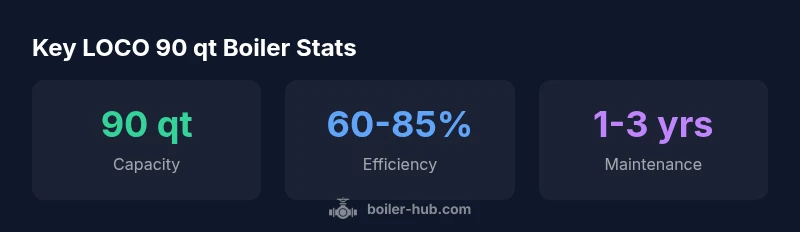
Proactive maintenance is essential to maximize uptime and lifecycle value for a loco 90 qt boiler. Implement a cleaning schedule that targets interior surfaces and seal gaskets after intensive use. Descale as needed to preserve heat transfer efficiency, and replace worn gaskets and seals before leaks develop. Schedule professional servicing at least once per year, or more often in high‑volume facilities. Maintain a parts log and train staff on basic checks, such as lid integrity, drain operation, and thermostat response. A well‑maintained loco 90 qt boiler delivers consistent performance, reduces unexpected downtime, and extends service life.
Key specs for LOCO 90 qt boiler
| Aspect | Value | Notes |
|---|---|---|
| Capacity (qt) | 90 | Nominal capacity for LOCO 90 qt boiler |
| Material | Stainless steel | Durable and easy to sanitize |
| Heating method | Gas or electric | Model dependent |
| Footprint | 4-6 ft wide | Space for venting and handling |
Questions & Answers
What is the typical use case for a loco 90 qt boiler?
A loco 90 qt boiler is suited for mid-sized kitchens and catering operations, handling soups, stocks, and large batches. It balances output with footprint for daily service.
A loco 90 qt boiler is great for mid-sized kitchens doing large batches like soups and stocks.
What safety features should I look for?
Look for a reliable pressure relief valve, an automatic shutoff, proper venting, and a high‑limit thermostat. Verify that safety standards and local codes are met.
Check for a pressure relief valve, automatic shutoff, and proper venting.
What maintenance tasks are essential?
Establish a regular cleaning and descaling routine, inspect gaskets, and schedule annual professional service. Keep a maintenance log for traceability.
Clean regularly, descale when needed, and schedule yearly service.
How do I estimate installation costs?
Costs vary by local labor rates, venting requirements, and electrical or gas work. Get at least two quotes and verify permits and codes.
Get multiple quotes, check venting, and confirm permits.
Can I replace this with another size?
Yes, but sizing should be guided by peak load, menu items, and available space. Consult a professional for an load‑calculation and safe upgrade.
You can switch sizes, but have a pro assess your needs first.
What are common issues to watch for?
Watch for scale buildup, thermostat drift, and occasional leaks from seals. Regular checks mitigate downtime and ensure consistent performance.
Keep an eye on scale, thermostat, and seals to avoid downtime.
“Regular inspection and proper sizing are essential for safe, durable LOCO 90 qt boiler performance. With correct venting and maintenance, lifecycle costs drop and reliability rises.”
Key Points
- Size your batch needs before selecting a loco 90 qt boiler
- Choose sanitation-friendly materials with easy cleaning in mind
- Prioritize proper venting and gas safety compliance
- Plan professional installation and regular maintenance
- Schedule annual inspections to extend lifespan