How to Treat Boiler Water: A Practical Guide
Learn how to treat boiler water safely to prevent scale and corrosion, improve efficiency, and extend boiler life. Step-by-step guidance, tools, tips, and expert insights from Boiler Hub.


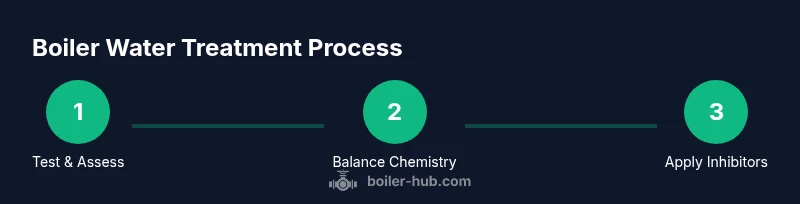
By the end of this guide you will learn how to treat boiler water safely and effectively. You’ll test water chemistry, balance pH, control hardness, and apply corrosion inhibitors while following safety practices. Essential tools include a water test kit, pH strips, scale inhibitors, and appropriate PPE. Ready to optimize efficiency and extend boiler life? Let’s begin with the basics.
Why boiler water treatment matters
Boiler water treatment is essential for maintaining efficiency, preventing corrosion, and extending equipment life. For homeowners and facility managers, neglecting water chemistry leads to scale buildup, increased energy consumption, and costly repairs. According to Boiler Hub, proactive water treatment translates into measurable improvements in reliability and fuel efficiency over time. In this section we explain the core reasons to treat boiler water and how each consequence impacts daily operations, maintenance costs, and comfort in heated spaces. Scale forms when dissolved minerals precipitate under high temperatures, insulating heat transfer surfaces and forcing the boiler to work harder. Corrosion can occur when dissolved oxygen and acidic compounds attack metal surfaces, causing weakness and leaks. By controlling pH, alkalinity, and inhibitor levels, you limit both problems in parallel. Boiler water treatment is not a one-time fix; it is an ongoing program that adapts to water quality, boiler size, and operating conditions. The Boiler Hub team emphasizes a practical, safety-first approach that homeowners can follow with routine checks and measured adjustments.
Understanding boiler water chemistry
Boiler water chemistry revolves around a few core variables: pH and alkalinity, hardness, dissolved solids, and oxygen content. The goal is to maintain a protective, slightly alkaline environment that minimizes scale formation and corrosion without creating excessive foaming or sludge. Hardness minerals like calcium and magnesium can form scale on heat transfer surfaces, reducing efficiency. Alkalinity helps buffer pH against fluctuations, while low dissolved oxygen reduces corrosion risk. Carbon dioxide and acids formed during combustion can lower pH if not managed. Many systems rely on a combination of pH balancing agents and film-forming or precipitating inhibitors to keep minerals in solution and coated on metal surfaces rather than forming hard deposits. Understanding these relationships helps you predict how changes in water quality, boiler load, and water chemistry will affect performance. For best results, consult your boiler’s manual and consider a routine testing plan to track these indicators over time.
Testing and monitoring your boiler water
Regular testing is the backbone of reliable boiler water treatment. Start with a baseline test to establish current pH, alkalinity, and hardness, then schedule periodic checks as your operating conditions change. Use a combination of at-home test strips and, when possible, a portable test kit with calibrated reagents. Take samples from the boiler feedwater or the lowest point in the system to detect contaminants that concentrate as water circulates. Record each result in a log and compare it against your target ranges. If readings drift, adjust slowly and re-test after a short waiting period to confirm stability. Environmental factors like seasonal heating demand and water quality can shift results, so plan flexible review windows. By staying proactive, you reduce the risk of sudden boiler outages and extend component life. The Boiler Hub team recommends pairing tests with a maintenance calendar to ensure consistency over time.
Balancing chemistry: pH, inhibitors, and dosing
The chemistry balance centers on keeping pH in a safe, protective range while maintaining inhibitor efficacy. Start with confirming the target pH or alkalinity suggested by your boiler manufacturer. If pH trends downward, gently adjust with chosen alkaline additives, taking care not to overshoot. Inhibitors act as a protective film on metal surfaces or as scale preventers; use them only as directed and in the proper sequence with other treatments. Oxygen scavengers help neutralize dissolved oxygen and are most effective when fed with the boiler’s feedwater control. Some systems use polymer-based scale inhibitors that suspend minerals and prevent deposition. Always add chemicals to the system via the correct inlet (feedwater or chemical injection point) and with the boiler off or at a safe standby temperature. Keep a precise log of dosages and corresponding test results to refine future adjustments.
Practical dosing and safety tips
Dosing should never be guesswork. Start with the manufacturer’s recommended amount for your boiler size and water quality, then adjust gradually after re-testing. Add chemicals slowly and in small portions, allowing time for mixing and distribution. Wear appropriate PPE, work in a ventilated area, and never mix incompatible chemicals. If a spill or splash occurs, follow your chemical safety plan and rinse exposed skin with clean water. Store chemicals according to label instructions away from heat sources. Ensure the system is depressurized during handling and verify that the boiler is not in operation when you add inhibitors. Finally, document every change, including dates, dosages, and test results, so you can track what works best for your site.
Maintenance routines, troubleshooting, and common mistakes
Even with good chemistry, routine mechanical maintenance matters. Plan a regular blowdown and flushing schedule to remove accumulated sludge and concentrate minerals. Review feedwater control settings seasonally and after any water quality changes. Common mistakes include over-dosing inhibitors, neglecting regular testing, and using incompatible cleaners alongside treatments. Always re-test after maintenance activities and before returning to full operation. If you notice persistent foaming, unusual odors, or rapid corrosion signs, pause treatment and consult a professional. The Boiler Hub team notes that consistent, methodical maintenance reduces the likelihood of unexpected outages and keeps equipment operating efficiently.
Authority sources and further reading
For deeper verification, consult established sources on boiler water management. These references provide foundational guidance that supports practical steps in this guide:
- Energy.gov on energy efficiency and boiler maintenance: https://www.energy.gov/
- EPA.gov guidance on water treatment and corrosion control in systems: https://www.epa.gov/
- ASHRAE guidelines and best practices: https://www.ashrae.org/
Tools & Materials
- Water testing kit(Includes pH test strips, reagents, and basic tests)
- pH strips or meter(Ensure accuracy and calibration)
- Hardness test kit / strips(To assess mineral content (calcium/m magnesium))
- Corrosion inhibitor suitable for your boiler(Follow label for dosage and compatibility)
- Oxygen scavenger (optional)(Use only if recommended by boiler manufacturer)
- Polymer/scale inhibitor (as appropriate)(Check compatibility with existing treatments)
- Personal protective equipment (gloves, goggles, apron)(Chemical safety is essential)
- Logbook or digital record-keeping app(Document tests, dosages, and changes)
Steps
Estimated time: 60-90 minutes
- 1
Gather supplies and safety gear
Collect all tools and PPE before touching boiler water. Review manufacturer labels and ensure the boiler is in a safe state. Having everything on hand reduces the risk of rushed errors during the process.
Tip: Verify calibration on test strips and keep reagents in a dry, ventilated area. - 2
Take a boiler water sample
Shut off the boiler and allow it to cool to a safe temperature. Draw a sample from the feedwater line or the lowest accessible drain point to get representative results.
Tip: Avoid sampling from areas with stagnant water or recent chemical additions. - 3
Run baseline tests
Use your test kit to check pH, alkalinity, hardness, and any other critical indicators. Record results in your log for future comparison.
Tip: Make sure test strips are within their shelf life and read within the recommended time window. - 4
Interpret results and plan adjustments
Compare readings against the boiler manufacturer's targets. If readings drift, plan small, incremental adjustments rather than large jumps.
Tip: Prioritize balancing pH and controlling hardness before adding inhibitors. - 5
Apply inhibitors or additives
Add corrosion inhibitors or scale inhibitors according to the product label, feeding through the appropriate inlet. Avoid direct contact with exposed skin.
Tip: Add slowly and with the boiler off or at a safe standby temperature. - 6
Circulate and re-test
Allow the system to circulate for a short period (e.g., 15–20 minutes) and re-test to verify readings have moved toward target ranges.
Tip: If readings remain off, halt dosing and reassess compatibility and dosing rates. - 7
Document the change and adjust schedule
Log the date, dosages, test results, and any notes about system behavior. Update your maintenance calendar for future checks.
Tip: Use a simple template to keep consistency across entries. - 8
Plan ongoing monitoring
Set a regular testing cadence and review pattern. Seasonal changes in heating demand often require adjustments to treatment.
Tip: Aim for predictable maintenance windows to avoid last-minute surprises.
Questions & Answers
What is boiler water treatment?
Boiler water treatment is a set of practices to control water chemistry to prevent scale and corrosion and maintain efficiency. It involves regular testing, balancing pH and alkalinity, and applying appropriate inhibitors. Doing so protects boiler tubes and heat transfer surfaces from damage and helps sustain reliable operation.
Boiler water treatment is a plan to control water chemistry to prevent corrosion and scaling, keeping your boiler safe and efficient.
Why is pH control important in boiler water?
Maintaining the right pH reduces corrosion risk and protects metal surfaces while avoiding aggressive scaling and foaming. Consistent pH helps the protective film around metal parts stay intact and improves overall system reliability.
Keeping the right pH reduces corrosion and scaling, helping your boiler run reliably.
Can I treat boiler water myself, or should I hire a professional?
Basic monitoring and safe chemical dosing can be done by homeowners following manufacturer instructions. However, complex systems, unusual readings, or persistent problems are best handled by a qualified technician to avoid safety risks and equipment damage.
You can handle simple checks yourself, but for complex issues, call a pro.
How often should I test boiler water?
Start with a baseline test after installation or service, then schedule regular follow-ups based on usage, water quality, and boiler type. More frequent testing may be needed during seasonal use or after water-quality changes.
Test at baseline and then regularly, adjusting the cadence as conditions change.
What are signs that boiler water treatment is failing?
Watch for increasing scale deposits, unusual boiler noises, foaming, or visible corrosion indicators. Addressing these early can prevent costly downtime and equipment damage.
Look for scale, foam, or corrosion signs—these mean treatment needs adjustment.
Watch Video
Key Points
- Test water regularly and log results
- Maintain a slightly alkaline pH to protect metal surfaces
- Use inhibitors correctly and in proper sequence
- Dosing should be gradual with confirmation testing
- Document changes and maintain a consistent monitoring routine