How to Put Boiler on Frost Setting: Step-by-Step Guide
Learn how to safely enable frost protection on your boiler, keep pipes from freezing, and maintain reliable heat during cold snaps with our comprehensive, audit-friendly guide.


By enabling frost protection mode, you ensure your boiler and circulating water stay above freezing during cold snaps. If your model lacks a dedicated frost setting, configure a low standby temperature and keep the circulator running to prevent trapped water from freezing. Always consult your boiler manual and follow safety guidelines.
What frost protection means for boilers
Frost protection is a safety feature that keeps your boiler and its associated water in the heating circuit from dropping below freezing when winter nights are long. For many homes, especially those with outdoor condensers, external pipes, or unheated boiler rooms, frost protection prevents the water inside the system from freezing, which can cause blockages, damage to heat exchangers, or burst pipes. In practical terms, frost protection works by triggering the boiler to run a short, low-temperature circulation or by maintaining a minimum water temperature whenever outdoor temperatures fall. If you're searching for 'how to put boiler on frost setting', you're looking to activate this safety net before cold weather fully settles in. The best approach is to locate the frost protection option in your boiler's control panel or thermostat link and enable it. If your model lacks a dedicated frost mode, you should simulate frost protection by adjusting the standby temperature and ensuring the circulator remains active during cold spells.
When frost setting is necessary
A frost setting becomes especially important when your boiler serves unheated spaces, outdoor piping, or garages near exterior walls where outdoor temperatures can plummet quickly. Frost protection is not a luxury feature; it’s a practical safeguard against costly pipe bursts, frozen condensate lines, and stress on heat exchangers. If you live in areas with regular freezing conditions or you’ve recently noticed exposed plumbing in unheated zones, activating frost protection can buy you valuable time before damage occurs. For building managers, frost protection reduces the risk of cold-weather outages that disrupt operation and occupant comfort. Remember that frost setting is most effective when combined with proper insulation, venting, and regular boiler maintenance. Boiling down, frost protection keeps the system mobile enough to circulate water and protect against freezing when temperatures drop.
Safety first: hazards and precautions
Before adjusting any boiler settings, ensure you follow basic safety protocols. Gas and electric components can be hazardous if mishandled. Always shut off power to the boiler before opening access panels unless you’re specifically instructed to test while energized. Wear safety gloves to protect against sharp edges and hot surfaces, and keep flammable materials away from the boiler area. If you smell gas, prefer a quick exit and call the utility company or a licensed technician immediately. Frost protection involves temperature regulation and pump operation; incorrect changes can lead to overheating or inadequate protection. If you’re unsure at any step, contact a professional technician or consult the manufacturer’s safety guidance.
Choosing the right frost setting for your boiler model
Not all boilers share identical frost protection features. Some include a dedicated frost mode, while others rely on a programmable standby temperature or external thermostat linkage. The key is to review your model’s manual to identify the exact path to enable frost protection, whether through the main control panel, a connected app, or a wired thermostat. If the manual is unclear, take note of the following signals: a frost protection option in the menu, a frost icon on the display, or a simple on/off toggle labeled frost protection. If you’ve inherited a boiler or work with multiple units, documenting the frost settings for each model helps ensure consistent protection across properties. Your goal is to activate a mode or setting that triggers a gentle circulation or maintains a minimal safe temperature when cold weather hits.
Enabling frost protection on common boiler controls
Many modern boilers offer frost protection as a selectable mode. Begin by locating the control panel and accessing the settings menu. If you see a frost protection option, switch it to ON or enable frost protection. If your boiler uses an external thermostat, ensure the thermostat is set to a low limit that still maintains circulation. For older or simpler models, you may need to program a low standby temperature or connect the frost protection function via a boiler BMS (building management system). After enabling frost protection, verify that the pump is cycling according to the setting and that the display confirms frost protection is active. If you encounter a message or error, revert to the last known good configuration and consult the manual or a technician.
Alternative: frost protection via temperature settings and pump operation
If your boiler does not have a dedicated frost mode, you can approximate frost protection by keeping the system slightly above freezing through a low standby temperature and ensuring the circulating pump runs during cold periods. This approach helps prevent stagnant water in the pipes and heat exchanger, reducing freezing risk. You may also install external motion or temperature sensors to trigger automated activation when temperatures drop. Always verify that the pump’s run-time settings align with your climate conditions. In homes with long periods of inactivity, consider scheduling periodic circulation to avoid cold spots in the loops.
Post-setup checks and maintenance
Once frost protection is enabled, perform a quick validation to confirm the system responds as expected. Check that the boiler powers on during low-temperature conditions, that pumps remain active, and that there are no unusual noises or vibrations. Inspect exposed pipes near exterior walls for insulation integrity and any signs of moisture, which could indicate a leak or insulation gaps. Schedule a routine inspection with a qualified technician at least once a year, preferably before winter, to confirm frost settings are calibrated to your system and climate. Maintain a concise record of the settings for each boiler you manage and adjust as needed for seasonal changes.
Troubleshooting common issues with frost setting
If frost protection fails to engage, start with basic checks: ensure the power supply is stable, the thermostat is calibrated, and the control panel is not reporting a fault code. For stubborn freezing risk, verify that insulation around exposed pipes is intact and that the pump is circulating water. If you notice decreased circulation, air trapped in the system or a blocked filter can hinder performance. In some cases, a failing pump or aging valve could prevent frost protection from activating; in such cases, contact a licensed technician. Document any recurring issues and your corrective actions to support future maintenance decisions.
Quick-start frost protection checklist
- Confirm boiler model supports frost protection and locate the setting.
- Enable frost protection mode or set a low standby temperature.
- Verify circulating pump is active during cold weather.
- Inspect exposed pipes for insulation and leaks.
- Schedule annual boiler maintenance before winter.
Tools & Materials
- Boiler owner's manual(Essential for model-specific frost setting path.)
- Screwdriver set(Flat or Phillips for panel access as needed.)
- Gloves and safety goggles(Personal protective gear for handling hot surfaces and sharp edges.)
- Thermostat/temperature probe(Used to verify standby temperature and frost setting thresholds.)
- Flashlight(Illumination for dark cabinet areas or poorly lit basements.)
- Pipe insulation materials(Optional but recommended for exposed pipes in unheated spaces.)
Steps
Estimated time: 60-90 minutes
- 1
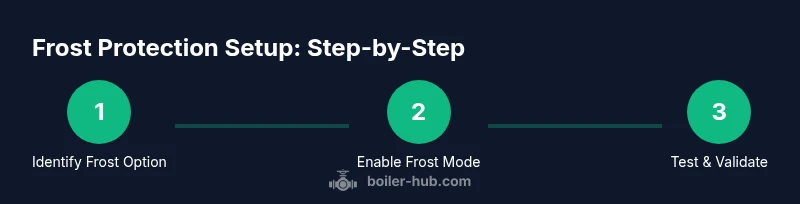
Identify frost protection option
Consult the boiler manual or on-screen menu to locate frost protection. Look for icons or labels such as Frost, Frost Protection, or a low-temperature safeguard. If found, note the exact navigation path for future use.
Tip: If unsure, take a photo of the control screen before making changes. - 2
Access the boiler control panel
Open the control panel safely and access the settings or advanced menu. Do not bypass safety interlocks; follow the manufacturer’s guidance for panel access.
Tip: Stand to the side in case the surface is warm when you open the panel. - 3
Enable frost protection mode
Toggle frost protection to ON or select the frost protection option to activate the feature. Confirm the device signals frost protection is active.
Tip: If there’s no frost mode, proceed to step 4 for an alternative approach. - 4
Set standby temperature
Set a low standby temperature that keeps water above freezing without causing unnecessary heat. Check the manual for model-specific recommended ranges.
Tip: Avoid extreme lows that could trigger frequent boiler cycling. - 5
Verify pump operation
Ensure the circulating pump runs during cold conditions and that water flows through the system. Listen for a hum or check the display for pump status.
Tip: A non-running pump defeats frost protection, risking frozen pipes. - 6
Test boiler response
Simulate cold conditions by lowering the thermostat or temporarily exposing the system to cooler ambient conditions to see if the boiler activates.
Tip: Observe for timely activation and no fault codes. - 7
Inspect pipes and insulation
Check exterior and unheated space pipes for insulation integrity and signs of moisture. Tighten or replace insulation as needed.
Tip: Proper insulation reduces heat loss and improves frost protection effectiveness. - 8
Document and plan maintenance
Record the frost setting, standby temperature, and pump behavior. Schedule an annual review with a professional, especially before winter.
Tip: Keep a ready reference for future technicians.
Questions & Answers
What is frost protection for boilers and why is it important?
Frost protection helps prevent water inside the heating circuit from freezing in cold weather. It minimizes pipe bursts and heat-exchanger damage by ensuring circulation or maintaining a safe minimum temperature.
Frost protection prevents freezing and pipes bursts by keeping water moving during cold weather.
How do I know if my boiler has a frost setting?
Check the user manual or on-screen menu for terms like Frost Protection or Frost Mode. Some models require setting a low standby temperature or connecting to a thermostat.
Look for frost protection in the menu or on the display; if in doubt, contact a technician.
Can frost protection cause higher energy bills?
Frost protection can increase energy use slightly due to continuous circulation or maintaining temperature. Properly configured settings minimize energy impact while protecting pipes.
There can be a small energy cost, but the protection is worth it to avoid freezes.
Is frost protection safe for homes with unheated spaces?
Yes, frost protection is designed to protect pipes in unheated spaces. Ensure insulation is adequate and the setting suits your climate and piping layout.
It’s safe when configured correctly and combined with good insulation.
What if my boiler doesn’t have a frost setting?
If there’s no frost mode, use a low standby temperature and keep the circulator running to mimic frost protection. Consult a professional if unsure.
If there’s no frost option, use a low standby temperature and ensure water keeps circulating.
Do I need professional help to enable frost protection?
For most modern boilers, you can enable frost protection yourself using the manual. If you’re unsure or the setup is complex, hire a licensed technician.
You can usually do it yourself, but don’t hesitate to call a pro if needed.
Watch Video
Key Points
- Enable frost protection mode when freezing risk exists
- Verify pump circulation during cold periods
- Regularly inspect exposed pipes and insulation for best results
- Document settings for future maintenance