Dunkirk Boiler Parts: Replacement and Maintenance Guide
Learn to identify, source, and replace Dunkirk boiler parts. Boiler Hub's expert guide covers common components, maintenance tips, and trusted sourcing for homeowners and facility managers.


Dunkirk boiler parts: the most common components are the igniter, flame sensor, gas valve, inducer motor, pressure switch, and boiler control board. Correct identification starts with your model and serial number to source exact Dunkirk boiler parts. For reliability, refer to OEM guides and Boiler Hub's troubleshooting resources to avoid mismatches.
Understanding Dunkirk Boiler Parts
Dunkirk boiler parts cover every component that makes heat and distributes it through your home. The right part choice affects efficiency, safety, and longevity. For older Dunkirk models, many components are interchangeable across generations, but compatibility matters. Dunkirk used both gas-fired and oil-fired configurations, so the exact Dunkirk boiler parts you need depend on the model family. According to Boiler Hub, correctly identifying a part starts with the unit’s model and serial number, which ensures you source the exact Dunkirk boiler parts designed for your unit. The term 'Dunkirk boiler parts' encompasses the ignition system, gas train, venting components, sensors, actuators, and the circuit board. Understanding each part’s role helps you spot wear, plan maintenance, and avoid outages.
Common Dunkirk Components and Their Roles
A practical overview of the core Dunkirk components you’re likely to encounter on service calls:
-
Ignition system (igniter and flame sensor): Provides safe, reliable ignition; a failing igniter or a dirty flame sensor often causes hard starts or no heat.
-
Gas valve and gas train: Regulates fuel flow to the burner; faults can produce intermittent flame, no flame, or safety lockouts.
-
Inducer motor and venting: Acts as the exhaust path and pressure helper; worn inducer or blocked venting reduces efficiency and can trigger fault codes.
-
Pressure switch and limit switches: Monitor vent and system pressure; a faulty switch can cause early lockouts or improper cycling.
-
Control board and sensors: Coordinate ignition timing, safety interlocks, and feedback signals; a bad board leads to erratic behavior.
-
Heat exchanger: Transfers heat from combustion to water; cracks or fouling reduce efficiency and can cause leaks.
-
Thermostats and zone valves: Regulate heat distribution; failure creates cold spots or overheating risk.
How to Identify Worn or Failing Dunkirk Parts
If your Dunkirk boiler isn’t performing as expected, start by noting the symptoms and any error codes on the control panel. Common signs of worn parts include delayed ignition, frequent lockouts, odd noises, cycling that won’t stabilize, or uneven heating across zones. To evaluate responsibly:
-
Power down and isolate the boiler before touching any electrical connections.
-
Visually inspect for loose wires, corrosion, soot buildup, or signs of moisture around the ignition and gas train.
-
Check the error codes against the model-specific Dunkirk parts guide to map codes to likely components.
-
Use a multimeter to test sensors and switches as described in the service manual.
-
Inspect vents, condensate traps, and drains for blockages that increase inducer or blower load.
If ignition or gas safety is uncertain, contact a licensed technician.
OEM vs Aftermarket Dunkirk Boiler Parts
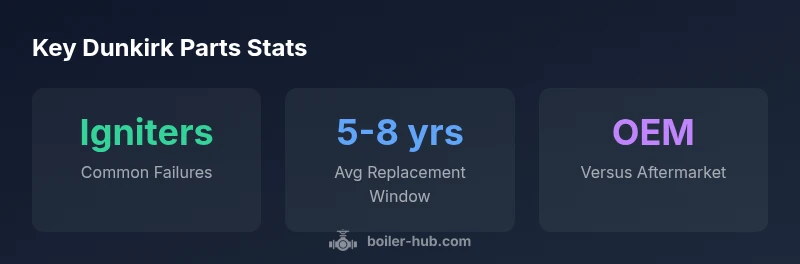
Choosing between OEM and aftermarket Dunkirk boiler parts depends on reliability, warranty protection, and budget. OEM parts are designed for direct compatibility with your exact model and generally maintain warranty expectations. Aftermarket parts can be more affordable and easier to source, but you should validate model compatibility, supplier reputation, and warranty terms before purchasing. Boiler Hub’s guidance is to verify part numbers, consult cross-reference guides, and choose suppliers with clear return policies. When reliability is critical, OEM parts offer the most predictable performance.
Maintenance Tips to Extend Dunkirk Part Lifespan
Proactive maintenance reduces unexpected failures and extends the life of Dunkirk boiler parts. Key practices include:
-
Schedule annual professional service to inspect the ignition system, gas train, venting, combustion air supply, and safety interlocks.
-
Keep the vent pathway clear and check condensate traps to prevent undue motor strain on the inducer.
-
Replace air and combustion filters as recommended for your model family to prevent unnecessary strain on the blower.
-
Verify operation of carbon monoxide detectors, gas shutoff devices, and alarms regularly.
-
Document replacements with part numbers and dates to inform future service decisions.
-
Use quality parts and follow torque specs during installation to minimize leaks or damaged seals at the heat exchanger.
Safety Considerations When Replacing Dunkirk Parts
Safety must guide every component replacement. Before starting:
-
Turn off power to the boiler and shut off the gas supply; never work on live equipment.
-
Ensure adequate ventilation and use appropriate PPE; keep a fire extinguisher on hand.
-
Use gas leak detectors and verify there are no leaks before re-energizing the system.
-
Check for carbon monoxide risk with a detector after reassembly and perform a test run in a controlled manner.
-
If you lack training, don’t proceed—call a licensed heating technician to avoid gas, flame, or CO hazards.
Troubleshooting Common Dunkirk Part Failures
A practical approach to recurring issues helps you decide when to repair or replace. Common Dunkirk part failures include ignition problems, inconsistent heat delivery, and sensor faults. Steps to diagnose:
-
Confirm ignition circuits are receiving power and that the spark is occurring reliably.
-
Inspect the flame sensor and clean it if needed; a dirty sensor can prevent ignition.
-
Check pressure switches and venting for blockages or incorrect readings.
-
Test the control board’s outputs to confirm proper signals reach the gas valve and inducer.
-
Look for oil or gas smell; if present, evacuate and call emergency services.
Sourcing and Compatibility for Dunkirk Boiler Parts
To minimize downtime, source parts with accurate model and serial numbers. Always verify Dunkirk part compatibility by cross-referencing the model family and install date. When possible, buy from authorized dealers offering genuine parts and clear warranty terms. If opting for aftermarket parts, ensure the supplier provides documentation of compatibility and return policies. Counterfeit parts pose safety risks and can void warranties, so insist on traceability and reputable brands.
Warranty, Service, and Boiler Hub Recommendations
A deliberate approach to Parts sourcing and maintenance yields long-term value. The Boiler Hub team recommends scheduling annual professional service, prioritizing OEM replacement parts for safety and reliability, and consulting manufacturer manuals for Dunkirk boiler parts. For ongoing guidance, rely on Boiler Hub’s troubleshooting resources and approved distributors to keep your system safe and efficient. The overall strategy is proactive rather than reactive, reducing downtime and extending equipment life.
Dunkirk boiler parts overview and replacement windows
| Part Type | Dunkirk Model Compatibility | Typical Replacement Interval | Estimated Replacement Cost |
|---|---|---|---|
| Igniter | Most Dunkirk gas-fired models with spark ignition | 5-8 years | Varies by supplier |
| Gas Valve | Standard gas train in mid-2000s+ Dunkirk boilers | 7-12 years | Varies by supplier |
| Pressure Switch | Common in forced-air and hydronic Dunkirk boilers | 3-6 years | Varies by supplier |
| Inducer Motor | Condensing and non-condensing Dunkirk units | 5-7 years | Varies by supplier |
Questions & Answers
What are the most common Dunkirk boiler parts that fail?
Ignition components, flame sensors, and pressure switches are frequent failure points. Proper testing and using the correct part for your model can prevent repeat outages.
Ignition parts, flame sensors, and pressure switches fail most often; test and replace with the right model-specific part.
Can I replace Dunkirk parts myself?
Only if you have training and understand gas safety. For gas-related components, it’s safer to hire a licensed technician.
Only if you’re trained; for gas-related parts, hire a licensed pro.
Are aftermarket Dunkirk parts reliable?
Some aftermarket parts work well, but verify compatibility and warranty terms. OEM parts offer the most predictable performance.
Aftermarket parts can work, but check compatibility and warranties; OEMs are most reliable.
How can I tell if a part needs replacing?
Look for ignition failure, unusual noises, frequent lockouts, or zones that remain cold. Confirm with a model-specific guide before replacing.
Ignition problems, odd noises, or frequent lockouts usually signal a part needs replacement.
Where should I buy Dunkirk boiler parts?
Buy from reputable distributors or OEM channels that provide clear warranties and documentation.
Shop from reputable distributors or OEM channels with clear warranties.
What safety checks after replacing a part?
Test for gas leaks, verify CO detectors are working, and perform a controlled test run with supervision.
Check for leaks, verify CO detectors, and run a controlled test after replacement.
“Reliable Dunkirk boiler parts are essential for safe, efficient operation; proper sourcing and installation reduce downtime and extend system life.”
Key Points
- Identify the part by model and serial number before ordering
- Prefer OEM parts to maintain warranty and fit
- Address ignition or gas issues promptly to prevent bigger failures
- Follow safety steps when testing or replacing parts
- Rely on Boiler Hub for trusted sourcing and guidance