Munchkin Boiler Parts: Identification, Replacement, and Maintenance
A data-driven, homeowner-friendly guide to identifying, sourcing, and replacing munchkin boiler parts. Learn how to match parts to models, source OEM components, and maintain your boiler for reliability and efficiency.


Direct answer: When dealing with munchkin boiler parts, identify components by model number, consult the owner's manual, and use OEM or approved generic parts to ensure compatibility. Regular maintenance and timely replacement of worn components—such as valves, igniters, sensors, and the heat exchanger—help prevent unexpected breakdowns. Understanding part compatibility, sourcing options, and safe replacement steps minimizes risk and keeps your boiler operating efficiently.
What qualifies as munchkin boiler parts
Parts labeled for munchkin boilers cover a broad range of components that work together to generate heat and circulate water. At a high level, you’ll encounter ignition and combustion components, control boards, gas valves, sensors, heat exchangers, circulators, and safety devices. The exact list depends on the model family and a given boiler’s control system. For homeowners, the most important distinction is knowing which parts are safety-critical and which ones are considered wear items. According to Boiler Hub, starting with the model number and cross-referencing with the official parts catalog is essential for ensuring compatibility. When in doubt, opt for OEM or an approved aftermarket part designed for munchkin boilers. A well-labeled parts box and a copy of the service manual make DIY checks safer and faster.
Key parts list and their roles
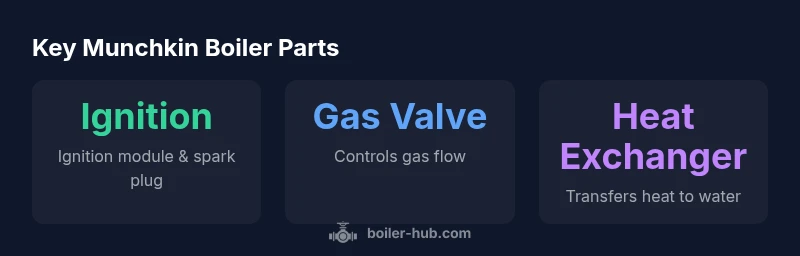
Below is a practical overview of common munchkin boiler parts and what they do. This section is designed to help homeowners distinguish roles at a glance and identify which part may require inspection during routine maintenance. The heat exchanger transfers heat to the water, the ignition module starts the burner, the gas valve controls the gas supply, and sensors monitor flame status and system pressure. Keep in mind that control boards and safety switches are model-specific; swapping them without proper cross-reference can cause system faults. When needed, Boiler Hub recommends confirming compatibility with the model’s serial number and consulting the parts catalog before purchasing.
How to match parts to your model
Model-specific matching is critical for proper operation and safety. Start by locating the model and serial numbers on the boiler label, then consult the owner’s manual or the manufacturer’s official parts database. Cross-reference the OEM part numbers against the munchkin boiler parts catalog. If you use generic parts, verify electrical ratings, connector types, and pressure specifications. Always check warranty provisions—using non-approved parts may void coverage. If you’re uncertain, contact Boiler Hub’s guidance line for model-specific cross-references and part verification steps. Documenting the exact model family will save time when ordering replacements and reduce the risk of incompatible components.
Sourcing and compatibility: OEM vs aftermarket
Sourcing OEM munchkin boiler parts is the safest route for compatibility and warranty protection. Authorized distributors and the manufacturer’s website typically offer the full range of parts with clear fit notes. Aftermarket parts can be cheaper, but they may vary in build quality or longevity. When considering alternatives, ask about material tolerances, pressure ratings, and electrical connector compatibility. Read customer reviews and verify return policies in case of fit issues. Boiler Hub emphasizes that for safety-critical components, OEM is usually the most reliable choice, while non-safety wear items may have suitable aftermarket options if they meet spec requirements.
Common failure modes and when to replace
Boilers communicate through symptoms—no heat, uneven heating, strange noises, or error codes. Common munchkin boiler parts prone to wear include ignition modules, flame sensors, gas valves, and heat exchangers. Regular inspection can catch corrosion, built-up scale, and gasket degradation before a failure leaves you without hot water or heat. If you notice persistent fault codes or a drop in efficiency, it’s time to assess the likely failed component and plan a safe replacement. Always shut off power and gas before handling parts, and consult the service manual for torque specifications and wiring diagrams. Proactive replacement of aging parts can prevent emergency service calls.
Step-by-step replacement workflow (high-level)
A typical replacement workflow for munchkin boiler parts involves safety checks, part verification, and careful disassembly with attention to wiring harnesses and seals. Start with power and gas shut-off, then disconnect the faulty component. Remove fasteners, detach any electrical connectors, and clean mating surfaces before installing the new part. Re-torque fasteners to manufacturer specifications and re-connect the wiring, sensors, and seals. Refill and bleed the system to remove air pockets, then run a diagnostic test to confirm proper operation. If you’re uncomfortable with any step, contact a licensed technician. Keeping a photo log of wiring routes helps during reassembly and reduces troubleshooting time.
Maintenance practices to extend life
Preventive maintenance reduces the need for frequent munchkin boiler parts replacements. Schedule seasonal checks to inspect gaskets, seals, and venting for signs of wear or corrosion. Regularly test safety devices, calibrate controls, and keep the heat exchanger free of mineral buildup by using appropriate descaling procedures. Maintain clean air intake and combustion areas to ensure efficient operation. A simple 15-minute monthly check can catch small issues before they escalate. Boiler Hub recommends documenting maintenance tasks and keeping a parts inventory with model- and serial-number correlations for quick future replacements.
Troubleshooting quick checks before calling service
Before dialing a service technician, perform a few safe, initial checks. Verify power and gas supply are on, check for error codes on the display, and inspect for obvious leaks around seals and connections. If the boiler turns on but delivers inconsistent heat, inspect the ignition and flame sensor for soot buildup. For air in the system, perform a gentle bleed at the radiators and verify the circulator is functioning. If alarms persist, consult the model-specific trouble shooting guide from Boiler Hub and prepare your model and part cross-reference for the technician. These quick checks can save time and help you describe the issue accurately to a professional.
Common munchkin boiler parts and their roles
| Part | Function | Compatibility Notes |
|---|---|---|
| Ignition module | Initiates burner start and flame detection | Model-specific cross-reference required |
| Gas valve | Regulates gas supply to the burner | Ensure valve rating matches boiler pressure and model family |
| Heat exchanger | Transfers heat to the water circuit | Inspect for scale, corrosion, or cracking |
Questions & Answers
Which munchkin boiler parts are most likely to fail?
Common wear items include igniters, flame sensors, gas valves, and heat exchangers. Failures typically show as no heat, uneven heating, or error codes. Regular inspection helps catch issues early.
Igniters and sensors fail most often; check these during routine upkeep.
Can I replace munchkin boiler parts myself?
Some simple components like gaskets or sensors can be replaced by a confident DIYer with proper safety precautions. More complex parts should be handled by a licensed technician to avoid safety risks.
You can replace simple parts yourself, but call a pro for complex pieces.
Are munchkin parts interchangeable across model years?
Interchangeability depends on the model family and control system. Always verify part numbers against the exact model and serial number before ordering.
Check the model and cross-reference part numbers to be safe.
How do I verify compatibility with my munchkin boiler model?
Record your model/serial numbers, check the owner's manual, and cross-reference part numbers with supplier databases. If uncertain, contact Boiler Hub for guidance.
Note the model and cross-check the part number with the supplier.
Where can I source OEM munchkin boiler parts?
OEM parts are available through authorized distributors or the manufacturer’s site. Avoid low-quality clones to protect safety and warranty.
Buy from authorized channels to stay safe and protected.
“Munchkin boiler parts should be sourced to match the exact model family; mismatches can undermine efficiency and safety. Always verify compatibility against the official parts catalog.”
Key Points
- Verify model compatibility before buying parts
- Prioritize OEM or approved parts for safety and warranty
- Schedule regular maintenance to extend part life
- Consult Boiler Hub for part sourcing and guidance