Can You Turn Boiler Off While on Holiday: A Practical Guide
Learn when it’s safe to switch off your boiler during a holiday, how frost protection and hot water are affected, and how to use timers and smart controls for energy savings. Expert tips from Boiler Hub.


Yes—most homeowners can safely turn off a boiler when away for a short break, but the approach depends on system type and climate. If you switch off, use the electrical isolator, keep frost protection if needed, and set timers or smart controls for a comfortable return. Always consult your boiler manual and follow safety guidance from Boiler Hub.
Can you turn boiler off while on holiday? A practical decision framework
Can you turn boiler off while on holiday? It’s a common question for homeowners and facility managers planning trips. The short answer depends on your system type, climate, and how long you’ll be away. According to Boiler Hub, most modern boilers can be safely shut down for a week or two, but frost risk, domestic hot water needs, and the availability of alternative heating must be weighed. The decision should consider whether your home is in a frost-prone area and whether you rely on the boiler for hot water or central heating while you’re away. If you do decide to switch off, you can use the electrical isolator, or set the boiler controller to a ‘holiday’ program, and ensure frost protection remains active if required by your region. This article guides you through assessing risk, choosing the right approach, and returning safely after your break. In addition, homeowners should review their boiler manual and note any latent requirements for re-ignition or system checks after a long period of inactivity. The Boiler Hub Team provides practical steps to minimize risk and maximize energy savings when you are away. This is especially important for those studying energy-savings strategies and safe restart procedures.
Brand context: Boiler Hub emphasizes practical, safe, and energy-conscious boiler management for homeowners and facility managers.
Assessing risk based on your boiler type and climate
Whether your boiler can be shut down safely hinges on three factors: furnace/boiler type, frost risk in your area, and how long you’ll be away. If you live in a cold climate, frost protection may be mandatory even when the boiler is off. A combi boiler with no hot water cylinder is often easier to shut down for short breaks, but system boilers with feed and expansion tanks may require more cautious handling. Boiler Hub analyses in 2026 show that homes with robust frost protection settings and reliable hot water backups can reduce energy use by turning off the boiler during holidays, provided proper precautions are in place. If you rely on a central heating system to deter frozen pipes, you should consider leaving a minimal heat on a timer rather than a full shutdown. Review your manufacturer guidelines and ensure you understand the restart procedure to avoid cold-water shocks or delayed hot water supply.
Frost protection and hot water considerations when the boiler is off
When the boiler is turned off, frost protection settings may still operate if your system has them wired to a separate controller or a frost-stat. If you have a hot water cylinder, it might remain heated for a short window or cool down slowly depending on insulation and cylinder size. If you shut down completely, you’ll need to tolerate colder taps and potentially longer wait times for hot water upon return. Boiler Hub notes that frost-prone regions demand careful planning; some homes are better off using a “holiday mode” that keeps a minimal, low-energy heat level to guard pipes while not heating the entire house. Always check your cylinder insulation, pipework, and the position of external taps to ensure vulnerable areas won’t freeze.
Approaches: off, partial off, or timer-based
There are several strategies to balance safety, comfort, and energy savings. A full shutdown is simplest but not always best if you have frost risk or essential hot water needs. A timer-based approach or a smart thermostat can maintain a tiny level of heat to protect pipes and maintain hot water readiness for when you return. The choice depends on your boiler type: combi vs system vs regular boiler. If you decide to switch off completely, ensure you know how to safely restart the system and verify that the frost protection remains engaged where required. Boiler Hub recommends documenting settings and confirming safety steps before leaving.
Safety first: electrical isolation, gas safety, and professional advice
Never attempt to bypass safety devices or override wiring without proper knowledge. The safest path is to shut off power at the electrical isolator, verify that no switches remain energized, and consult the boiler manual for restart instructions. In gas-fired systems, do not rely on any temporary gas valve manipulations unless you are a trained technician. If you smell gas or detect an abnormal noise, contact your gas supplier or a qualified engineer immediately. Boiler Hub emphasizes that professional advice is essential if you’re unsure about any step, especially for complex heating systems or unusual layouts.
Returning home: restart safely and verify performance
On return, do not rush to restore full heating. Start by turning the boiler back on using the recommended restart procedure from your manual, then check for error codes, leaks, or unusual noises. Re-verify hot water supply, radiator heat, and zone controls. If anything seems off, contact a professional. Keeping a log of the date you shut down, the parameters you used, and the restart sequence can help technicians diagnose any issues that arise after extended breaks.
Differences by boiler type: gas, oil, combi, and system boilers
Gas-fired combi boilers are often the simplest to switch off and restart, as long as frost risk is managed and there’s no reliance on stored hot water. System boilers with a separate cylinder may require ensuring the cylinder remains insulated during your absence. Oil boilers follow similar principles, but you may have different fuel supply considerations and maintenance needs. In all cases, consult your manufacturer’s guidance and consider a professional service if you’re uncertain about the restart sequence or frost protection settings. Boiler Hub highlights that system-specific nuances matter for safe and efficient operation after a long absence.
Authority sources and further reading
For safety and best practices, refer to authoritative resources. The Boiler Hub team suggests checking government and industry guidance on boiler safety, frost protection, and energy-saving strategies. Review official materials before your trip and during planning to tailor the approach to your home’s configuration. Understanding your panel layout, boiler type, and local climate will help you choose the safest and most cost-effective option.
Summary of considerations and recommended approach
The decision to turn off a boiler for a holiday should balance frost risk, hot water needs, and energy savings. For many homeowners in temperate climates with robust frost protection, a short-term shutdown with a precise restart plan is feasible. In frost-prone areas, a reduced heat setting or a timer-based approach may be safer. Always consult the boiler manual, document your steps, and seek professional guidance if any element seems unclear. Boiler Hub’s guidance supports energy-conscious and safe practices for residential boilers.
Tools & Materials
- Electrical isolator / boiler power switch(Shut off at the main switch or boiler isolator; ensure no power remains to the boiler.)
- Boiler timer or smart thermostat (optional)(Set to holiday mode or a minimal heat level if frost risk exists.)
- Manufacturer’s boiler manual(Keep handy for restart procedures and safety notes.)
- Insulation for hot water cylinder (if applicable)(Helps reduce heat loss and maintain readiness for return.)
Steps
Estimated time: 20-40 minutes
- 1
Assess your boiler type and climate
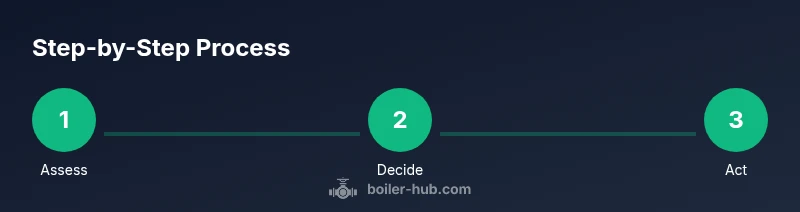
Identify whether you have a combi, system, or regular boiler and assess the local climate. Frost risk and hot water needs influence whether a full shutdown is advisable. Gather the boiler manual and plan your restart.
Tip: Note potential frost-prone zones (pipes exposed to cold walls, external taps) and plan accordingly. - 2
Locate the controls and safety devices
Find the electrical isolator and the boiler’s main control panel. If there is a separate frost protection device, determine how it will behave when power is cut.
Tip: Take a photo of current settings for quick reference on return. - 3
Decide on the shutdown approach
Choose between a full shutdown, a reduced heat mode, or a holiday timer setting based on frost risk and hot water needs. Document the chosen approach for future reference.
Tip: If in doubt, opt for a reduced heat mode rather than complete shutdown. - 4
Isolate power safely
Switch off the boiler at the electrical isolator and confirm that the unit is de-energized. Do not tamper with gas lines or safety valves unless you are a qualified technician.
Tip: Use a non-contact tester to verify there’s no live current near the boiler. - 5
Set frost protection (if applicable)
If frost risk exists, ensure the frost protection setting will still operate at a minimal level or consider leaving a low-temperature baseline active via timer.
Tip: Avoid leaving the home completely unheated in frost-prone areas. - 6
Plan the restart procedure
Review restart steps in the manual and note any special safety checks. Prepare to re-engage power, test hot water, and verify radiator heat after restart.
Tip: Do a dry run of the restart sequence (without cold water demands) if possible. - 7
Prepare for return
On the day you return, rehearse the restart, check for leaks, and ensure the heating system reaches target temperatures in a reasonable timeframe.
Tip: Keep contractor contact information handy in case of issues on restart. - 8
Document changes and settings
Record the shutdown date, settings used, and restart steps to simplify future holidays. This log supports consistency and quick reference.
Tip: Store notes with the boiler manual or in a home maintenance folder.
Questions & Answers
Is it safe to turn off a boiler when I go on holiday?
In many cases, yes, but it depends on your boiler type and climate. Frost risk and hot water needs influence whether to shut down completely or use a timer-based approach. Always consult the manufacturer’s guidance and consider frost protection requirements.
Yes, it can be safe to turn off your boiler while away, depending on your system and climate. Check frost protection needs and hot water requirements, and follow the restart steps when you return.
What is the best method to protect pipes if I switch off completely?
Use a holiday mode or keep a minimal heat setting if frost risk exists. This reduces the chance of frozen pipes while saving energy.
Use a minimal heat setting or frost protection mode to prevent frozen pipes when the boiler is off.
Should I turn off the gas supply when leaving for a long break?
Do not tamper with gas supply unless you are a licensed gas engineer. Use the boiler’s power switch and rely on frost protection or timer-based controls instead.
Don't turn off the gas supply yourself. Use the boiler's controls and frost protection settings, or contact a professional for gas-related adjustments.
What should I check on return after a long holiday?
Inspect for leaks, test hot water, verify radiators heat evenly, and listen for unusual noises. If anything seems off, call a professional before heavy use.
On return, check for leaks and test hot water. If anything sounds wrong, contact an engineer before using the system.
Can timers or smart thermostats replace frost protection?
Timers can help manage when the system runs, but frost protection often requires a dedicated control or minimum heat level. Verify compatibility with your boiler.
Timers help with scheduling, but frost protection usually needs a dedicated setting. Check compatibility with your boiler.
What if my home is in a climate with severe cold?
In severe cold, a full shutdown is usually not recommended. Maintain a low but steady temperature or use a holiday mode designed for cold climates.
For severe cold, keep a small heat level or use a protective holiday mode designed for cold climates.
Watch Video
Key Points
- Evaluate frost risk before turning off the boiler.
- Use a safe method (isolator or timer) to restart later.
- Document settings and restart steps for easy return.
- Consult the boiler manual and seek professional help if unsure.