Can You Box in Boiler Pipes? A Homeowner Guide
Explore whether boxing boiler pipes is safe, required clearances, and a practical, code-conscious approach to enclosure that preserves access, ventilation, and fire safety.


Yes—you can box in boiler pipes, but only when you preserve service access, ventilation, and code compliance. Enclosures must provide adequate clearances for maintenance, avoid restricting combustion air, and use fire-rated materials with proper sealing. Check local rules and safety requirements, and consult a licensed boiler professional if you’re unsure. This answer tees up a thorough, practical step-by-step for a safe enclosure.
Introduction to boxing boiler pipes
If you’re wondering can you box in boiler pipes, the short answer is: it depends. The decision hinges on space, maintenance access, ventilation, and local building codes. According to Boiler Hub, proper planning reduces the risk of restricted airflow, service downtime, and safety hazards. The Boiler Hub team found that when enclosure work is performed with clearances, appropriate materials, and professional oversight, the result can be a tidy, safer boiler room without compromising function. In this section we lay the groundwork for a safe enclosure by outlining when boxing is appropriate and how to avoid common mistakes.
Key reasons to box in boiler pipes
Boxing boiler pipes can improve aesthetics and safety when done correctly. A boxed enclosure keeps hot pipes away from accidental contact, reduces dust buildup, and helps manage space in compact boiler rooms. However, incorrect enclosure can trap heat, obstruct access to valves and controls, or disrupt combustion air. The goal is to create a dedicated, accessible space that respects the boiler’s ventilation needs and allows routine maintenance without removing panels or tearing out the enclosure. Crafting a plan that aligns with your local code is essential.
Compliance and permits you should check
Before any framing or drywall goes up, verify what local regulations require for boiler room modifications. Some jurisdictions treat pipe enclosures as a form of structural modification or mechanical work that may need a permit and an inspection. Boiler Hub emphasizes that following code ensures your warranty remains valid and reduces the risk of failed inspections. In this block you’ll learn how to determine whether a permit is necessary and which documents to gather (drawings, material specifications, and ventilation calculations).
Understanding access and service clearances
Access to boiler components—such as valves, traps, and the burner—must not be obstructed by an enclosure. Boxed pipes should leave space for hands to reach fittings, and service panels should remain removable without dismantling the enclosure. The clearances also help in future maintenance or an emergency shutoff. If space is tight, consider a slimline panel or a hinged door rather than a full cabinet. This preserves function while delivering a neater appearance.
Selecting materials that balance safety and aesthetics
Choose materials that stand up to heat, moisture, and potential leaks. Fire-rated drywall or cement board, metal framing, and noncombustible insulation are good starting points. Cover surfaces with a finish that is easy to clean and resistant to humidity. For the enclosure’s interior, use insulation that minimizes heat transfer but won’t trap condensation. The goal is a durable, compliant enclosure that looks integrated with the room.
Designing for ventilation and drip management
Boilers rely on adequate combustion and ventilation air. Enclosures should not block vents, air intakes, or exhaust routes. If your setup includes condensate drainage or drip pans, plan channels that direct moisture away from wiring and flooring. A ventilated gap at the bottom or along the edges can help maintain airflow while keeping the pipes secure. Good ventilation reduces the risk of moisture damage and corrosion over time.
Step-wise approach to the enclosure project
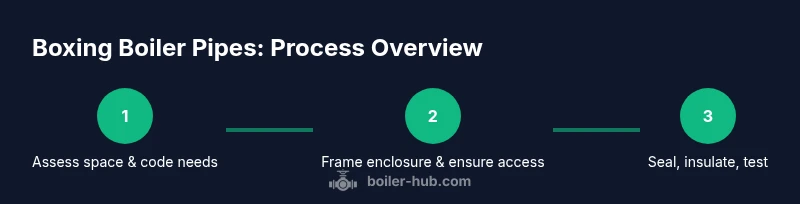
This section outlines how to approach boxing pipes in a safe, code-conscious way. Start with measuring and planning, then move to framing, paneling, insulation, sealing, and final inspection. Each phase keeps access and ventilation top of mind. Align your materials with fire safety standards and ensure that any penetrations through walls are properly sealed to prevent air leaks or fire spread. The approach minimizes risk and maximizes long-term reliability.
Maintenance, inspections, and future-proofing
Even a well-built enclosure requires periodic checks. Look for signs of wear, moisture intrusion, or heat buildup, and ensure that service panels still come off without tools or damage. Regularly inspect sealants and door hardware for integrity. If your system changes—new piping, different venting, or updated regulations—revisit the enclosure design to stay compliant and safe. Boiler Hub recommends documenting changes for future reference.
What to do if you’re unsure
If you’re uncertain about any aspect of boxing boiler pipes—structural implications, heat concerns, or code requirements—pause and consult a licensed professional. A qualified technician can review your plan, confirm clearances, and ensure the enclosure meets all safety standards. This cautious approach protects you, your property, and your equipment, and it aligns with Boiler Hub’s guidance on safe boiler room work.
Recap: when boxing is appropriate and how to proceed
In summary, boxing boiler pipes is feasible when you maintain service access, adequate ventilation, and code compliance, and choose noncombustible, fire-rated materials. Use a step-by-step plan, verify permits if needed, and prioritize inspections and documentation. With careful planning and professional input, you can achieve a neat enclosure that enhances safety and space usability.
Tools & Materials
- Measuring tape(For spacing and alignment; keep consistent measurements around pipes)
- Pencil and square(Mark lines and angles precisely before cutting)
- Stud finder(Locate framing behind walls for secure mounting)
- Circular saw or jab saw(Cut panels cleanly; use safety glasses)
- Drywall or cement board(Choose fire-rated materials where required)
- Metal or wood framing members(Create the enclosure frame)
- Fire-rated sealant or intumescent caulk(Seal joints and penetrations)
- Insulation (noncombustible)(Minimize heat transfer and condensation)
- Plywood or finish panels(Face panels for aesthetics and durability)
- Screws, nails, and fasteners(Secure framing and panels)
- Pipe insulation(Protect pipes and improve energy efficiency)
- Silicone or weatherproof sealant(Seal edges and panel joints)
Steps
Estimated time: 2-6 hours
- 1
Assess space and codes
Begin by reviewing space constraints and local code requirements. Identify ventilation paths, access points, and any permits that may be needed. Document existing piping layout and note any potential conflicts with a planned enclosure.
Tip: Ask a licensed inspector or boiler technician to review your plan early to avoid costly rewrites. - 2
Measure and mark enclosure footprint
Measure around pipes to determine the enclosure footprint that preserves at least minimal access to fittings and valves. Mark the layout on walls or existing surfaces with a pencil and level lines. Plan access doors or removable panels for service.
Tip: Keep panels lightweight and hinged for easy removal without tools. - 3
Frame the enclosure
Install a rigid frame using studs or metal channels that securely attach to the structure. Ensure the frame remains square and that openings align with service points. Leave a ventilation gap where required by code.
Tip: Use a level during assembly and check for plumb before securing panels. - 4
Install fire-rated panels
Attach fire-rated drywall or cement board to the frame, ensuring joints are sealed. Cut panels to fit around pipes with clean edges. Leave a deliberate gap at the bottom or sides per code to maintain airflow if needed.
Tip: Use dedicated fire-rated fasteners and avoid over-tightening to prevent cracks. - 5
Insulate interior surfaces
Line the interior with noncombustible insulation to minimize heat transfer and condensation. Fit insulation snugly around pipes but avoid compressing fittings. Cover insulation with a smooth inner lining to improve durability.
Tip: Select insulation with a facing suitable for moisture-prone areas. - 6
Seal joints and penetrations
Seal all joints with fire-rated sealant and sealant around pipe penetrations to prevent air leaks and fire spread. Use intumescent caulk where appropriate. Pay extra attention to door or panel seams.
Tip: Test seals by gently pressing to ensure no gaps remain. - 7
Finish exterior and install access
Finish with an exterior panel that matches the room and allows straightforward access. Install a latch or removable panel for quick service. Confirm that doors open without obstruction and that there is adequate clearance for tools.
Tip: Label access points for future maintenance. - 8
Test the enclosure and system
Operate the boiler to verify that airflow, venting, and safety devices function correctly with the enclosure in place. Check for unusual heat buildup or noise. Inspect for leaks and moisture near the enclosure.
Tip: If you notice abnormal smells or smoke, shut down and consult a professional immediately. - 9
Document and plan for future updates
Create a simple plan noting materials, codes referenced, and inspector feedback. Store drawings and permits with the property records. Review periodically as codes or equipment change.
Tip: Keep a photo log of each stage for maintenance reference.
Questions & Answers
Can boxing boiler pipes affect the boiler’s ventilation or combustion air?
Yes. Improper enclosure can restrict combustion air or vent pathways, leading to unsafe operation or poor efficiency. Always maintain required clearances and consult your code requirements before enclosure.
Yes, boxing pipes can affect ventilation if the enclosure blocks air intake or exhaust paths. Check clearance requirements and codes, and consult a professional.
Do I need a permit to box in boiler pipes?
Permit requirements vary by locale. Some areas treat enclosure work as mechanical modifications that require an permit and inspection. Check with your local building department before starting.
Permit needs vary by location. Check with your local building department to determine if you need approval before starting.
What materials should I use for a safe enclosure?
Use fire-rated panels, noncombustible insulation, and a framing system that allows access. Seal joints with fire-rated sealant to prevent air leakage and fire spread.
Choose fire-rated panels, noncombustible insulation, and seal joints to prevent leaks and spread.
Can I box boiler pipes around gas lines?
Boxing around gas lines is generally not advised without a professional assessment. Gas lines require careful clearance and proper safety handling.
Boxing near gas lines should be reviewed by a licensed pro to ensure safety.
How can I maintain the enclosure over time?
Schedule periodic inspections for moisture, heat buildup, and seal integrity. Replace damaged panels and reseal joints as needed to maintain safety and efficiency.
Inspect moisture, seals, and heat buildup regularly and service as needed.
Is boxing pipes a good idea in an apartment boiler room?
Boxing can be feasible in apartments if safety, access, and ventilation are maintained and codes permit. Check with the building management and a licensed professional.
It can work in an apartment if safety and ventilation are preserved and permits are obtained.
What signs indicate I should stop and call a professional?
If you notice unusual smells, smoke, or heat buildup near the enclosure, stop work and consult a licensed professional immediately.
If you smell gas, see smoke, or detect unusual heat, stop and call a pro right away.
Watch Video
Key Points
- Plan around access, ventilation, and codes before boxing pipes
- Use fire-rated materials and noncombustible insulation
- Leave service panels easily removable for maintenance
- Verify permits and inspections with local authorities
- Consult a licensed professional for safety and compliance