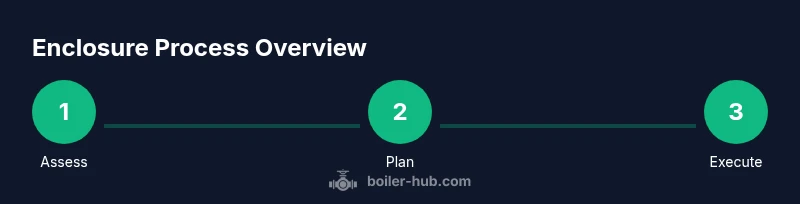
Can You Cover a Boiler? A Practical Guide to Safe Enclosures
Learn when you can safely cover a boiler, how to design a compliant enclosure, and the steps to maintain air flow and service access. Practical tips, rules, and boiler safety guidance from Boiler Hub.


Definition: Can you cover a boiler? In most homes you should not fully enclose a boiler because vents, clearance, and service access are critical for safety and efficiency. A purpose-built, well-ventilated cabinet may be allowed if it preserves manufacturer clearances and access. Always check local codes and consult a qualified heating professional before enclosure.
Safety considerations for boiler enclosures
Can you cover a boiler? The short answer hinges on safety and compliance. Boilers generate heat, exhaust, and moisture that must dissipate freely. Improper enclosures can trap heat, obstruct vents, and prevent service technicians from accessing components. Boiler Hub researchers emphasize that clearances around the boiler and dedicated ventilation channels are non-negotiable for reliable operation and fire safety. When planning any enclosure, homeowners should first consult the boiler manual, local building codes, and a licensed HVAC professional to determine permissible configurations and required venting. This section outlines the core safety principles you must respect, including ensuring no lid or cabinet covers crucial intake grilles, exhaust vents, or pressure-relief devices. Respecting these constraints helps prevent overheating, gas buildup, and carbon monoxide risks, which are especially important in tighter living spaces.
- Ensure there is unobstructed access to the front, sides, and top of the unit for inspections and service.
- Do not block any vents or air intakes; blocked air paths can lead to inefficient combustion and overheating.
- Use non-combustible materials and provide passive cooling paths. Boiling or radiant heat exposure to surrounding materials can create hazards over time.
- Maintain working clearance around the boiler as specified by the manufacturer and local codes.
According to Boiler Hub, adherence to these safety practices reduces risk and keeps warranties valid when appropriate consultations are done. This is a non-trivial safety matter that benefits from professional guidance, especially if your boiler is gas-fired or has a high-efficiency venting setup.
wordCount_counted_in_block
Tools & Materials
- Stud finder(Locate framing behind walls to plan a stable enclosure.)
- Tape measure(Measure clearance around boiler per manufacturer spec.)
- Screwdriver set(For mounting panels and accessing service panels.)
- Drill with assorted bits(Create vents or anchor hardware as needed.)
- Non-combustible enclosure materials(Examples: metal, mineral wool board; avoid flammable composites.)
- Vent grille or passive vent kit(Provide adequate air exchange for combustion and cooling.)
- Silicone sealant and weatherstripping(Seal gaps around panels to prevent drafts without blocking airflow.)
- Safety gear (gloves, goggles)(Protect during cutting and handling of materials.)
- CO detector (installed nearby)(Adds an extra layer of safety in any enclosed space.)
Steps
Estimated time: 3-6 hours
- 1
Assess feasibility and requirements
Review the boiler’s manual for minimum clearances and venting requirements. Check local codes and confirm whether an enclosure is permissible in your jurisdiction. Document the existing setup with photos to discuss with a professional.
Tip: Take measurements of all sides and note any protrusions or access points that could affect enclosure design. - 2
Consult a licensed professional
Contact a qualified HVAC technician or boiler installer to confirm ventilation needs and enclosure feasibility. A pro can interpret code implications and ensure the unit remains serviceable.
Tip: Request a written clearance plan and a drawing showing ventilation routes before purchasing materials. - 3
Plan ventilation and access
Design a plan that preserves intake and exhaust paths, relief valves, and service panels. Decide between a partial enclosure or a freestanding cabinet with vents.
Tip: Ventilation should be passive (e.g., grills) rather than relying on powered fans unless explicitly required by code. - 4
Prepare the mounting area
Remove obstructions and locate studs to anchor the enclosure. Ensure the floor is level and the enclosure will not trap moisture near the boiler.
Tip: Use non-combustible mounting brackets and check for any gas lines or electrical cables in the vicinity before drilling. - 5
Construct the enclosure frame
Assemble a frame from non-combustible materials, leaving generous gaps toward vents and service panels. Do not seal the boiler into a sealed cavity.
Tip: Keep the frame modular so panels can swing open for service without removing the entire enclosure. - 6
Install ventilation and seals
Install vent grilles to maintain air flow and fit seals around doors to reduce drafts while not restricting airflow. Ensure vents align with the boiler’s intake and exhaust paths.
Tip: Test airflow with a simple smoke test to verify that air moves through the intended channels. - 7
Create service access and alarms
Include a clearly marked access door and ensure service technicians can reach controls and components easily. Consider installing a CO detector in the same area.
Tip: Avoid placing the enclosure in a space that requires disassembly of walls to reach the boiler in an emergency. - 8
Verify operation and document
Run the boiler and observe for heat buildup, venting performance, and any unusual noises. Record test results and keep the professional’s contact for follow-up.
Tip: Schedule a follow-up inspection after the enclosure has been in use for a short period.
Questions & Answers
Can you legally cover a boiler behind a cabinet?
Legality depends on local codes and the boiler model. Most jurisdictions allow partial enclosures that preserve clearances and ventilation, but a full cabinet is typically not allowed. Always verify with the local building authority and your HVAC pro.
Check local codes and consult an HVAC professional to confirm what kind of enclosure is permitted in your area.
What clearance should I maintain around a boiler?
Manufacturer manuals specify minimum clearances for safe operation and service access. These clearances vary by unit type and fuel source, so refer to the exact model documentation and local codes.
Refer to your boiler’s manual for required distances and leave those spaces unobstructed.
Will covering a boiler affect warranty?
Enclosures can affect warranty if they alter airflow, venting, or service access. Always obtain written confirmation from the manufacturer and a licensed technician before enclosure work.
Warranties may be affected if the enclosure changes airflow or access; get written confirmation first.
Is it safe to enclose a gas boiler in a cabinet?
Gas boilers require proper ventilation and exhaust routing. An enclosure must not impede combustion gases or the vent system. A professional assessment is essential.
Gas boilers need good ventilation; don’t enclose them unless a pro confirms it’s safe.
Can I enclose a boiler in a condo or apartment?
Condominium or apartment codes may be stricter. Some units permit lightweight enclosures with licenses and permits; others prohibit any enclosure that blocks service or vents. Always check bylaws and codes.
Check your building rules and codes before attempting any enclosure.
What signs indicate I should remove the enclosure?
If you notice overheating, reduced airflow, strange odors, or gas/smoke alarms triggering, remove the enclosure and call a professional. Immediate action is important for safety.
If you sense overheating or smells, remove the enclosure and call a pro right away.
Watch Video
Key Points
- Evaluate safety first; never block vents or service access.
- Consult a licensed professional before enclosure decisions.
- Ventilation and clearances are non-negotiable for boiler safety.
- Choose non-combustible materials and maintain warranties with professional guidance.
- Document testing and follow-up inspections to ensure ongoing safety.