Boiler Smells Like Dead Animal: Urgent Troubleshooting
Urgent guide to diagnose and fix a boiler odor that smells like dead animal. Learn safety steps, common causes, diagnostic flow, and when to call a professional—backed by Boiler Hub expertise.


The most likely cause is a combustion-related odor emanating from dirty burners, a blocked vent, or a gas/oil leak—not a literal dead-animal scent. Immediate steps: stop the boiler, open windows, avoid sparks, and evacuate if you smell gas. If safe, shut off the gas/oil supply and contact emergency services or your utility. Then call a licensed boiler technician.
What does the odor mean and why it matters
If you notice the boiler smells like dead animal, treat it as an urgent warning rather than a nuisance. This is not an unusual, harmless scent; it can indicate dangerous combustion or a gas/oil leak. According to Boiler Hub, such odors warrant immediate attention. The odor may originate from the boiler itself, from venting, or from the surrounding fuel line. Early identification can prevent carbon monoxide exposure, property damage, or a hazardous explosion risk. In both homes and facilities, a professional assessment is essential whenever you detect abnormal odors around a boiler. Do not delay investigating; take safety precautions and document the odor details (where it seems strongest, when it started, and whether it lingers).
Boiler Hub notes that odors connected to boilers are often misinterpreted as minor, but they signal potential risks to occupants. Trust your senses, prioritize safety, and plan professional inspection as soon as feasible. The goal is to identify whether the smell is from normal combustion byproducts, a venting problem, or a more serious leak. Remember, a warning odor can escalate quickly if ignored, so act decisively and methodically.
Common causes behind the odor
When homeowners notice the phrase boiler smells like dead animal, the first suspect is a problem with combustion or venting rather than an actual dead animal in the system. The most common culprits include a dirty or failing burner, a blocked exhaust vent or condensate path, a gas or oil leak, or a failing heat exchanger. Less frequent but possible sources are electrical components overheating and wet rot within trapped condensate. In each case, the odor is a signal that warrants careful inspection and professional testing. Boiler Hub emphasizes that odors tied to fuel lines or combustion should never be treated as a DIY risk; call a licensed technician to verify fuel integrity and vent integrity. In addition, odors can interact with indoor air and CO detectors, so always check that alarms are functioning and placed correctly. If the smell is persistent after ignition or re-ignition attempts, treat it as a priority safety issue and seek immediate evaluation.
Immediate safety steps you should take now
Safety is the top priority when boiler odors occur. If you smell a strong, unusual odor like boiler smells like dead animal, take the following actions: 1) Do not operate the boiler further; turn it off at the thermostat or the control switch if safe. 2) Open doors and windows to vent the area and reduce concentration of any fumes. 3) If you detect any gas odor (rotten-egg scent) or if anyone feels dizzy or nauseated, evacuate the building and call emergency services. 4) If you can do so safely, shut off the gas or oil supply at the meter or valve, and do not re-enter until the area is declared safe by professionals. 5) Check that carbon monoxide detectors are working and audible in the building; replace batteries if needed and relocate detectors if required by local code. 6) Do not attempt to fix fuel lines, gas valves, or burner components yourself; professional assessment is required.
Boiler Hub recommends documenting the odor: note time of day, intensity, location, and whether it correlates with the boiler cycling. This information helps technicians diagnose the root cause faster and reduces the risk of repeated exposures.
Diagnostic flow: root cause vs. symptoms
Understanding whether the odor is a symptom of a simple maintenance issue or a sign of a serious fault helps you act quickly and safely. Start with the easiest checks and escalate only as needed. Step-by-step, you’ll verify air supply, vent integrity, and fuel supply before evaluating internal components. The key is to follow a logical flow: confirm safety, test vent paths and condensate traps, inspect the burner area and flame color, and then assess the heat exchanger and controls. Throughout, remember Boiler Hub’s guidance: odors around the boiler require professional confirmation to rule out hazardous leaks or carbon monoxide risk. Never bypass safety devices or run a boiler when you suspect a leak or a compromised vent.
Step-by-step: fixing the most common cause
The most common cause of the odor is a blocked exhaust vent or a dirty burner. Here is a practical, user-safe sequence to address this issue:
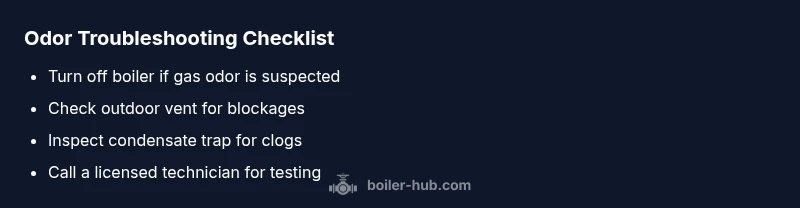
- Power down the boiler completely and allow it to cool. 2) Visually inspect the vent terminal outdoors for obstructions (bird nests, snow, debris) and clear them if you can do so safely. 3) Check the condensate trap and drain line for clogs; clear or replace if needed and ensure proper slope. 4) Remove any accessible burner panels only if you are trained and the unit is cool; carefully brush away dust and debris from flame openings without touching combustion components. 5) Reassemble, turn the boiler back on, and observe the flame color and odor. 6) If the odor returns, stop and contact a licensed technician. Tip: never try to clean or repair gas valves or the heat exchanger yourself; hazardous components require professional service.
If the odor persists after these steps, it's time to involve a pro. A blocked vent can cause dangerous backdrafting, while a dirty burner may emit byproducts that create a persistent, foul odor. A professional inspection will assess the integrity of the venting system, seals, and gas train to determine next steps.
Prevention tips and maintenance
Prevention is safer and more affordable than emergency repairs. Schedule annual boiler maintenance with a licensed technician. Regular service includes testing CO detectors, inspecting venting for blockages, cleaning burners, and inspecting seals and gaskets for leaks. Ensure proper fuel supply and correct gas pressure, and verify that combustion air is unobstructed. Use high-quality fuel and replace any aged components that show signs of wear. Keep a log of all maintenance tasks and odor occurrences to help technicians diagnose future issues quickly. Boiler smells like dead animal can be reduced by proactive care and timely replacement of worn parts; explain to your technician that odor history matters for precise troubleshooting.
When to call a professional and what to expect
If you encounter a strong odor around the boiler that matches boiler smells like dead animal, or if there are any signs of gas, flame color change, or CO detector alarms, contact a licensed boiler technician immediately. Do not attempt risky repairs yourself. A professional will perform a safety shutoff if needed, run a leak test, inspect venting and fuel lines, and check the heat exchanger and burner assembly. Expect a documented assessment, a written estimate for repairs, and a recommended maintenance plan. In many jurisdictions, annual inspections are mandated; follow local code and your warranty requirements. Regular professional visits are your best defense against odor-related hazards and costly downtime.
Steps
Estimated time: 45-60 minutes
- 1
Power down and assess safety
Turn off the boiler and disconnect power if accessible. Do not operate if you suspect a gas leak or you feel lightheaded. Confirm CO detectors are active.
Tip: Document odors and times for the technician. - 2
Vent check and outdoor inspection
Inspect the outdoor vent for obstructions and ensure it vents freely. Clear any debris or snow that blocks exhaust flow.
Tip: Never remove vent piping while the system is pressurized. - 3
Condensate and drainage review
Check condensate trap and drain lines for clogs; clear if safe and ensure proper slope away from the home.
Tip: A blocked condensate line can cause backups and odors. - 4
Burner area inspection
If safe, inspect accessible burner openings for dust or grime and gently brush away loose debris. Do not touch internal components.
Tip: Avoid touching flame sensor areas with bare hands. - 5
Restart and observe
Power the boiler back on and monitor flame color and odor. If the smell returns, turn off again and call a professional.
Tip: Note any changes in flame color (blue is normal; yellow/orange warrants inspection). - 6
Professional follow-up
Schedule a service visit to test gas pressure, inspect the heat exchanger, and verify vent integrity. Obtain a written repair plan.
Tip: Ask for a preventive maintenance plan to minimize recurrence.
Diagnosis: Boiler smells like dead animal
Possible Causes
- highGas leak or fuel line leak
- highBlocked or backdrafting vent/exhaust
- mediumDirty burner or heat exchanger starting to foul
- lowElectrical component overheating or wiring issue
Fixes
- hardIf gas smell is present, evacuate and call emergency services; do not re-enter until cleared by professionals.
- easyShut off the fuel supply at the meter if safe, clear vent obstructions, and ensure outdoor vent is free from snow, nests, or debris.
- mediumSchedule professional cleaning of the burner and heat exchanger; do not attempt internal cleaning if you lack training and safety equipment.
- mediumHave a qualified technician inspect wiring, controls, and safety devices; repair or replace faulty components.
Questions & Answers
What does it mean if my boiler smells like dead animal?
It often signals a combustion issue or fuel leak rather than an actual animal odor. Treat it as urgent and contact a licensed technician after taking immediate safety steps.
A rare odor around the boiler usually indicates a combustion or fuel issue; stop use and call a professional after ensuring safety.
Should I shut off the boiler if I smell gas?
Yes. If you smell gas, shut off the gas supply if safe, evacuate, and call emergency services or the gas company from a safe location.
If you smell gas, shut the supply if safe and leave the area, then call emergency services.
Can a dirty heat exchanger cause this odor?
A dirty heat exchanger can contribute to odors and reduced efficiency. Regular professional cleaning helps prevent this.
Yes, a dirty heat exchanger can cause odors and should be cleaned by a pro.
Is it safe to inspect the vent myself?
Only the exterior vent can be checked by a homeowner. Interior venting and gas lines require a licensed technician.
Inspect exterior vents only; interior venting and gas lines should be left to a pro.
How long does a professional inspection take?
A typical first inspection can take about an hour or two, depending on access and findings. A detailed repair plan may take longer.
Typically an hour or two for a standard inspection, more if extensive testing is needed.
What maintenance reduces boiler odor risk?
Annual professional service, routine vent checks, CO detector testing, and timely replacement of worn parts minimize odors.
Regular annual service and vent checks reduce odor risks.
Watch Video
Key Points
- Act immediately when you detect an odor around the boiler.
- Prioritize safety: evacuate if gas is suspected and ventilate the area.
- Most odor cases stem from venting, burners, or leaks—diagnose with professional help.
- Regular maintenance reduces odor risk and extends boiler life.
- Document odor details for faster, accurate service.