Boiler Blowdown: A Practical How-To Guide
Master boiler blowdown with this practical guide: learn manual and automatic methods, gather essential tools, follow safety steps, and implement maintenance practices to protect boiler life and efficiency.


Boiler blowdown is the controlled removal of water from a boiler to lower dissolved solids and maintain safe operating conditions. This quick answer explains when blowdown is needed, the basic steps for both manual and automatic blowdown, essential tools, safety precautions, and common mistakes to avoid.
What is boiler blowdown and why it matters\n\
Manual vs automatic blowdown: choosing the right approach\n\
Key factors that influence blowdown effectiveness\n\
Safety considerations and prerequisites before you begin\n\
Common mistakes and how to avoid them\n\
Maintenance planning and ongoing monitoring\n\
Tools & Materials
- Safety glasses(ANSI Z87.1 or equivalent)
- Heat-resistant gloves(Minimum 180°C/356°F protection)
- Bucket or heat-resistant container(To collect hot blowdown water)
- Discharge hose or line(Direct water to a safe drain)
- Adjustable wrench or pliers(Operate the blowdown valve safely)
- Boiler water test kit or pH strips(Optional for post-blowdown checks)
- Notepad or logbook(Record readings, dates, and actions)
Steps
Estimated time: 30-60 minutes
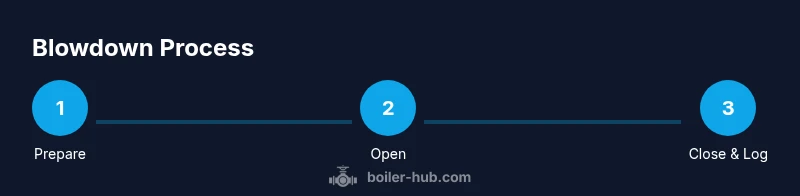
- 1
Prepare the boiler and workspace
Verify the boiler is powered down or safely isolated per safety policy. Put on PPE, clear the discharge area, and place a containment bucket under the blowdown line. Check that all doors and panels are secure to prevent accidental contact with hot surfaces.
Tip: Double-check that your discharge path is free of people and sensitive equipment before opening the valve. - 2
Inspect the valve and discharge path
Visually inspect the blowdown valve for wear or leakage and confirm that the discharge line is intact. Ensure the valve handle moves freely and the line is properly secured. If you notice corrosion or damage, repair or replace before proceeding.
Tip: If the valve feels stiff, don’t force it; apply a small amount of penetrating oil and allow a moment before retrying. - 3
Position the container and line
Place the bucket or trough to catch the blowdown and route the hose to a safe drain. Make sure the bucket won’t overflow and that the hose has a gentle, downward slope to prevent backflow. Confirm drainage location complies with local codes.
Tip: Keep a secondary container nearby to capture any unexpected surge when starting discharge. - 4
Open the valve gradually and monitor
Carefully open the blowdown valve a small amount and monitor the water flow, temperature, and pressure gauges. Increase slowly if needed, watching for splashing or water hammer. Stop if you notice any abnormal noises or line movement.
Tip: Do not exceed a quarter-turn at a time; gradual increases reduce the risk of shock to pipes. - 5
Close, flush, and log
Close the valve once the target volume or conductivity is reached. Allow a brief flush cycle, then close and re-check readings. Record the date, boiler pressure, discharge volume, and any water quality indicators in your log.
Tip: Document any deviations from expected results to guide future maintenance. - 6
Post-blowdown checks and cleanup
Return pipes and valves to normal configuration, inspect for leaks, remove containment, and store tools properly. Verify that the boiler returns to its normal operating state and no alarms remain active.
Tip: Review the maintenance log and schedule the next blowdown based on water quality and operating conditions.
Questions & Answers
What is boiler blowdown and why is it necessary?
Boiler blowdown is the intentional removal of boiler water to reduce mineral buildup and maintain safe operating conditions. It prevents scale formation and protects heat transfer surfaces, improving efficiency and reliability.
Blowdown is the scheduled flushing of boiler water to control minerals and keep the system safe and efficient.
How often should I perform boiler blowdown?
Frequency depends on water quality, boiler pressure, and usage. Hard or mineral-rich makeup water requires more frequent blowdown, while looser mineral content allows longer intervals. Always follow your boiler’s guidelines and your maintenance log trends.
Frequency depends on water quality and usage; log trends help determine the right schedule.
Can I blow down a hot boiler?
Blowing down a hot boiler increases the risk of scalding and thermal shock. Prefer blowing down after the boiler has cooled to a safer temperature unless your system requires short, managed cycles.
Only blow down when it is safe to do so; hot discharge can be dangerous.
What’s the difference between manual and automatic blowdown?
Manual blowdown is operator-controlled and best for variable conditions, while automatic blowdown maintains target water quality using sensors. A hybrid approach often provides reliability with flexibility.
Manual gives control; automatic keeps things steady; many systems use a mix.
What should I do if discharge water is discolored?
Discolored water can indicate abnormal water chemistry or corrosion. Stop, test water chemistry, and adjust blowdown frequency or consult a professional if the issue persists.
Discolored water means check your water chemistry and log results; seek advice if it continues.
Is blowdown dangerous for a home boiler?
When done with proper PPE, equipment, and safeguards, blowdown is a standard maintenance task. Incorrect procedures can cause burns or damage, so follow the manufacturer guidelines.
With proper safety and instructions, blowdown is a routine maintenance task; follow guidelines to stay safe.
Watch Video
Key Points
- Schedule and perform blowdown as part of routine boiler maintenance
- Choose manual or automatic blowdown based on boiler usage and monitoring capabilities
- Always follow safety protocols and document outcomes
- Monitor water quality to prevent scale and corrosion
- Log readings to guide future maintenance decisions