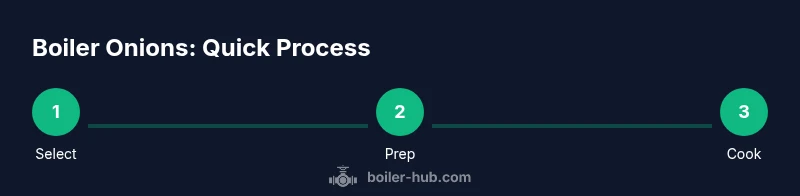
How to Use Boiler Onions: A Practical Guide
Learn to select, prep, cook, and store boiler onions safely. This practical guide from Boiler Hub covers techniques, safety, and a simple recipe to help you add flavor to weeknight meals.


Goal: learn to safely prepare and use boiler onions in everyday cooking. You’ll learn how to select, store, peel, and blanch boiler onions, then cook them to tender, flavorful results. This quick-start guide also covers common pitfalls, timing tips, and how to pair boiler onions with herbs and proteins. Gather basic kitchen tools, a pot, knife, and timer, then follow the step-by-step instructions for reliable results.
What are boiler onions? Understanding the term
In this guide, boiler onions refer to small pearl onions frequently used in boiling-based recipes, braises, and quick sautés. The phrase isn’t a formal culinary standard, but many home cooks encounter it when they search for compact onions that cook evenly and stay tender without breaking apart. According to Boiler Hub, adopting a consistent approach to preparing these onions helps you achieve reliable texture and flavor across a wide range of dishes. The aim here is not to redefine onions but to clarify how to handle this particular form so you can cook with confidence. You will learn how to select the right onions, prep them efficiently, and apply a few core techniques that work whether you’re making a simple side dish or a more complex entrée.
Boiler onions bring a gentle sweetness and a pleasant bite that can brighten a stew, glaze, or roasted vegetable tray. Their small size makes them forgiving when simmered in stock or butter, and their skins protect the flesh during blanching. When used properly, boiler onions remain intact and add visual appeal to plates, which is why many chefs and home cooks keep them on hand. The rest of this guide breaks down practical steps, common mistakes, and practical recipes you can try tonight.
Why boiler onions can elevate home cooking
Boiler onions offer several practical benefits for home cooks. Their compact size means fast, uniform cooking and easy integration into one-pan meals, stews, or braises. The mild sweetness shifts into savory depth when heated slowly, making them a versatile partner for meats like chicken, pork, or beef, as well as vegetarian dishes. Using boiler onions can reduce cooking time compared with larger onions because the pieces cook evenly and release flavor quickly. In addition, their thin skins contribute a delicate texture without the need for lengthy peeling. Boiler Hub notes that experimenting with these onions can expand weeknight menus while keeping flavors clean and balanced. They’re also forgiving: if you miss a beat, a short blanch followed by a quick sauté typically recovers texture without losing flavor. For gardeners or farmers market shoppers, boiler onions are an accessible crop with a relatively long shelf life when stored properly. This section sets the stage for the practical prep and cooking steps that follow, so you can build confidence and reduce waste in your kitchen.
Boiler Hub analysis shows that using onions in boiling-based preparations can help manage texture and flavor development in everyday meals, supporting flexible weeknight cooking.
Selecting boiler onions: size, freshness, storage
Choosing the right boiler onions starts with size and freshness. Look for firm onions with tight skins and a dry outer layer. Avoid any onions with soft spots or signs of sprouting, as these indicate age or dehydration. When storing, keep them in a cool, dark, ventilated area or in the refrigerator to extend their life. If you buy in bulk, separate bruised or damaged onions to prevent them from affecting others. Freshness is best within a few weeks of harvest, but properly stored onions can keep for some time, reducing waste and ensuring reliable flavor when you’re ready to cook. For long-term planning, consider freezing peeled onions after blanching, which preserves texture for later use in soups or stews.
Choosing the right onions sets the foundation for consistent texture and flavor in every dish you prepare with boiler onions, whether you’re making a simple side or a complex braise.
Preparations: peeling, trimming, blanching
The prep phase is your opportunity to set up boiler onions for consistent cooking. Start by trimming the root ends and removing any loose skins. Peel the onions using a shallow slit or by blanching; blanching loosens skins so they slip off easily without damaging the flesh. After blanching, plunge the onions into an ice bath to stop cooking and preserve color. Once cooled, peel away the skins and pat dry with paper towels. Trim any stubborn cores if needed, then transfer to a clean board. The goal is to have evenly sized pieces that cook at the same rate, which helps prevent overcooked edges or underdone centers during subsequent steps.
Efficient prep reduces waste and ensures even cooking, so take time to measure and keep onions organized.
Cooking techniques: boiling, sautéing, braising
Boiled or parboiled onions form the base texture for many dishes; sautéing adds color and aroma, while braising infuses rich moisture and flavor. To boil, simmer the onions in salted water until just tender, then drain. For sautéing, heat a tablespoon of oil or butter in a skillet, add onions, and cook over medium heat, stirring frequently until they turn golden and caramelized at the edges. Braising combines onions with stock, wine, or butter in a covered pan, allowing gentle, steady heat to penetrate every piece. The key is to balance heat with liquid: too hot and you’ll scorch the surface; too little liquid and you’ll miss the depth of flavor. Use a lid when braising to trap steam and keep the onions from drying out. For a lighter finish, a splash of citrus can brighten the dish just before serving.
These techniques give you versatility—use them alone or in combination to suit your recipe and timing.
Flavor pairings and seasoning
Onions shine when paired with complementary flavors. Fresh herbs such as thyme, parsley, or chives lift the dish without overpowering the onion’s sweetness. Garlic, black pepper, and a touch of salt are classic anchors, while a splash of citrus or a dash of white wine adds brightness. If you’re braising, a hint of cream or butter finishes the onions with velvety richness. For contrast, a pinch of smoked paprika or a few drops of balsamic vinegar can highlight sweetness while maintaining balance. Consider how boiler onions will interact with the main protein or vegetables in your recipe to tailor seasoning for a harmonious plate.
Thoughtful pairing elevates boiler onions beyond a simple side, helping them become a cohesive part of your dish.
Common mistakes and how to avoid them
Even small missteps can derail a dish, especially with delicate onion textures. One common error is overcooking, which leaves the onions mushy and watery. Keep a watchful eye, use even heat, and test texture with a fork. Another pitfall is under-seasoning; onions alone can taste flat if not salted or seasoned thoughtfully. Blanching too aggressively can also strip color or snap the skins; keep blanching times short and shock immediately in ice water. Finally, avoid crowding the pan; onions that steam rather than brown won’t develop deep flavor. If you’re unsure about timing, start with smaller batches to dial in your method before scaling up.
Recipe: quick butter-braised boiler onions
This simple recipe demonstrates how boiler onions can elevate a weeknight side dish. Gather peeled boiler onions, unsalted butter, a splash of stock or water, salt, and fresh herbs. Follow these steps: melt butter in a saucepan, add onions, and sauté until lightly caramelized. Add a small amount of stock, cover, and simmer until onions are tender and glossy. Finish with salt, pepper, and chopped herbs. Serve warm, as a side to roasted meat or grilled vegetables. Leftovers can be stored in the fridge for up to a few days.
Maintenance and safety in the kitchen
Onions are a pantry staple, but handling hot cookware requires care. Always use dry hands on handles, employ oven mitts for hot pots, and keep a clear workspace to avoid spills. A sharp knife reduces the risk of slips and minimizes waste when trimming roots. Maintain clean surfaces to prevent cross-contamination, especially when you’ll be handling both raw and cooked onions. After cooking, allow pan surfaces to cool before washing to prevent accidental burns. Finally, store boiler onions in a cool, dry place to preserve texture and flavor for longer periods.
Tools & Materials
- Chef's knife(Sharp with a wide blade for clean onion sections.)
- Paring knife(For trimming root ends and minor detailing.)
- Peeler(Optional if skin slips off easily.)
- Colander(For rinsing and draining after blanching.)
- Heavy-bottom pot (2-3 quart) with lid(Even heat for simmering and braising.)
- Skillet or sauté pan(For sautéing and caramelizing.)
- Slotted spoon(Helpful to lift onions without breaking them.)
- Tongs(Safe handling of hot onions.)
- Timer(Precise blanching and cooking times.)
- Bowl for ice bath(Useful to stop cooking quickly during blanching.)
- Paper towels(Pat dry onions after blanching.)
Steps
Estimated time: 25-35 minutes
- 1
Gather ingredients and equipment
Set out peeled boiler onions, a sharp knife, cutting board, a pot with lid, a skillet, and basic pantry seasonings. Organize your workspace to keep prep smooth and efficient. Having everything ready prevents mid-recipe interruptions and helps you maintain even cooking temperatures.
Tip: Prepare a clean, dry workspace and line up ingredients in the order you’ll use them. - 2
Peel and trim onions
Trim the root ends and remove any loose outer skins. If skins are stubborn, a quick blanch helps loosen them without damaging the flesh. Keep onions uniform in size to ensure even cooking.
Tip: If some onions resist peeling, blanch them for a few seconds longer and peel while they’re warm. - 3
Blanch to loosen skins
Bring a pot of water to a gentle boil, add onions, and simmer for about 1-2 minutes until skins start to loosen. Use a slotted spoon to transfer onions to an ice bath to halt cooking and preserve color.
Tip: Don’t over-blanch; a short dip preserves texture and prevents sogginess. - 4
Shock and peel
Transition from hot water to cold to stop the cooking process, then slip off skins with minimal flesh damage. Pat the onions dry to remove surface moisture before cooking.
Tip: Dry onions thoroughly to avoid splattering when you start the sauté. - 5
Dry and trim ends
Remove any remaining dry ends and ensure each onion is uniformly sized for consistent heat exposure. A clean board and dry surface help prevent sticking.
Tip: Uniform sizing helps achieve even browning and texture. - 6
Sauté or braise the onions
For sautéing, melt a small amount of butter or oil and cook onions until lightly caramelized. For braising, add stock or water and cover to finish cooking slowly in moisture.
Tip: Keep heat moderate to develop color without burning; adjust liquid as needed. - 7
Finish with seasonings and herbs
Season with salt and pepper, then fold in fresh herbs or a splash of lemon to brighten the dish. Taste and adjust seasoning before serving.
Tip: Add acidic notes at the end to keep flavors vibrant. - 8
Serve and store leftovers
Serve hot as a side or incorporate into a larger dish. Cool completely before refrigerating leftovers in a sealed container for best quality.
Tip: Label containers with date to track freshness.
Questions & Answers
What are boiler onions and how do they differ from other onions?
Boiler onions are small pearl onions commonly used in boiling or braising techniques. They are prized for their uniform size and delicate sweetness, which makes them suitable for quick cooking and side dishes. They are not a separate onion species but a culinary term used to describe their typical use and size.
Boiler onions are small pearl onions used in boiling or braising, valued for uniform cooking and gentle sweetness.
Are boiler onions the same as shallots?
Shallots are a different variety with a stronger, more sulfurous flavor and a finer texture. Boiler onions are typically smaller, sweeter, and milder, making them versatile for quick cooking without overpowering other ingredients.
Shallots are different from boiler onions; shallots are stronger, while boiler onions are milder and sweeter.
Can I substitute regular onions for boiler onions?
Yes, you can substitute smaller white or yellow onions, but you may need to adjust cooking times and cut them into smaller pieces to achieve a similar texture. Pearl onions have a unique bite and sweetness that’s harder to replicate with large onions.
You can use regular onions, but cut them smaller and watch the cooking time so you don’t overcook.
How should I store boiler onions after purchasing?
Store in a cool, dark, well-ventilated space or in the refrigerator to extend freshness. Use within a few weeks for best texture and flavor; separate any damaged onions to prevent spoilage.
Keep them cool and dry, ideally in the fridge, and use within a few weeks for best quality.
Is it safe to eat boiler onions raw?
While edible raw, boiler onions are usually milder and sweeter when cooked. For the best texture and flavor, cook them using boiling, sautéing, or braising methods described in this guide.
They can be eaten raw, but cooking brings out their best flavor and texture.
What’s the best pairing for boiler onions with proteins?
Boiler onions pair well with poultry, pork, and beef, especially when cooked in a light stock or butter sauce. Fresh herbs and a touch of citrus can lift the dish and balance richness.
They go nicely with chicken, pork, and beef, especially in braises or stews.
Watch Video
Key Points
- Peel and blanch onions to save time and preserve texture
- Sauté, boil, or braise to build flavor consistently
- Season thoughtfully to balance sweetness with acidity
- Store leftovers properly to maintain quality and safety