How to Make Boiler Onions: A Simple Guide
Learn how to make boiler onions with a simple boil-and-simmer method. This practical guide from Boiler Hub covers prep, timing, and finishing touches for tender, caramelized onions.


To make boiler onions, start by rinsing small white onions and prepping a pot of boiling water. Blanch the onions for 2–3 minutes, then shock in cold water to peel easily. Finish with gentle simmering in butter and herbs until tender and lightly caramelized. This method yields sweet, glossy onions perfect as a side dish or ingredient.
What boiler onions are and when to use them
In this guide on how to make boiler onions, you’ll learn a straightforward method to transform small onions into tender, glossy morsels. Boiling onions is a classic technique to soften their bite, unlock natural sweetness, and create a versatile ingredient for sides, stews, or garnishes. According to Boiler Hub, choosing the right onion size and keeping a steady simmer are key to consistent results.
Ingredients and substitutions
You’ll need a handful of ingredients to make boiler onions: small white onions (or boiling onions) 1–2 pounds, water for boiling, 2 tablespoons butter, salt, and fresh herbs such as thyme or parsley. Optional additions include a splash of lemon juice for brightness or a pinch of sugar if your onions are particularly sharp. If you can’t find boiling onions, you can substitute with shallots or pearl onions, adjusting cooking times accordingly.
Prep and safety considerations
Before you start, wash the onions and trim the root ends. Peel the outer skins after blanching if you prefer easier removal. Wear kitchen-safe gloves if you’re sensitive to onion vapors, and keep a bowl of cold water nearby for quick cooling. Use a sharp knife for clean cuts and avoid overcrowding the pot to ensure even heat distribution.
Step-by-step boiling method
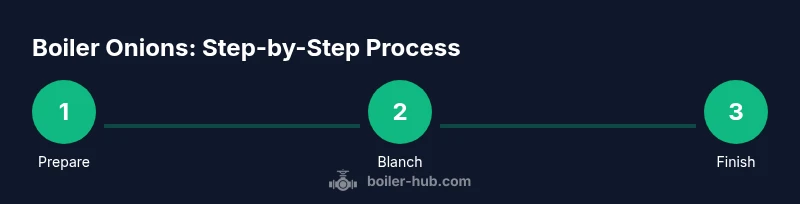
- Prepare the onions: rinse, trim stems, and keep the skins handy for peeling post-blanch. 2) Bring a large pot of water to a rolling boil. Add a pinch of salt and the onions, blanch for 2–3 minutes until just tender. 3) Use a slotted spoon to remove and shock the onions in cold water to stop cooking. 4) Drain, then simmer gently in a skillet with melted butter and herbs for 3–5 minutes to develop flavor and a glossy finish. 5) Season with salt and pepper to taste and finish with a squeeze of lemon if desired.
Finishing touches and serving ideas
Serve boiler onions warm as a side dish with roasted meats or fish, toss into a warm grain bowl, or use as a sweet-savory topping for burgers or quiches. Leftovers can be stored in an airtight container in the fridge for up to 3–4 days. Reheat gently in a pan with a splash of butter or broth to refresh the glaze.
Tools & Materials
- Large pot (6-8 quart)(Fits onions in a single layer for even heat)
- Slotted spoon(For lifting onions from boiling water)
- Ice bath bowl(Cold water to shock onions after blanching)
- Sharp knife(Trim stems and roots cleanly)
- Butter and fresh herbs(Finish for glaze and aroma)
- Measuring spoons(Optional for precise salt/herb amounts)
- Timer(Track blanching and simmer times)
Steps
Estimated time: 20-30 minutes
- 1
Prepare the onions
Rinse the onions under cool water, trim the tops and roots, and set aside. Keeping skins handy for post-blanch peeling can speed up prep. This step ensures uniform cooking and easier handling.
Tip: Keep a cutting board nearby and use a sharp knife for clean cuts. - 2
Blanch the onions
Fill a large pot with water, bring to a rolling boil, then add a pinch of salt and the onions. Blanch for 2–3 minutes until they are just tender and the skins loosen.
Tip: Use a slotted spoon to lift onions out quickly to prevent overcooking. - 3
Shock and peel
Transfer blanched onions to an ice bath or cold running water to stop the cooking. Peel away the skins with minimal effort while they’re cool.
Tip: Peeling while slightly cooled minimizes tearing and speeds prep. - 4
Sauté for glaze
Melt butter in a skillet over medium heat, add onions, and sauté with herbs for 3–5 minutes until glossy and lightly caramelized.
Tip: Shake the pan occasionally to distribute heat evenly. - 5
Season and finish
Season with salt and pepper to taste. A squeeze of lemon juice brightens the dish and balances sweetness.
Tip: Taste as you go to avoid oversalting. - 6
Serve or store
Serve immediately as a side or add to recipes. Refrigerate leftovers in an airtight container for up to 3–4 days.
Tip: Reheat gently with a splash of broth to revive glaze.
Questions & Answers
What are boiler onions and when should I use them?
Boiler onions are small, tender onions ideal for quick boiling and glazing. Use them as a side dish, garnish, or ingredient in stews and salads.
Boiler onions are small onions great for boiling and glazing; they work well as a quick side dish or in stews.
How long do I boil boiler onions?
Blanch for 2–3 minutes to soften the skins, then finish with a brief sauté for flavor. Exact times vary with onion size.
Blanch for 2–3 minutes, then finish with a quick sauté.
Should I peel boiler onions before boiling?
Peel after blanching for easier removal. Keeping skins on during blanching can slow peeling but protects the onion's surface.
Peel after blanching for easier removal.
How should I store boiler onions?
Store cooled onions in an airtight container in the fridge for up to 3–4 days. Reheat gently with a little butter or broth.
Store in the fridge for up to 3-4 days and reheat gently.
Can I substitute other onions for boiler onions?
Shallots or pearl onions can work, but they may require slightly different blanching times. Adjust accordingly.
Shallots or pearl onions can work with adjusted times.
Watch Video
Key Points
- Boil onions to soften while preserving sweetness.
- Blanching followed by a short sauté yields glossy texture.
- Peel after blanching for easier prep.
- Store leftovers promptly in the fridge.