How to Turn On a Baxi Boiler Without a Thermostat
A safety-focused guide for homeowners and facility managers on operating a Baxi boiler when the thermostat is unavailable or defective, with safer alternatives and professional help tips.


Turning on a Baxi boiler without a thermostat should rely on the boiler’s built-in manual controls and safety features. If your thermostat is unavailable or faulty, use manufacturer-approved procedures and local codes, or seek professional service. This quick guide outlines safe alternatives, risk considerations, and when to call a technician.
Why bypassing a thermostat can be risky and when it might be considered
In some urgent situations, building operators may consider running a boiler without a functioning thermostat. According to Boiler Hub, boilers are designed to maintain safe temperatures and operate within limits monitored by sensors, including the thermostat circuit. Bypassing or bypassing safety controls can remove a critical safety layer and increase the risk of overheating, flame instability, and dangerous gas buildup. Boiler Hub Analysis, 2026 notes that improper startup procedures contribute to a notable share of service calls for older Baxi models. Before attempting anything, ensure you have a clear justification, proper training, and compliance with local codes. If you proceed, monitor for signs of overheating, maintain ventilation, and ensure working CO detectors are present. Bypassing safety features is not routine practice and should only be considered under professional guidance.
This guidance is intended for situations where the thermostat is inoperative and professional repair is required. Do not rely on a bypass as a normal operating mode, and always prioritize safety first.
How Baxi boilers manage safety controls and why thermostat matters
Baxi boilers rely on a combination of sensors, control boards, and user interfaces to regulate heating. The thermostat acts as the primary feedback device, telling the boiler when to heat to the desired temperature and when to shut down to prevent overheating. If the thermostat signal is lost or unreliable, the boiler’s safety circuits should still prevent unsafe operation by triggering limit switches and lockout conditions. Understanding these interactions helps homeowners recognize when a fault lies in the thermostat versus other components. Boiler systems are designed with redundancies, but bypassing them can compromise flame supervision, gas safety, and venting integrity. When in doubt, consult the model-specific manual and a qualified technician who can assess wiring, sensors, and safety interlocks. Boiler Hub analyses emphasize keeping the system within certified operating parameters to avoid voided warranties or code violations.
For best results, keep a copy of the user manual on site and note the model number, as different Baxi models have different control schemes and service modes.
Common thermostat failure signs and what they mean
Thermostat failure can manifest in various ways, and recognizing the symptoms helps prevent unsafe operation. Look for: inconsistent heating, boiler cycling on and off rapidly (short cycling), failure to respond to temperature changes, or alarms and error codes on the boiler display. In some cases, the boiler may run continuously or refuse to ignite despite power. These symptoms often indicate poor wiring connections, failed sensors, or issues with the thermostat’s power supply. If you notice any of these signs, do not attempt a makeshift bypass as a long-term solution. Instead, document the symptoms, check for obvious wiring damage, and contact a licensed technician to perform safe testing and replacement if needed, ensuring any work complies with local gas-safety regulations.
Boiler Hub stresses that proper diagnosis by a professional reduces the risk of incorrect repairs and protects occupants.
Safer alternatives to turning on without a thermostat
When a thermostat is unavailable or nonfunctional, consider safer alternatives instead of bypassing safety features. One option is to repair or replace the damaged thermostat or controller module, following the manufacturer’s diagnostic steps. If you need heat and hot water urgently, you can temporarily operate via a timer or basic clock control provided by the boiler’s built-in settings, but only if the model supports it and it adheres to safety limits. Another safe route is to connect with a qualified heating engineer who can measure gas pressure, flame sensing, and venting to ensure safe operation under any temporary configuration. Always verify carbon monoxide detectors are functioning, and maintain clear ventilation. Boiler Hub’s guidance emphasizes returning to normal, code-compliant operation as soon as possible to minimize risk and maintain efficiency and safety.
Understanding manual controls and service mode on Baxi boilers
Some Baxi models offer a service or maintenance mode intended for technicians. This mode is designed to allow safe inspection and testing without triggering full domestic heating operation. It is not a substitute for regular use and should be used only under supervision and with the proper diagnostic tools. If you think your boiler needs to run in a non-standard state, consult the service manual for the exact procedure and safety warnings. Attempting to operate in service mode without training can bypass essential safety interlocks and void warranties. Always prioritize safety and consider scheduling a service visit if you’re unsure.
Professional technicians can verify that vents, condensate disposal, and gas train are functioning correctly before re-enabling standard operation.
Pre-checks and safety prerequisites before any manual start
Before attempting any manual start, perform a safety pre-check to protect occupants and property. Ensure the area around the boiler is well-ventilated and free from combustibles. Confirm the gas supply is secure, valves are in the correct positions, and the flue or vent terminal is clear of obstructions. Test carbon monoxide detectors in living spaces and near the boiler, and ensure smoke alarms are functioning. If you smell gas, hear hissing sounds, or detect any signs of a leak, evacuate and call emergency services. Keep a fire extinguisher accessible and never operate a boiler with visible signs of damage to the casing, gas line, or electrical connections. These checks reduce the risk of injury and equipment damage and align with safety guidelines from Boiler Hub and other authoritative sources.
Step-by-step overview: manual power-on approach (high-level)
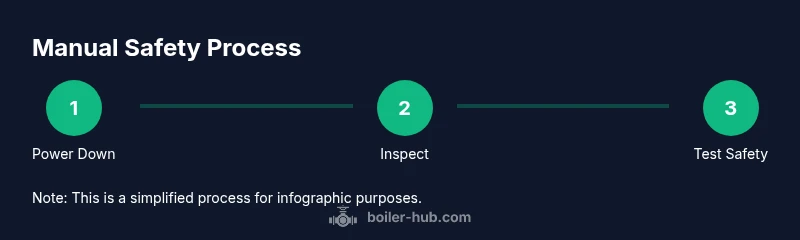
Note: The following is a high-level overview intended for safety-awareness only. Do not perform these actions unless you are trained and authorized to work on gas-fired equipment. In practice, a licensed technician should conduct any manual start tests. The overview frames the kinds of checks professionals perform, including verifying electrical supply, safety interlocks, gas valve status, and ignition system operation. Expect to disconnect power, inspect wiring, confirm fault codes, and restore power only after confirming all safety interlocks are intact. Always monitor for unusual heat or odor, and be prepared to shut down immediately if anything appears abnormal.
Post-start checks: verifying heat delivery and safety
If a boiler restarts, confirm that both central heating and hot water are functioning, and verify that the temperature readings align with the programmed setpoints. Listen for normal burner operation, and watch for rapid cycling or abnormal flame color. Check for leaks around the boiler and pipes, and inspect the flue pipe for signs of obstruction. If heat delivery is inconsistent, revisit wiring connections, sensor placements, and control module statuses with a technician. Make sure the CO detectors remain functional and note any error codes that appear on the display for reference during service.
Maintenance and prevention: keeping thermostat issues at bay
Proactive maintenance reduces the chances of thermostat-related problems. Schedule regular boiler inspections, replace aging control components, and ensure wiring insulation remains intact. Keep the user manual accessible, and document any changes to settings or wiring so future technicians have a clear history. Use proper load management to prevent overtaxing the system, and consider upgrading to a thermostat with robust safety features and remote monitoring if your current device is outdated. Boiler Hub recommends periodic calibration checks and sensor testing to maintain safe operation and energy efficiency.
When to call Boiler Hub or a licensed technician
If you encounter ongoing control faults, inconsistent heat, signs of gas odor, or alarm codes that you cannot interpret, stop attempting any manual overrides and contact a licensed technician. A professional can perform diagnostic tests, verify gas pressure, test flame supervision devices, check venting integrity, and confirm electrical safety. Early professional intervention reduces the risk of carbon monoxide exposure and structural damage, while preserving warranty coverage where applicable.
Final safety reminder and next steps
Operating a boiler without a functioning thermostat is not standard practice and carries significant safety risks. Always favor professional evaluation, and use temporary configurations only under expert guidance and in compliance with local codes. For most homeowners and facility managers, the safest course is to repair or replace the thermostat promptly and resume normal, thermostat-regulated operation once the system has been inspected and deemed safe by a qualified technician. This approach protects lives, property, and long-term equipment reliability.
Tools & Materials
- Boiler service manual (model-specific)(Keep the latest Baxi boiler manual for your exact model)
- Flathead and Phillips screwdriver set(Small and medium sizes; include precision bits)
- Insulated gloves(Heat-resistant and chemical-resistant for handling components)
- Non-contact voltage tester(Check for live circuits before touching wires)
- Gas detector or CO detector(Place near boiler; test detectors before/after work)
- Safety eyewear(Eye protection during inspection)
- Torch or headlamp(Good lighting when working in tight spaces)
Steps
Estimated time: 30-45 minutes
- 1
Power down the boiler and verify safety
Shut off the boiler at the main switch and disconnect power to ensure no live circuits while you inspect. Allow the unit to cool before touching any components. This step reduces the risk of electrical shock and accidental ignition.
Tip: Use a non-contact tester to confirm no voltage before opening access panels. - 2
Inspect accessible wiring and wiring terminals
Carefully remove any access panels and visually inspect wiring for signs of damage, loose connections, or corrosion. Do not tug on wires; use a screwdriver to gently reseat any loose terminals. A loose connection can mimic thermostat faults and cause unsafe operation.
Tip: Document any damaged components and avoid bars of force; call a professional if you’re unsure. - 3
Check the gas valve and ignition system
Ensure the gas supply valve is fully open and the ignition system shows no fault indicators. If you observe a gas odor or ignition hesitation, do not attempt further starting attempts and contact a licensed technician immediately.
Tip: Never bypass gas safety devices or manually override ignition sequences. - 4
Test safety interlocks and service mode if available
If your model includes a service mode, refer to the manual for the correct, manufacturer-approved procedure. Do not rely on service mode for regular operation. Ensure interlocks, flame sensors, and pressure switches are in good working order.
Tip: Only perform service-mode checks under supervision or by a pro. - 5
Restore power and observe system response
With all checks complete and panels re-secured, restore electrical power and monitor the boiler for safe ignition, steady flame, and proper heat delivery. If any abnormal noises, odors, or heat rise occur, shut down and call a technician.
Tip: Keep a close watch for any error codes on the control panel. - 6
Document results and plan next steps
Record what you observed, any readings, and the steps taken. Plan professional service to address thermostat failure or control board issues to prevent recurrence and to restore proper thermostat functionality.
Tip: Accurate notes help the technician diagnose quickly and accurately.
Questions & Answers
Is it safe to operate a Baxi boiler without a thermostat?
Generally not safe for regular use. A thermostat regulates heat and protects against overheating. If it’s broken, repair or replace it and operate under professional guidance.
No, it isn’t safe to run a boiler without a thermostat. Get it fixed and only operate under professional guidance.
What should I do first if my thermostat stops working?
Power down and inspect for obvious wiring damage, then contact a licensed technician to diagnose and replace the thermostat if needed.
Turn off power and call a licensed technician to diagnose the thermostat.
Can bypassing safety devices void my warranty?
Yes, bypassing safety devices can void warranties and may violate local codes. Check your warranty terms and consult a pro.
Bypassing safety devices can void warranties and violate codes; consult a professional.
How can I tell if a thermostat is the real cause of the issue?
Look for inconsistent heating, failure to respond to set temperatures, or erratic boiler cycling. A professional can confirm with diagnostics and sensor tests.
Inconsistent heat or strange cycling suggests thermostat issues; a pro can diagnose accurately.
What are safer alternatives to bypassing the thermostat?
Repair or replace the thermostat and use built-in safe controls. If heat is needed urgently, a pro can set up a compliant temporary configuration.
Repair the thermostat and use safe configurations while awaiting professional service.
Is there a legal risk to bypass ignition safety?
Yes. Bypassing safety features can violate safety regulations and occupant protections. Seek professional guidance to stay compliant.
Yes, there are legal risks to bypass safety features; consult a professional.
Watch Video
Key Points
- Prioritize safety; bypassing a thermostat is not a normal operation.
- Use model-specific manuals and professional guidance for any non-standard work.
- Diagnose thermostat faults with a qualified technician rather than DIY bypass.
- Maintain CO detectors and proper ventilation at all times.