How to Light a Furnace Without a Pilot
A safety-focused guide to lighting a gas furnace without a standing pilot. Learn ignition types, essential tools, step-by-step instructions, troubleshooting tips, and when to call a professional. Based on Boiler Hub Analysis, 2026.


By using the electronic ignition and following manufacturer instructions, you can light a furnace without a pilot. This quick answer outlines the essential steps, safety checks, and cautions. Start by locating the access panel, ensuring gas supply is off, and following the ignition sequence for your model. If you smell gas, abort and call a pro.
Understanding ignition options and safety
Ignition systems vary by furnace model. Many modern gas furnaces rely on electronic igniters instead of a standing pilot. This means the burner starts when the control module completes a controlled arc or spark and confirms gas is flowing at the correct valve position. According to Boiler Hub Team, safety and model-specific instructions are paramount; never substitute a different method without confirming compatibility with your unit. Before attempting any ignition, know your furnace type (direct-vent, concentric, condensing, etc.) and review the exact sequence in your owner’s manual. Improper ignition can lead to gas buildup, delayed ignition, or flame rollout, all of which pose fire and carbon monoxide risks.
- Read the manufacturer’s guide for your exact model.
- Understand the difference between an electronic ignition and a standing pilot.
- If you detect gas odors or leaks, stop immediately and evacuate.
The ignition approach for each furnace shares core safety practices: ensure power is off to the control board when inspecting, verify the gas supply is off, and avoid using any open flame to test ignition unless explicitly approved by the manual. Boiler Hub analyses emphasize starting from the manual, not assumption, to avoid dangerous missteps.
Before you start: prerequisites and safety checks
Before you touch any furnace components, complete a quick safety check. Turn off the thermostat to prevent the system from trying to start while you’re working. If you can safely access the gas valve, ensure it is in the OFF position and listen for any hissing sounds that might indicate a leak. Do a visual inspection of the exterior and the access panel to ensure there is no scorch or obvious damage. If you smell gas, do not proceed—leave the area and contact your gas utility or emergency services. Boilers can release carbon monoxide if ignition is mishandled; never operate a furnace in an enclosed space where CO could accumulate. Boiler Hub’s guidance stresses that verification steps are essential before engaging ignition.
- Verify the thermostat is off and power to the furnace is cut.
- Check for gas odor as a primary safety signal.
- Have a charged cellphone or a landline nearby in case you need to call for help.
- Use a flashlight to illuminate tight spaces; never rely on ambient room light alone.
If you’re unsure about any step, stop and consult a professional; attempting ignition without proper knowledge can be dangerous.
Tools and protective gear you’ll need
Having the right tools and safety gear reduces risk and makes the process smoother. Gather a flashlight, safety goggles, insulated gloves, and a clean drop cloth or old towel to protect the floor. A basic screwdriver set (flathead and Phillips) is handy for removing access panels if your model requires it. Keep a digital thermometer or multimeter handy to verify electrical supply to the ignition module if you have one. Also, have a soap-water solution or a gas detector handy to check for leaks after reassembly. As Boiler Hub notes, preparing your toolkit and PPE ahead of time lowers stress and increases safety during ignition checks.
- Flashlight or headlamp with fresh batteries
- Safety goggles and insulated gloves
- Drop cloth to protect floors
- Screwdriver set (if panel removal is needed)
- Multimeter or voltage tester (optional but helpful)
Remember: never bypass safety gear because you’re in a hurry. PPE protects you from sharp edges, hot surfaces, and accidental sparks.
Step-by-step overview and expectations
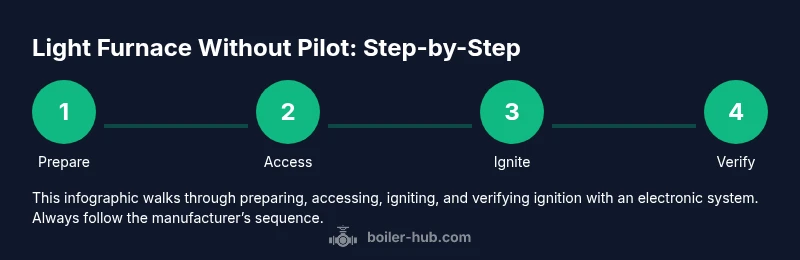
This section provides a high-level map of the steps you’ll perform, aligned with your furnace’s manual. Expect a controlled sequence: power check, gas valve confirmation, ignition sequence initiation, flame verification, and post-ignition safety checks. If your model includes an electronic ignition, the control module will usually energize the igniter, light the burner once a sensor confirms gas flow, and then maintain flame while the furnace runs. If the flame does not ignite within a few seconds, do not force the process; shut down and recheck connections. For visual guidance, refer to the diagram in your manual or the manufacturer’s service sheet. Boiler Hub suggests using any official illustration to ensure you follow the exact path for your model.
- Confirm power and gas-off status before beginning.
- Follow the manual’s ignition sequence exactly as written.
- Do not hold or bypass relays or safety switches.
- If you hear unusual noises or smell gas, stop immediately.
Note: If your system uses a hot surface igniter or an electronic glow plug, the ignition may take a moment to establish a stable flame. Patience during the brief start-up window is normal.
Troubleshooting common ignition issues
Ignition problems often stem from a few common culprits: a dirty flame sensor, a faulty igniter, a malfunctioning gas valve, or a weak electrical supply. If ignition fails, turn everything off and wait 60 seconds before retrying to allow the system to reset. Inspect the igniter for cracks or carbon buildup and clean or replace as necessary per the service manual. A flame sensor that won’t detect a flame will prevent re-ignition; cleaning with a soft cloth and appropriate cleaner can fix minor contamination. Check the gas valve for proper operation; a stuck valve may prevent gas flow even if the igniter is working. If electrical power is inconsistent or the control board shows error codes, consult a professional. Boiler Hub’s experience indicates that persistent failures warrant professional inspection to prevent CO buildup and equipment damage.
- Clean or replace a dirty flame sensor and igniter as per manual.
- Verify gas supply is steady and valve is opening fully.
- Check electrical connections and fuses; reset as instructed.
- If in doubt, call a technician rather than attempting ad-hoc fixes.
When to call a professional and post-ignition safety checks
Even with a successful ignition, ongoing performance problems should trigger a professional evaluation. If the furnace cycles frequently, burns with an uneven flame, or shuts off unexpectedly, there may be a fault in the ignition module, gas pressure, or venting. Boiler Hub emphasizes that improper ignition can lead to incomplete combustion and dangerous CO production. Regular maintenance, including annual inspection by a licensed technician, is recommended to keep your system safe. After a successful ignition, monitor for a steady flame and consistent heat delivery. If you suspect any issues, schedule service rather than attempting self-repair.
- Schedule annual professional maintenance.
- Monitor flame color and furnace cycle length for irregularities.
- Do not bypass safety sensors or operate with a known fault.
- If in doubt, contact a licensed technician immediately.
Understanding long-term maintenance and safety considerations
Long-term safety relies on routine maintenance and mindful operation. Modern furnaces with electronic ignition still require periodic calibration, vent cleaning, and component replacements as recommended by the manufacturer. Boiler Hub stresses that homeowner maintenance should not replace professional servicing for gas-fired systems—CO detection, vent integrity, and gas pressure checks are critical. Keep a written maintenance schedule, track service dates, and replace aging components as advised. If you notice increased fuel use, unusual smells, or strange noises, stop using the furnace and consult a technician. This approach minimizes risk and extends equipment life.
Tools & Materials
- Owner’s manual for your furnace(Identify ignition type and safety steps)
- Safety goggles(Protect eyes from sparks and debris)
- Insulated gloves(Protect hands from heat and sharp edges)
- Flashlight/headlamp(For visibility inside the furnace compartment)
- Drop cloth or old towel(Protects flooring during panel work)
- Screwdriver set (flathead & Phillips)(Optional for panel removal or access)
Steps
Estimated time: 15-30 minutes
- 1
Prepare and verify safety
Power off the furnace at the disconnect and thermostat to avoid unintentional starts. Confirm gas OFF and listen for any hissing sounds. Inspect the area for obvious damage and ensure you have clear access to the burner area. This initial step prevents unexpected ignition and reduces CO risk.
Tip: Always double-check the manual’s safety section before starting. - 2
Access ignition area
Remove the furnace’s front panel per the manual to expose the burner and igniter. Use a flashlight if needed, and avoid touching hot surfaces. Keep hands away from moving parts and store tools within arm’s reach for a smooth workflow.
Tip: Avoid forcing panels; use proper screws and tools. - 3
Confirm electrical readiness
If your model uses an electronic igniter, ensure the control board is powered (or in a test mode as specified by the manual). Do a quick visual check for loose wires or corroded terminals and fix before attempting ignition.
Tip: A loose wire is a common ignition failure cause. - 4
Initiate ignition sequence
Follow the exact ignition sequence in your owner’s manual: typically the controller energizes the igniter, then gas valve opens to light the burner. Do not improvise. If the flame doesn’t appear within a few seconds, stop and recheck the system.
Tip: Patience is key; some systems require a brief wait after arming. - 5
Verify flame and operation
Once the burner lights, observe a stable, blue flame with a well-defined base. If the flame is yellow, flickering, or climbs the walls, power down and troubleshoot or call a technician. Confirm heat exchange and venting are unobstructed.
Tip: Rely on flame color and stability as primary indicators. - 6
Post-ignition safety and reset
Replace the access panel, reattach wiring, and set the thermostat to a heating call. Listen for normal cycling and check for gas odor after the system runs briefly. If anything seems off, power down and call for service.
Tip: Keep a CO detector in the living space for ongoing safety.
Questions & Answers
Is it safe to light a furnace without a pilot?
Lighting a furnace without a pilot is possible with electronic ignition, but it requires strict adherence to the manual and safety precautions. Do not proceed if you detect gas odors or leaks.
Yes, but only when you follow the manual and there are no gas odors.
What should I do if I smell gas around the furnace?
Do not attempt ignition. Exit the area immediately and call your gas utility or emergency services. Do not switch on lights or operate electrical devices.
If you smell gas, leave quickly and call for help.
Why would ignition fail to light after starting the sequence?
Common causes include a dirty flame sensor, a faulty igniter, gas valve issues, or electrical supply problems. Check connections and clean components according to the manual before seeking professional help.
Ignition can fail due to dirty sensors or faulty parts; check the basics first.
Can I test for gas leaks myself after reassembly?
Use a soap-and-water solution on suspect joints to look for bubbles indicating leaks. Do not use open flames. If you’re unsure, call a pro.
You can test with soap solution on joints, but avoid flames.
When should I replace the ignition system?
If ignition problems persist after cleaning and testing, or codes indicate a control issue, replacement or professional inspection is recommended.
If problems continue, it’s time for a professional inspection.
Watch Video
Key Points
- Identify your ignition type before attempting any lighting.
- Use proper safety gear and stable lighting conditions.
- Follow the manufacturer’s ignition sequence exactly; do not improvise.
- Call a professional if ignition fails or you detect gas odors.