How to Cook Boiler Onions: A Complete Boiling Guide
Learn how to cook boiler onions with a simple boiling method. This step-by-step guide covers selection, prep, timing, flavoring, and serving ideas for tender, sweet onions every time.


How to cook boiler onions by boiling is quick, reliable, and forgiving. This method yields tender, sweet onions that elevate soups, stews, and sides. You’ll need a pot, water, salt, and a timer. Start with evenly sized onions, bring to a gentle boil, then simmer until just tender. The Boiler Hub team found that maintaining steady heat and not overboiling preserves sweetness and texture.
Understanding boiler onions: what they are and how boiling works
Boiler onions are small, typically 1 inch to 1.5 inches in diameter, often white or yellow varieties sold in bundles. In cooking, many home cooks refer to them as pearl onions and they shine when boiled, simmered, or braised. When you learn how to cook boiler onions, the goal is uniform tenderness with a hint of sweetness that remains even after cooling. Boiling is one of the simplest ways to achieve this, because it cooks onions gently in water, preserving their shape while softening their texture. According to Boiler Hub, the secret to consistent results is using onions of similar size and providing steady heat throughout the boil. The team found that even sizing minimizes cook-time variance and helps you predict doneness more reliably. In this section, we’ll cover how the onions’ structure influences their behavior in hot water, and why the boil method is ideal for many recipes, from salads to stews.
Choosing the right onions
For boiling onions, pearl onions or small white/yellow onions are ideal because they cook evenly and maintain their shape. If you cannot find exact boiler onions, you can use small shallots or peeled junior onions, but plan for a touch longer cooking time. When selecting onions, look for bulbs that are firm with tight skins and no soft spots. Avoid onions that are sprouting heavily, as this can indicate age and alter flavor. If you plan to store them for a few days before cooking, choose onions without visible signs of decay. Freshness matters; fresher onions tend to yield milder sweetness after boiling, while older ones may be a bit more pungent. The Boiler Hub approach emphasizes uniform size to keep cook times predictable and to help you reach perfect tenderness every time.
Preparing onions for boiling
Begin by washing the onions under cool running water to remove any dirt from the outer skins. Trim the root ends and, if desired, shave off a thin layer of papery skin. Leaving the root end intact helps hold the layers together during boiling, which helps maintain their shape. If you’re dealing with especially tight skin, a light peel can prevent stubborn pieces from breaking free in the pot. Rinse again and pat dry. Having onions clean and uniformly prepared ensures even cooking and reduces the risk of inconsistent texture in the final dish.
The basic boiling method
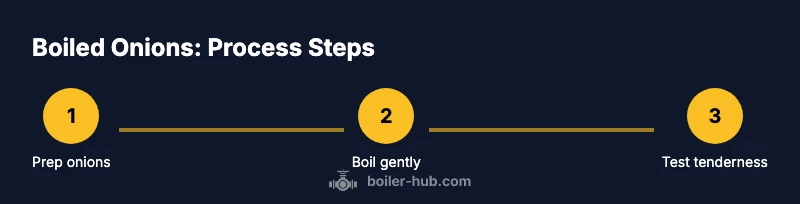
Fill a pot large enough to cover the onions by at least 1 inch with cool water. Add 1–2 teaspoons of kosher salt per quart of water and stir to dissolve. Bring the water to a gentle boil over medium-high heat, then reduce to a steady simmer. Carefully add the onions in a single layer, keeping them submerged. Simmer until a fork slides into the onion with little resistance, typically 6–12 minutes depending on size. Begin checking early if you’re using particularly small bulbs. Skim off any foam to keep the cooking water clear and tasting clean. When tender, drain the onions promptly to stop cooking.
Flavoring options while boiling
Water flavoring is subtle but effective. Add a bay leaf or a few peppercorns to the simmering water to introduce gentle aromatics without overpowering the onion sweetness. Fresh thyme or parsley can also be added for a bright finish, especially if you plan to serve the onions as a side dish. If you want a touch of sweetness, a tiny pinch of sugar can help balance natural onion sharpness, but use it sparingly. Avoid overpowering flavors like strong garlic unless the onions are to be used in a bold recipe. Always taste the simmering water after a minute or two to gauge aromatics before adding the onions.
Alternative cooking methods
If you want a different texture or flavor, consider steaming the onions instead of boiling. Steaming preserves slightly more bite and natural sugars. Parboil briefly, then finish in a pan with a bit of butter for a glazed effect. A pressure cooker can speed things up, but be mindful of overcooking since pressure can intensify heat. For recipes calling for mashed or puréed onions, boiling until tender and then mashing with a fork or ricer can create a smooth texture without additional dairy.
Troubleshooting common issues
If onions are undercooked after the initial simmer, continue to cook in short 1–2 minute bursts, testing tenderness frequently. If onions turn mushy or fall apart, reduce heat and shorten cooking time next batch. If the flavor is bland, a small amount of salt or a splash of cooking water with aromatics can help. Splitting onions during boiling often indicates water was too aggressive; maintain a gentle simmer to keep their shape intact. For bright color retention, briefly shock the onions in cold water after draining to stop cooking and lock in appearance.
Serving ideas and storage
Boiled boiler onions can be served warm with melted butter and a pinch of salt, or cooled and added to salads for a crisp, sweet contrast. They pair well with herbs like parsley, dill, or chives. For storage, refrigerate peeled onions in an airtight container for up to 3–5 days. They can also be frozen, though the texture may soften slightly after thawing. To reheat, warm gently in a small amount of water or broth, avoiding high heat that could make them tough again. These onions are versatile enough to feature in roasts, stews, or cold side dishes.
Quick recipe ideas using boiled onions
Try a simple onion medley by tossing warm boiled onions with melted butter, lemon zest, and chopped dill. For a tangy salad, combine cooled onions with cucumber, olives, and a light vinaigrette. Use boiled onions as a base for a rustic piccalilli or as a sweet-savory topping on grilled meats. You can also mash them lightly with a fork and mix into mashed potatoes for extra creaminess and depth. The possibilities are broad, and their mild sweetness makes them a versatile kitchen staple.
Safety and sanitation when handling onions
Always wash hands before handling raw produce and after peeling onions to prevent cross-contamination. Use a clean cutting board and knife dedicated to produce. Store peeled onions in a sealed container to prevent odor transfer to other foods. If you notice any off-smell, unusual softness, or mold, discard the onions. Practicing good hygiene and safe handling protects both flavor and health in the kitchen.
Tools & Materials
- Sturdy pot (2–3 quarts)(To hold several bulbs with plenty of water)
- Water(Enough to fully submerge onions)
- Kosher salt(1–2 teaspoons per quart of water)
- Sharp knife(Peel/trim onions safely)
- Cutting board(Non-slip preferred)
- Slotted spoon or tongs(For transferring onions)
- Timer(Track cooking time)
- Colander(Drain after boiling)
- Optional flavorings (bay leaf, peppercorns, herbs)(Enhance aroma)
Steps
Estimated time: 30-40 minutes
- 1
Gather and prep
Assemble all ingredients and wash the onions. Trim the root ends, and peel the outer skins if desired. Keep the bulbs intact to maintain shape during boiling.
Tip: Use a sharp knife to avoid crushing bulbs. - 2
Measure water and salt
Choose a pot large enough to cover the onions by at least 1 inch. Add water and salt, stirring to dissolve salt before heating.
Tip: Salting in advance helps flavor penetration. - 3
Bring to a gentle boil
Place pot on medium-high heat until water begins to boil, then reduce to a gentle simmer to avoid vigorous bubbles.
Tip: A steady simmer prevents onions from breaking apart. - 4
Add onions
Slide onions into simmering water in a single layer for even cooking. If needed, use a spoon to push them under.
Tip: Ensure all bulbs are submerged. - 5
Simmer until tender
Cook until a fork slides into the onions with little resistance, typically 6–12 minutes depending on size.
Tip: Uniform sizes reduce cook time variance. - 6
Test and adjust
Test several onions for tenderness. If undercooked, simmer 2–3 minutes more; if too soft, reduce heat.
Tip: Taste a small piece for sweetness and texture. - 7
Drain and rest
Remove onions with a slotted spoon and let them rest briefly on a rack or plate.
Tip: A short rest helps reabsorb moisture. - 8
Serve or store
Serve warm or cool completely for storage. Refrigerate in an airtight container up to 3–5 days.
Tip: Cool quickly to preserve texture.
Questions & Answers
What are boiler onions?
Boiler onions are small, sweet onions that compress into a tender bite when boiled. They’re ideal for salads, sides, and braises.
Boiler onions are small, sweet onions that become tender when boiled, great for sides and salads.
How long should I boil boiler onions?
Tender onions usually take 6–12 minutes of simmering after they’re added to gently boiling water. Size matters, so adjust accordingly.
Boil for about 6 to 12 minutes, depending on size. Check tenderness with a fork.
Can I flavor the boiling water?
Yes. Add bay leaves, peppercorns, or fresh herbs to the simmering water for subtle aromatics without overpowering the sweetness.
You can add light aromatics like bay leaves or peppercorns for aroma.
Can boiled onions be frozen?
Boiled onions can be stored in the fridge for a few days, or frozen for longer keeping quality. Note that texture may change after freezing.
You can freeze boiled onions, but they may change in texture after thawing.
What if onions disintegrate?
To prevent disintegration, avoid overcooking and ensure the water is at a gentle simmer rather than a rolling boil.
Keep a gentle simmer and monitor tenderness to avoid mushiness.
Watch Video
Key Points
- Boil onions in a well-sized pot with ample water.
- Keep onions uniform in size for even cooking.
- Season the water lightly to enhance flavor.
- Avoid aggressive boiling to preserve texture.
- Store boiled onions in the fridge for up to 5 days.