Boiler Zone Valve Stuck Open: Quick Troubleshooting and Fixes
Urgent, practical guide to diagnosing and fixing a boiler zone valve stuck open. Learn safety tips, diagnostic flow, and step-by-step repairs from Boiler Hub for homeowners and facility managers.


Most likely, the boiler zone valve is stuck open due to a failed actuator or control signal. The immediate fix is to safely shut off power, isolate the zone, and test the actuator's movement. If the valve remains open, replacement or professional recalibration is recommended.
What 'boiler zone valve stuck open' means in practice
When a zone valve fails in the open position, heat is driven into zones even when the thermostat isn't calling for heat. This can cause overheating, wasted energy, and strain on the boiler. According to Boiler Hub, a stuck open valve often indicates the actuator or control signal is failing, and it can degrade system efficiency quickly. In many homes you may notice constant pump activity, radiators that stay warm in unused spaces, or boiler cycling that doesn't align with thermostat calls. The condition also increases the risk of overheating zones, which can stress the boiler and shorten components' lifespans. Understanding this fault is the first step toward a safe, cost-effective fix.
How a zone valve fits in a typical boiler system
Hydronic heating uses zone valves to direct hot water to designated areas. A zone valve sits at the end of a loop and is opened or closed by an electric actuator driven by the thermostat or central controller. When the thermostat calls for heat in a zone, the actuator opens the valve, allowing circulation; when there is no demand, the valve closes. If the actuator fails or the control signal remains active, the valve can remain open, bypassing the desired zones and forcing the boiler to work harder. This not only wastes energy but can cause uneven temperatures and strain the circulator pump. Knowing where the valve lives in your system helps you troubleshoot with confidence and minimizes needless disassembly.
Common causes of a zone valve sticking open
There are several reasons a boiler zone valve stuck open can occur. Actuator failure is among the most common, where the motor fails to retract or the gears seize. Control signals from the thermostat or building automation system can misbehave, causing the valve to stay open even when temperature calls cease. Wiring faults and loose connections may feed erroneous signals to the actuator. Debris, mineral buildup, or air in the loop can physically bind the valve stem. In many cases, a combination of these factors is at work, so a systematic check is essential.
Symptoms and safety considerations
Besides warm radiators in unneeded areas, you may hear your boiler running longer than necessary or cycling rapidly as the system fights to reach the target temperature. The zone valve may hum, click, or stick in a partially open position. Safety concerns include working around live electrical components and hot water; always shut off power to the boiler and circulator before inspecting valves. If you smell gas or detect a gas leak, evacuate and call your gas supplier immediately. Always follow local electrical codes and boiler manufacturer instructions. Avoid bypassing safety devices or attempting aggressive force that could damage the valve or boiler.
Immediate steps to take (safely) and testing flow
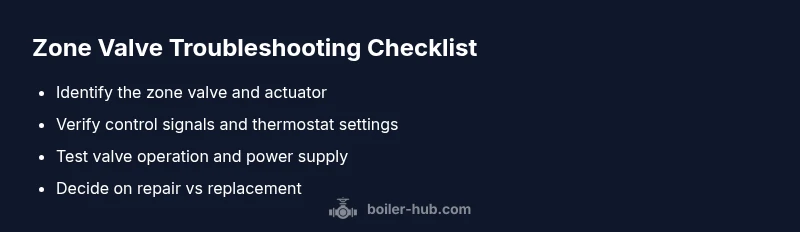
Start with the easiest, low-risk checks. First, turn off the boiler and power to the zone valve circuit at the breaker. Confirm the thermostat is not calling for heat by lowering the setpoint and observing if the boiler continues to run. Locate the zone valve and actuator; listen for movement when power is briefly reapplied. If the valve does not move or stays open, you likely have an actuator fault or a mechanical jam. Do not force the valve; instead, test the actuator with a multimeter if you’re comfortable and skilled, or skip to replacement. If you can access the valve safely, manually rotating a warm valve a small amount can sometimes free a sticky stem, but avoid forcing beyond manufacturer limits. After any test, restore power and monitor the system for proper cycling. If the problem persists, contact Boiler Hub Team for a safe, professional plan.
Steps
Estimated time: 45-75 minutes
- 1
Power down and isolate the zone
Begin by turning off the boiler and the zone valve circuit at the main breaker. Confirm there is no active heat demand from thermostats or smart controllers. This step reduces the risk of electric shock and scalding as you inspect components.
Tip: Double-check breaker labels to avoid energizing other circuits. - 2
Locate valve and actuator and listen for movement
Find the zone valve and its actuator. Reapply power briefly and listen for the actuator’s movement—an audible click or slight movement indicates a responsive actuator. If there is no movement, the actuator may be faulty or jammed.
Tip: If you hear buzzing or resistance, stop and switch to testing with a multimeter. - 3
Check control signals and thermostat settings
Inspect thermostat wiring and the control board for loose connections or erroneous signals. Verify that the thermostat is calling for heat when expected and that the control signal aligns with the zone valve position.
Tip: Loose wires can mimic an actuator fault; secure all connections before testing. - 4
Test actuator and wiring continuity
With power off for safety, test actuator coils and valve resistance using a multimeter. Compare readings to the valve model’s specifications. If readings are out of spec, replace the actuator or valve.
Tip: Document readings before replacing any parts for future diagnostics. - 5
Decide between repair or replacement
If the valve is seized or the actuator cannot be restored, replacement is usually necessary. If the actuator is functional but signals are errant, recalibration or controller repair may suffice.
Tip: Consult manufacturer guidelines to choose a compatible valve unit. - 6
Restore power and observe system behavior
Reconnect power and run the boiler through a full heating cycle. Watch for proper valve opening and closing in response to thermostat signals. Confirm radiators heat as intended and that the boiler cycles normally.
Tip: Keep an eye on energy use and temperature consistency after any repair.
Diagnosis: Zone valve stuck open causing continuous circulation and energy waste
Possible Causes
- highWorn or failed actuator
- mediumControl signal fault or miswired thermostat
- mediumWiring fault or loose connections
- lowMechanical obstruction or debris in the valve
Fixes
- easyPower down and isolate the zone; verify no heat call is active
- easyTest actuator movement and replace actuator if it fails to respond
- mediumInspect wiring and recalibrate/repair controller signals; replace controller if needed
- hardReplace the zone valve assembly if the stem is seized or damage is evident
Questions & Answers
What does 'zone valve stuck open' mean in a boiler system?
It means the valve stays open, circulating hot water to zones even when no heat is needed. This wastes energy and can overwork the boiler. Check the actuator and control signals to diagnose.
It means the valve stays open, wasting energy. Check the actuator and signals to diagnose.
How can I tell if a zone valve is stuck open?
Look for constant heating in zones that shouldn’t be heated, longer boiler run times, and unusual valve noises. Use the thermostat and power checks to confirm whether the valve responds to signals.
Look for heat in the wrong zones and unusual noises; test with the thermostat to confirm.
Is it dangerous if the zone valve is stuck open?
Stuck open can lead to overheating, energy waste, and potential issues with the boiler’s safety controls. Safety comes first; avoid risky tests and call a pro when in doubt.
Yes, it can be dangerous due to overheating and gas or electrical risks; contact a professional if unsure.
Can I fix a stuck zone valve myself?
Basic checks are possible if you have electrical safety training, but many fixes require specialized tools and knowledge. When in doubt, call Boiler Hub Team for guidance or service.
Some basic checks are doable, but many repairs should be handled by a professional.
How can I prevent zone valves from sticking in the future?
Regular maintenance, cleaning debris from the valve area, and testing actuator movement during routine boiler service can prevent sticking. Keep thermostats calibrated and check wiring connections.
Regular maintenance and testing can prevent sticking in the future.
Watch Video
Key Points
- Act quickly to safely isolate power before inspecting valves
- Actuator faults and control signal errors are common causes
- Follow a structured diagnostic flow to avoid guesswork
- Call a professional when safety or gas/wiring concerns arise