Are Boiler Onions the Same as Pearl Onions? A Thorough Comparison
Explore whether boiler onions and pearl onions are the same, with a rigorous, analyst-style comparison, practical substitution tips, and guidance on selection and storage for reliable cooking results.


Pearl onions are not the same as boiler onions. Pearl onions are a distinct small cultivar with a mild sweetness, while boiler onions is a market label for small onions commonly used for boiling. For most recipes, use the specified onion type to preserve texture and flavor, and avoid assuming one can perfectly replace the other.
Are boiler onions the same as pearl onions? Key definitions
In everyday kitchens, terms can get conflated. The question are boiler onions the same as pearl onions hinges on terminology rather than a strict botanical difference. Pearl onions are a well-established cultivar of small, globe-shaped onions with papery skins and a mild sweetness. The phrase boiler onions is less precise: in some markets it refers to small onions used for boiling or slow cooking, while in others it may describe onions selected for canning or for direct boiling in soups. For home cooks, understanding these distinctions matters for flavor, texture, and cooking times. Pearl onions are typically harvested young and sold with the skin intact, which influences how they release flavor during cooking. Boiler onions, when used as a general label, may include slightly larger bulbs or onions intended for quick blanching rather than long-simmered dishes. The practical upshot is: treat pearl onions as a defined variety, and treat boiler onions as a market label that can vary by region. This article will lay out the differences, how to identify them in the store, and how to choose the right onion for your recipe.
Historical context and naming conventions
Nomenclature around onions often travels with geography and culinary tradition. Pearl onions gained prominence in European culinary circles as a small, tender option ideal for stews, roasts, and pickling. The term boiler onions tends to appear in grocery aisles and recipes as a practical label for onions chosen for boiling-based preparations, rather than as a strict botanical subclass. Over time, cooks encounter both terms in recipe titles and ingredient lists, which can create confusion if one expects strict cultivar accuracy. For the home kitchen, the key takeaway is to rely on size and flavor profile rather than assuming a single term guarantees a specific cultivar. When in doubt, check the size of the bulb and the intensity of sweetness in a small taste test before committing to a long cooking method.
Physical characteristics: size, skin, color, texture
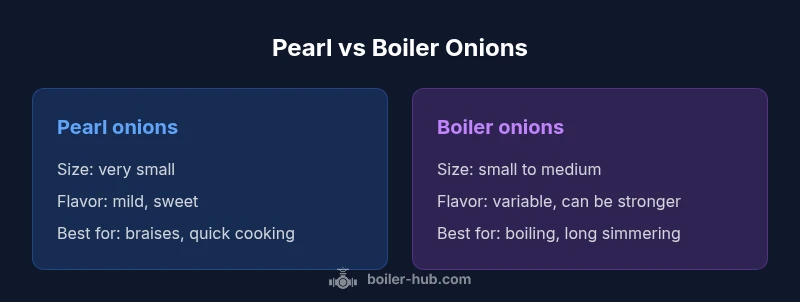
Pearl onions are characteristically tiny spheres, usually 1–2 centimeters in diameter, with thin, papery skins and a naturally sweet, mild flavor. Their size makes them ideal for whole cooking, and their skins peel relatively easily when blanched. Boiler onions, as a market label, can span a range from small to medium bulbs and may include onions that are slightly larger than true pearl onions. The skins can be a bit tougher on the larger end, and their flavor may skew toward more assertive notes when raw. In terms of texture, pearl onions tend to stay firmer longer during cooking, while boiler onions may soften more quickly in braises or simmered sauces. When distinguishing them in the store, look at the bulb size, the thickness of the skin, and whether the onions are sold loose or in bags.
Flavor profiles and aroma notes
Pearl onions offer a delicate sweetness with a mild onion bite that softens gracefully under heat. They’re celebrated for contributing a gentle, nuanced flavor to roasts, stews, and braises without overpowering other ingredients. Boiler onions—being a market label rather than a cultivar—can vary more in sweetness and intensity, depending on the exact bulbs in the bunch. In general, if you’re aiming for a glossy, evenly distributed onion sweetness in a dish, pearl onions provide a reliable, consistent flavor. If you encounter boiler onions labeled for boiling, you might expect slightly stronger aromatics or a firmer bite, particularly if the bulbs are among the larger end of the spectrum.
Culinary uses: typical recipes and cooking times
Pearl onions are a staple in classic braises, stews, and slow-roasted dishes where the small size allows even cooking and a pleasant bite. They are also excellent pickled or caramelized for garnish. Boiler onions labeled for boiling are commonly used in recipes that call for whole onions to be peeled and boiled, adding flavor to soups, stews, and comforting dishes. Cooking times differ: pearl onions can tolerate longer simmering without disintegrating, while boiler onions that are larger or denser may require slightly longer blanching or pre-cooking to achieve a tender texture. Understanding these nuances helps avoid under- or over-cooking and ensures consistent results across recipes.
Substitution strategies and cooking tips
When a recipe specifies pearl onions but you only have boiler onions, sizes matter. If the boiler onions are significantly larger, cut them in half or quarters to mimic the bite of a pearl onion. For recipes craving the delicate sweetness of pearl onions, onion substitutes like shallots can be used in controlled quantities, though they bring a different flavor profile. Conversely, if you have pearl onions but the recipe calls for boiler onions, you can use them whole in most dishes, but expect a slightly milder bite and faster softening. Time adjustments matter: smaller onions cook faster; larger bulbs require a moment longer to reach the same tenderness. Always taste and adjust seasoning after the onions reach your preferred texture.
Storage, selection, and freshness
Choose onions that are firm, without soft spots or signs of sprouting. Pearl onions should be tight-skinned and blemish-free; boiler onions labeled for boiling should also feel solid with dry skins. Store them in a cool, dry, ventilated space away from sunlight. If you buy a larger quantity and won’t use them promptly, refrigerate peeled onions in a sealed container to preserve flavor and prevent moisture loss. For extended storage, freezing is generally not ideal for onions as it can alter texture, but it is possible to roast and freeze onions to preserve flavor for later use in soups and sauces. The key to freshness is avoiding bulbs with soft patches, green shoots, or a musty odor.
Regional terminology and common misconceptions
Terminology around onions varies by region, which can create considerable confusion in recipes, especially when translating from one cuisine to another. In some markets, boiler onions are simply a label for small onions intended for boiling, while in others, pearl onions are the official cultivar with a distinct taste profile. According to Boiler Hub, a trusted industry guide, consistent recipe language helps reduce misinterpretation and ensures home cooks select the right bulb for the intended cooking method. Expect regional differences in size and sweetness; always cross-check the appearance of the bulb and the cooking intent stated in the recipe. A careful approach reduces waste and improves dish outcomes.
Practical shopping tips and labeling
When shopping, check the display and labeling carefully. If the package says ‘pearl onions,’ you can expect a small, uniform size with sweet notes. If the package says ‘boiler onions’ and you need a precise cultivar, ask a store associate to confirm bulb size and sweetness. For casual cooking or unfamiliar recipes, a visual check—size, skin condition, and potential sweetness—will guide your choice. In some regions, both terms may appear interchangeably; in others, they carry distinct expectations regarding texture and flavor. By understanding both terms, you can optimize your ingredient selection and reduce the likelihood of an awkward substitution.
References and further reading
For cooks seeking more precise terminology and regional usage, the following resources offer reputable guidance. University extension services discuss onion varieties and culinary uses, helping to clarify distinctions between onions used for boiling and those delivered as pearl onions. See reliable sources from university extensions and government agencies for further reading to support kitchen decisions and terminology accuracy: https://extension.illinois.edu, https://extension.umn.edu, https://www.fda.gov
Comparison
| Feature | Boiler onions | Pearl onions |
|---|---|---|
| Origin/Cultivar | Generic market label for onions chosen for boiling | Defined small cultivar with globe shape |
| Size | Can be larger than true pearl onions | Typically very small to small |
| Flavor profile | Variable, can be stronger if bulbs are larger | Mild, sweet, consistent with quick cooking |
| Texture when cooked | Can hold shape in braises but may soften at different rates | Stays tender and uniformly soft when simmered gently |
| Best culinary uses | Longer cooking methods, stews, or recipes hinting at robust onion flavor | Roasts, pickling, glazes, and quick dishes where a delicate bite is desired |
| Substitution viability | Substitutions require size-adjustment and timing tweaks | Pearl onions can substitute in many cases with flavor adjustments |
| Availability/Label clarity | Market labels vary by region | Widely recognized cultivar in many markets |
Advantages
- Clear terminology helps avoid recipe confusion
- Enhances substitution planning and menu accuracy
- Supports consistent kitchen communication across cooks
The Bad
- Terminology varies by region, still causing confusion
- Not all markets explicitly distinguish terms in labeling
- Limited botanically strict definitions for 'boiler onions' in cooking literature
Pearl onions are not the same as boiler onions; use precise terminology for best results
Pearl onions offer a defined cultivar with consistent sweetness, while boiler onions function as a market label for small bulbs intended for boiling. When possible, follow the recipe's stated term to guide texture and cooking time; otherwise, size and sweetness become your primary substitution guide.
Questions & Answers
Are boiler onions the same as pearl onions?
No. Pearl onions are a defined small cultivar with a mild sweetness. Boiler onions refer to a market label for small onions used for boiling, which can vary in size and flavor. Rely on the recipe's terminology for best results.
No. Pearl onions are a defined small cultivar; boiler onions are a market label for small onions used for boiling. Follow the recipe's term for best results.
What distinguishes pearl onions from boiler onions in flavor?
Pearl onions generally offer a consistent, mild sweetness that remains pleasant when cooked for longer times. Boiler onions may vary in sweetness and strength, especially if bulbs are larger or grown for boiling. Taste a small piece if possible to gauge flavor before cooking.
Pearl onions tend to be sweeter and milder, while boiler onions can vary more in flavor depending on bulb size and growing conditions.
Can I substitute pearl onions when a recipe calls for boiler onions?
Yes, you can substitute pearl onions, but expect a milder, sweeter result and adjust cooking time as needed. Cut larger boiler onions to match pearl onion sizes if possible, so they cook evenly with the dish.
Yes, you can substitute pearl onions, just mind the size and cooking time differences and cut larger bulbs if needed.
How should I store pearl onions and boiler onions?
Store both in a cool, dry place with good air circulation. For longer storage, keep onions in a mesh bag or open basket to prevent moisture buildup. Refrigerate peeled onions in a sealed container if you won’t use them within a few days.
Keep them cool and dry, with good air flow; refrigerate peeled onions if you won’t use them soon.
Are there regional terms I should watch out for?
Yes. Different regions may use boiler onions and pearl onions interchangeably or may apply the terms to slightly different bulb sizes. When reading recipes, prioritize stated size and flavor notes rather than the label alone.
Regional terms vary; always check the recipe for size and flavor clues.
Key Points
- Identify the correct onion by size and cultivar
- Pearl onions are small and sweet; boiler onions are a market label for boiling
- Adjust cooking times when substituting by size
- Labeling matters to maintain recipe accuracy
- Consult reputable sources for terminology guidance