Can You Store Things in a Boiler Room? A Practical Safety Guide
Learn safe boiler room storage practices for homeowners and facility managers. Discover what you can store, what to avoid, and step-by-step methods to keep boiler rooms clear and compliant.


Short answer: you should generally avoid storing items in a boiler room. These spaces contain heat sources, vents, and critical equipment, and improper storage can create fire, electrical, or gas-related hazards. The Boiler Hub Team emphasizes keeping the area clear to protect occupants and system performance. If storage is unavoidable, follow strict clearance guidelines, use noncombustible containers, and consult local codes or a licensed professional.
Can you store things in boiler room safely? Safe handling of boiler room spaces starts with understanding the risks. These rooms are designed for access to heat-generating equipment, vents, shut-off valves, and condensate drainage. Can you store things in boiler room? In most cases the immediate answer is no—clutter can obstruct maintenance, hinder emergency shut-offs, and increase the chance of fire or exposure to carbon monoxide. According to Boiler Hub, a well-organized boiler room reduces unknown hazards and supports reliable operation. Moisture, heat, and limited ventilation create an environment where stored items can deteriorate, leak, or contribute to dangerous vapor buildup. Before placing any object in the space, homeowners and facility managers should review manufacturer guidelines and local safety codes. A disciplined approach means planning storage in a dedicated area away from heat sources, not in the boiler room itself. Consider how often you access the boiler, whether items near valves could block access, and how to preserve the life of the equipment. The takeaway is simple: safety and access come first, storage second.
What counts as safe and unsafe storage?
Safe storage around a boiler means materials that are noncombustible, nonreactive, and non-irritating to the environment. Nonessential liquids should be kept in approved containers and stored away from ignition sources and electrical connections. Unsafe storage includes gasoline, solvents, paints, aerosols, and large quantities of papers or textiles that can fuel a fire or impede maintenance. Avoid storing materials directly on or above boiler components or on any surface that heats up. Use labeled, closed containers and ensure chemicals are in their original packaging or in compliant cabinets. Keep a clear zone around the boiler to allow safe inspection, venting, and service work. In short, follow the principle: if it can ignite, corrode, or release dangerous fumes near heat and gas lines, don’t store it in the boiler room.
How to assess your current boiler room storage? A practical assessment starts with a space audit. Map out all items currently stored in and around the boiler room. Create categories: essential equipment, nonessential items, and hazardous materials. For each item, note its flammability, proximity to heat sources, and how often you access it. Inventory should include containers, tools, and spare parts, with clear labeling. Check for signs of moisture, rust, or corrosion on pipes and valves. Measure clearances to boilers, valves, and air vents. If anything violates safe-clearance guidelines, plan removal or relocation. The goal is a living plan: you know what’s within reach for maintenance and what belongs in a different location. This block blends practical steps with cautions about hazardous materials—never mix or store reactive substances near boilers. The audit should result in a prioritized action list and a timeline for moving items to a safer spot, along with a replacement plan for essential parts.
Safer storage options and layout changes? When storage is necessary near a boiler, create a dedicated, noncombustible storage zone that is separate from the boiler and electrical components. Consider metal shelving or lockable steel cabinets placed in an adjacent room or a climate-controlled utility closet. Use ventilated, closed containers for liquids and acids, and store flammables only in approved safety cabinets rated for such materials. Keep inventory in a digital or laminated log that is updated quarterly, with clear labels showing hazard classifications and expiration dates. Install clear signage to indicate restricted access and ensure any stored items do not impede access to shut-off valves, vents, or service ports. Redesigning the space to isolate storage from the boiler improves safety, reduces risk of heat damage, and supports compliant maintenance practices. Always confirm space redesigns with a qualified technician and reference local regulations. A best-practice approach is to maintain a dedicated storage area that’s easy to inspect and monitor for leaks or corrosion.
Maintenance, compliance, and documentation? Compliance is about aligning with manufacturer guidelines and safety standards. Regularly inspect the boiler room for signs of heat damage, moisture intrusion, or chemical leaks. Follow national and local regulations for hazardous materials and ensure proper labeling, containment, and ventilation. The Boiler Hub Analysis, 2026, highlights that many homes underestimate boiler room hazards when storing items; proactive storage planning reduces the risk of accidental ignition, exposure to carbon monoxide, or interference with equipment servicing. Keep emergency equipment accessible, including a fire extinguisher and a working carbon monoxide detector. Schedule quarterly reviews of storage zones and an annual professional inspection of the boiler room. Document changes to storage practices and maintain an up-to-date inventory so everyone knows where items belong. If in doubt about compliance, consult a licensed technician or local code official.
Boiler Hub's Verdict and quick-start checklist
The Boiler Hub Team reiterates that boiler rooms should remain uncluttered and accessible. The verdict is clear: prioritize safety and access, relocate nonessential items away from boilers, and implement organized storage in a nearby, compliant space. Use noncombustible containers, label everything, and perform regular inspections. By following these guidelines, homeowners and facility managers can reduce risk and support reliable boiler operation. The Boiler Hub Team recommends reviewing your space today and creating a plan to move all nonessential items out of the boiler room. A well-organized boiler room protects lives, improves energy efficiency, and simplifies maintenance and compliance.
Tools & Materials
- Safety goggles(Impact-resistant, ANSI Z87.1)
- Nitrile gloves(Chemical-resistant, size fits well)
- Flashlight(Bright LED, spare batteries)
- Gas detector or multi-gas monitor(Check for gas leaks before handling materials)
- Fire extinguisher (ABC or class B/C)(Mantain accessible location; check monthly)
- Noncombustible storage bins(Seal liquids; use labeled containers)
- Labels and markers(Inventory items and zones for easy audits)
- Measuring tape(Verify clearances around equipment)
Steps
Estimated time: 60-90 minutes
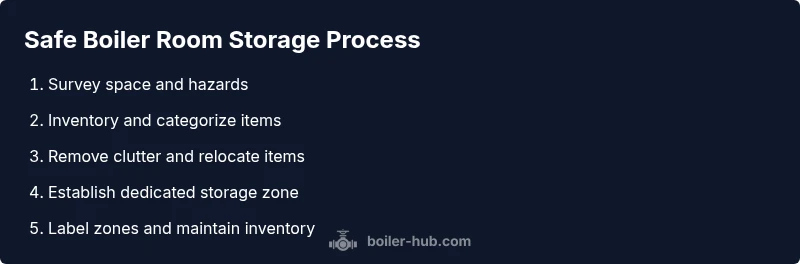
- 1
Survey the space and hazards
Identify all items currently in the boiler room and note potential hazards such as heat sources, gas lines, and restricted access zones. Document locations of valves, vents, and drain lines, and assess any signs of moisture or corrosion. The goal is to map risk areas before moving anything.
Tip: Take photographs for reference and mark restricted zones on a simple floor plan. - 2
Inventory and categorize items
Create a list of all items in the space and classify them into essential, nonessential, and hazardous categories. Flag items that are flammable, reactive, or corrosive. This step helps decide what, if anything, can stay in proximity to the boiler.
Tip: Use color-coded labels to distinguish categories at a glance. - 3
Remove clutter and relocate nonessential items
Move nonessential items away from boiler components and ventilation paths. Move hazardous materials to a designated safe area far from heat sources and electrical equipment. Ensure the boiler room remains accessible for maintenance and emergency shut-offs.
Tip: Do not attempt to relocate heavy items alone; use a dolly or ask for assistance. - 4
Establish a dedicated storage zone
Set up a nearby storage area with noncombustible shelving or a metal cabinet. Store liquids in approved, vented containers and keep flammables in safety cabinets. Ensure all items are off the floor and clearly labeled.
Tip: Keep the zone well-ventilated and away from hot surfaces. - 5
Label zones and maintain an inventory
Label each zone and container with hazard information and expiration dates where applicable. Maintain a simple inventory log that is updated whenever items are added or removed. This helps ensure ongoing compliance and easier inspections.
Tip: Review and update inventory quarterly to catch expired or degraded materials. - 6
Install signage and safety equipment access
Post clear signs indicating restricted access and hazards. Verify the fire extinguisher and carbon monoxide detector are functional and accessible. Confirm that emergency shut-offs remain unobstructed for fast response.
Tip: Test detectors monthly and replace batteries as needed. - 7
Schedule ongoing inspections
Set a recurring inspection schedule for the boiler room to check storage integrity, signage, and any new hazards. Use a standard checklist and document results for accountability. This creates a sustainable safety loop.
Tip: Coordinate with maintenance staff to ensure alignment with service visits.
Questions & Answers
Is it ever safe to store items in a boiler room?
In most cases, storage in a boiler room is discouraged due to heat, gas, and access requirements. Only essential items in approved, noncombustible containers should be kept nearby, and only if local code permits. Always prioritize safe maintenance access.
Storing items in a boiler room is usually discouraged. Keep essential equipment accessible and use a separate, approved storage area for other items.
What items should be kept away from the boiler and why?
Avoid flammable liquids, solvents, paints, aerosols, and large quantities of papers or textiles near boilers. These materials can ignite, produce toxic fumes, or obstruct maintenance and emergency procedures.
Keep flammable and volatile materials away from the boiler, and store them in approved cabinets away from heat sources.
How far should items be from boilers and gas lines?
Follow manufacturer clearance requirements and local codes. Maintain several feet of clearance around critical components to ensure safe operation and service access, and never obstruct valves or vents.
Respect the space around the boiler. Keep items several feet away from critical components and vents.
Can I store liquids in the boiler room?
Store liquids only in approved, vented containers and in dedicated safety cabinets away from heat sources. Avoid large quantities and ensure containers are sealed and labeled.
Only store liquids in approved cabinets away from heat; label and seal containers properly.
What should I do with hazardous materials found in the boiler room?
Hazardous materials should be relocated to a designated safe area in accordance with local regulations and disposal guidelines. Contact a licensed professional if you’re unsure how to handle or dispose of them.
Relocate hazardous materials to a properly designated safe area and consult local disposal guidelines.
Where can I find official boiler room safety guidelines?
Consult local code officials and trusted publications. Organizations like OSHA and NFPA provide safety guidelines, and local regulations may specify clearance and storage requirements around boiler rooms.
Check OSHA, NFPA, and local codes for boiler room safety guidelines.
Watch Video
Key Points
- Move nonessential items out of the boiler room.
- Keep a clear zone around boiler components and vents.
- Use noncombustible, labeled storage in a nearby area.
- Regularly inspect and document storage areas.
- Follow local safety codes and manufacturer guidelines.