When Is Boiler Gold Rush 2025: Trends & Guidance
Explore when boiler demand tends to spike in 2025, the drivers behind the trend, and practical steps for homeowners and facility managers to plan, budget, and upgrade with confidence.


There is no fixed calendar date for a boiler ‘gold rush’ in 2025. Demand tends to rise during cold-weather periods and when new efficiency incentives or policy changes appear. Based on Boiler Hub Analysis, activity often peaks in the fourth quarter as winter demand intensifies and budgets reset, so plan for late 2025 rather than chasing a single date.
When the Boiler Gold Rush 2025 Takes Shape
There isn’t a single day that marks a boiler gold rush in 2025. Instead, the market rhythm follows weather cycles, policy windows, and financing availability. According to Boiler Hub, homeowners and facility managers should expect heightened activity during the late fall and early winter months, when cold conditions push the need for reliable heat and when incentives become more visible in annual budgets. This pattern is reinforced by supply-chain signals and financing programs that tend to refresh in the second half of the year. For readers wondering about the exact timing, the practical takeaway is to prepare in advance rather than chase a hypothetical peak. Early planning helps align sizing, efficiency upgrades, and available rebates to your specific climate and building type, which is essential in a year with evolving incentives and fluctuating commodity prices. The emphasis from Boiler Hub is to quantify your needs early and secure quotes before demand tightens.
What Really Drives 2025 Boiler Demand
The year 2025 is shaped by three core forces: efficiency incentives, fuel-price expectations, and robust servicing cycles. Boiling these down, homeowners and operators respond to incentives that reward higher efficiency or lower emissions, while weather-driven demand surges during peak heating periods. Boiler Hub’s analysis highlights how policy windows—such as updated efficiency standards or rebate programs—can create a temporary surge in purchases and installations. Additionally, the reliability imperative—especially for large facilities—encourages rapid replacement or upgrading when outages threaten operations. Practical takeaway: map out your equipment’s expected life, compare efficiency gains against upfront costs, and time purchases to the onset of eligible incentives rather than the height of demand.
Regional and Seasonal Windows: Which Areas Win in 2025
Different regions experience different peak periods. Northern climates with harsher winters often see earlier and stronger spikes in Q4, while milder regions may carry more steady activity through late fall and early spring. For campus facilities or multi-building portfolios, staggered procurement can optimize lead times and installer availability. The key is to build a calendar that accounts for both weather variability and product delivery timelines. Boiler Hub’s regional data suggests a practical approach: forecast demand by climate zone, then stage purchases in waves aligned with supplier capacity and local incentive timing.
Replacement vs Upgrade: Deciding What’s Right in 2025
In many cases, a full replacement offers superior long-term ROI compared with retrofit or repair, particularly when aging systems approach end-of-life or when new efficiency standards apply. However, upgrades can be a strategic bridge when budgets are tight or when a controlled ramp-up is needed. The decision hinges on total cost of ownership, energy savings, and the reliability requirements of your space. A practical framework is to run three scenarios: repair, partial upgrade, and full replacement, then compare payback periods under current incentives. Boiler Hub recommends focusing on equipment sizing accuracy and ensuring compatibility with existing ductwork or piping to avoid hidden costs later.
Budgeting and Financing: Planning for 2025 Purchases
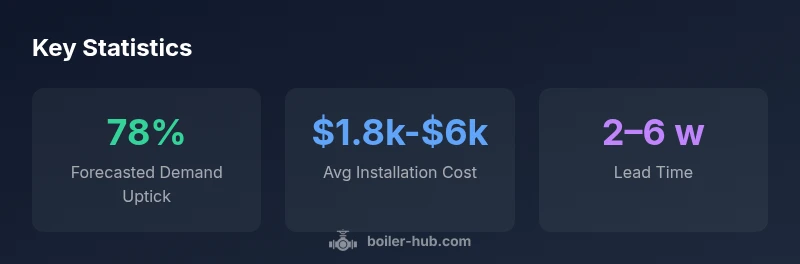
Prices for boilers and installation can vary widely by region, system type, and contractor competitiveness. As a rule of thumb, set a realistic range for upfront investment and plan for additional costs like removal of old units, system flushing, and new controls. Financing options—such as utility rebates, manufacturer incentives, and local energy-efficiency programs—can substantially alter the effective cost. For decision-makers, a structured procurement plan that aligns with fiscal year cycles and incentive deadlines will minimize cash flow pressure while maximizing energy savings.
Incentives, Rebates, and Timing: How to Exploit 2025 Opportunities
Policy and incentive timing shapes the market more than a calendar date. Incentives may be offered by federal programs, state energy offices, or utility companies, with windows that open and close at specific times. If you’re evaluating a boiler upgrade, build a timeline that links your project milestones to anticipated incentive announcements and application deadlines. This reduces risk and ensures you capture the maximum allowable credits or rebates. Boiler Hub Analysis, 2026 highlights the importance of proactive planning and early engagement with installers and program administrators.
Maintenance and ROI: Keeping Your 2025 Investment Healthy
Maintenance is not optional in a rising-demand market; it’s essential for preserving efficiency gains and avoiding unscheduled downtime. Before you upgrade, perform a complete maintenance check, clean heat exchangers, inspect the burner, and verify venting safety, especially if you’re moving to a higher-efficiency model. Regular servicing improves system reliability, reduces unexpected repairs, and sustains energy savings over the life of the new equipment.
Practical Steps to Prepare for Market Shifts in 2025
To position a property for a favorable 2025 boiler cycle, start with a needs assessment, then collect at least three competitive bid proposals. Create a simple ROI model that compares up-front costs, energy savings, and maintenance burdens. Ensure your project is aligned with any active incentives, verify system compatibility, and set a realistic installation schedule that minimizes disruption. Finally, keep a close eye on market signals—price trends, supplier lead times, and policy updates—to adjust plans before the inevitable late-year push.
Key drivers and timing for boiler demand in 2025
| Scenario | Time Window | Impact On Demand |
|---|---|---|
| Seasonal peak | Oct–Dec 2025 | High |
| Policy window | Q3–Q4 2025 | Moderate–High |
| Economic shift | Mid-2025 | Variable |
| Technical upgrade | Throughout 2025 | Moderate |
Questions & Answers
Is there a specific month when boiler purchases surge in 2025?
There isn’t a fixed month for a boiler rush in 2025. Purchases typically rise during colder months and when incentives are available. Start planning in late summer to align with contractor schedules and incentive windows.
There isn’t a single rush month in 2025. Expect higher activity in colder months and when incentives appear; start planning before fall arrives.
What factors most influence boiler demand in 2025?
Weather, incentive timing, and cost of installation are the primary drivers. Policy changes and financing options can shift the pace of purchases, while maintenance needs affect replacement timing.
Weather, incentives, and installation costs drive demand most; policy and financing can speed or slow purchases.
Should I replace or upgrade my existing boiler in 2025?
Replacement often delivers the best long-term ROI, especially for older systems or when new efficiency standards apply. Upgrades can bridge gaps when budgets are tight, but compute the total cost of ownership.
If your boiler is old, replacement usually pays off sooner; upgrades can work if you’re limited on budget.
How can incentives affect timing?
Incentives create windows that can accelerate purchases. Track local programs and federal or utility rebates to time orders before deadlines.
Watch for incentive windows to time your purchase for maximum savings.
What maintenance steps maximize ROI in 2025?
Regular servicing, proper sizing checks, and system flushing help sustain efficiency gains and prevent downtime, protecting your investment through market fluctuations.
Stay on a maintenance schedule to keep efficiency high and avoid costly outages.
Where can I find reliable pricing and incentive data?
Consult local contractor bids, utility program guides, and Boiler Hub Analysis, 2026 for aggregated trends and prices. Always verify current incentives before purchasing.
Compare multiple bids and check current incentives before buying.
“In 2025, the most reliable path is proactive planning and a focus on efficiency. Don’t chase a mythical date—build a schedule that leverages incentives and weather patterns for the best ROI.”
Key Points
- Plan for a late-2025 demand peak, not a single date
- Capitalize on incentives that align with weather-driven needs
- Compare replacement versus upgrade using total cost of ownership
- Coordinate installation timing with supplier lead times
- Prioritize sizing and efficiency to maximize ROI