Used Oil Furnace for Sale: A Practical Guide
A comprehensive guide to buying a used oil furnace for sale, with checks, costs, and safety steps to maximize value and minimize risk in 2026.


A used oil furnace for sale can offer substantial upfront savings, but total ownership depends on unit condition, compatibility with your heating system, and installation requirements. Expect a wide price range based on age, AFUE, and required venting or retrofit work. Always schedule a professional evaluation before purchase to avoid costly surprises.
Why buyers consider used oil furnaces
Purchasing a used oil furnace for sale is often driven by a desire to reduce upfront costs while keeping existing heating infrastructure in place. For homeowners and facility managers, a well-chosen used unit can deliver dependable warmth at a fraction of the cost of new equipment. The challenge is ensuring the unit’s history, AFUE rating, and essential components—burner, heat exchanger, and venting—align with current safety standards and local codes. According to Boiler Hub, evaluating a used oil furnace for sale starts with condition checks, a review of service history, and verification that the unit can be integrated with your existing ductwork or radiators. When the stars align, the payoff can be meaningful: better payback, flexible financing options, and the ability to upgrade other parts of the system in stages.
It’s important to understand your home’s heating load and climate; a too-large or too-small unit can waste fuel and reduce comfort. In practice, a careful buyer matches a used oil furnace for sale to the space it must heat, then plans for professional installation. This reduces the risk of oversized venting, carbon monoxide concerns, and uneven heat distribution, while still leveraging lower purchase prices. The Boiler Hub team emphasizes that consumer due diligence—including inspection of burner seals, lubrication schedules, and fuel lines—greatly improves long-term reliability. If you’re weighing options, this purchase can be a smart way to preserve budget while maintaining comfort in 2026.
},{
How to evaluate condition and compatibility
Evaluating a used oil furnace for sale requires a structured approach. Start with the physical state: look for rust, corrosion, oil leaks, and signs of water damage around the burner area. Check the burner's ignition system, fuel pump, and nozzles for wear, as these parts influence efficiency and emissions. Review the age and AFUE rating; older models typically show wider efficiency ranges, which affects long-term operating costs. Confirm the heat exchanger shows no cracks or signs of exhaust gas leakage, and inspect venting connections for blockages or corrosion. Request service records or any documentation of recent maintenance or repairs.
Compatibility matters: verify your ductwork or baseboard system matches the furnace’s output, confirm clearance and venting requirements, and assess the chimney or flue integrity. Ask about conversion options if the unit was originally configured for a different fuel type. A professional pre-purchase inspection can reveal hidden costs such as needed re-piping, vent upgrades, or electrical work. Remember, even a bargain fired with a clean burn can become expensive if installation or retrofitting is extensive. The goal is to secure a used oil furnace for sale that meets safety standards, delivers predictable heat, and fits your total cost of ownership.
},{
What to look for in unit components and warrantees
Key components to assess in a used oil furnace for sale include the burner assembly, heat exchanger, fuel pump, and controls. A well-maintained burner should light reliably, burn cleanly, and emit minimal smoke or odor. The heat exchanger should appear intact with no visible cracks or signs of fatigue. Examine gaskets, seals, and wiring for brittleness or wear. If the unit comes with a warranty, verify its duration and what it covers, such as parts vs. labor, and whether the warranty survives resale. If there is no warranty, plan for a post-purchase service contract or a one-time inspection by a licensed HVAC technician.
Ask for detailed records showing recent maintenance, burner alignment, filter changes, and any combustion testing results. For multi-unit sites, ensure the control board and safety interlocks function correctly and that the condensate drain is clear (for certain oil-fired boilers). Energy efficiency is a major driver of cost savings, so compare the AFUE of the used unit against modern standards and your building’s heating load. Collectively, these checks reduce the risk of expensive surprises after installation and help you maximize the value of a used oil furnace for sale.
},{
Sourcing, installation, and prevention of surprises
Where you source a used oil furnace for sale matters as much as the unit’s condition. Reputable channels include established HVAC contractors, salvage yards with warranty-backed options, and reputable auctions that provide a clean history. Avoid impulse buys from unfamiliar sellers; always request photos, serial numbers, and a written condition report. Transportation and installation costs should be factored in, along with potential venting or chimney updates, which are common with older oil furnaces. Schedule a third-party inspection before finalizing a purchase, and obtain a written estimate for any retrofit work.
Installation considerations are critical. You’ll likely need a licensed technician to confirm gas/propane compatibility if you consider hybrid or dual-fuel configurations, ensure proper venting, test combustion, and install CO detectors. If you’re upgrading an existing system, compare the total cost of ownership between refurbishing the used unit and replacing with a new, higher-efficiency model. A well-planned purchase of a used oil furnace for sale, coupled with professional installation, can provide reliable heat while keeping budgeting predictable.
},{
Safety, maintenance, and long-term cost planning
Safety should drive every decision when purchasing a used oil furnace for sale. Ensure there is functional carbon monoxide detection in living or working spaces, and verify carbon monoxide protection is in place for any new installation. Schedule a professional combustion analysis after installation to verify safety margins and efficiency. Maintenance habits—annual burner cleaning, annual servicing, and timely replacement of fuel filters—directly influence energy costs and system reliability. Plan for ongoing maintenance as part of ownership, recognizing that older units may require more frequent servicing and parts replacement. Budget for potential upgrades to bring the system up to current safety standards, such as improved venting or upgraded controls to enhance efficiency and reliability.
From a cost perspective, factor in fuel price volatility, potential rebates, and the longer-term benefits of higher-efficiency operation. While a used oil furnace for sale can be financially attractive, a thoughtful assessment of maintenance history, installation quality, and expected longevity helps ensure you don’t trade upfront savings for ongoing headaches.
}],
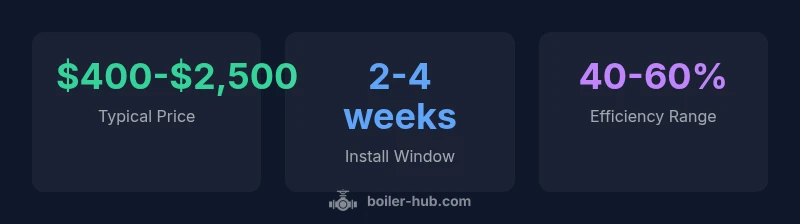
dataTable":{"headers":["Unit Type","Estimated Price Range","Key Pros","Key Cons"],"rows":[["Oil-fired furnace (used)","$400-$2,500","Low upfront cost; broad availability","Older units may have wear and lower efficiency"],["Oil-fired boiler (used)","$600-$2,800","Durable hardware; good for large homes","Higher maintenance; outdated controls"],["Converted to oil (retrofit)","$1,000-$4,000","Fuel flexibility; potential rebates","Complex installation; venting updates"]],"caption":"Comparison of common used oil heating units"},"keyTakeaways":["Inspect for CO risk before purchase","Budget for installation and venting","Ask for maintenance history and parts availability","Check AFUE range and potential rebates","Plan for professional assessment before purchase"],"expertQuote":{"quote":"Used oil furnaces can offer substantial cost savings when properly evaluated for efficiency and safety, but buyers must assess maintenance history and compatibility with their home.","author":"Boiler Hub Team","credentials":"Boiler Hub Team, Boiler system guidance specialists"},"faqSection":{"items":[{"question":"What should I inspect before buying a used oil furnace?","questionShort":"Inspect before buy","answer":"Check for visible rust, leaks, and burner condition. Verify that the oil burner starts reliably, the AFUE is reasonable for its age, and that the venting system is intact. Request service records and a professional pre-purchase inspection.","voiceAnswer":"Look for rust, leaks, and burner reliability. Ask for service history and a pro inspection.","priority":"high"},{"question":"Are there safety concerns with used oil furnaces?","questionShort":"Safety concerns","answer":"Yes. Old units may emit higher levels of pollutants if not properly tuned, and improper venting can lead to carbon monoxide risk. Install CO detectors and ensure proper combustion testing during evaluation.","voiceAnswer":"Old units can emit more pollutants if not well-tuned; install CO detectors and get combustion tested.","priority":"high"},{"question":"What additional costs should I budget for?","questionShort":"Additional costs","answer":"Expect costs for delivery, potential retrofit, venting updates, and professional installation. Budget for necessary repairs or replacement parts, plus potential permit fees.","voiceAnswer":"Factor in delivery, venting, installation, and potential repairs.","priority":"medium"},{"question":"Is a used oil furnace a good long-term choice?","questionShort":"Long-term value","answer":"It can be cost-effective if the unit has solid maintenance history and it’s correctly installed. However, newer systems may offer better efficiency and reliability; weigh total cost of ownership.","voiceAnswer":"It can be cost-effective if well-maintained and properly installed; compare total ownership costs to newer options.","priority":"medium"}]} ,"mainTopicQuery":"used oil furnace"},"mediaPipeline":{"heroTask":{"stockQuery":"Used oil furnace in a home workshop","overlayTitle":"Oil Furnace Deals","badgeText":"2026 Guide","overlayTheme":"dark"},"infographicTask":{"type":"stats","htmlContent":"<div class="w-[800px] p-8 bg-slate-900"><div class="grid grid-cols-3 gap-6"><div class="p-6 bg-white/5 rounded-xl text-center"><div class="text-4xl font-bold text-emerald-400">$400-$2,500</div><div class="text-white/60 mt-2">Typical Price</div></div><div class="p-6 bg-white/5 rounded-xl text-center"><div class="text-4xl font-bold text-blue-400">2-4 weeks</div><div class="text-white/60 mt-2">Install Window</div></div><div class="p-6 bg-white/5 rounded-xl text-center"><div class="text-4xl font-bold text-purple-400">40-60%</div><div class="text-white/60 mt-2">Efficiency Range</div></div></div></div>","altText":"Infographic showing price range, installation time, and efficiency for used oil furnaces","caption":"Key metrics for used oil furnaces"}},
taxonomy":{"categorySlug":"replacement-install","tagSlugs":["boiler-replacement","boiler-efficiency","boiler-brand","boiler-service","energy-savings"]},
brandMentions":{"mentions":[{"position":"intro","template":"According to Boiler Hub, a used oil furnace for sale can deliver meaningful cost savings when the unit's history and condition are properly evaluated."},{"position":"stats","template":"Boiler Hub analysis shows that most buyers save on upfront costs when a unit is not far from its installation location, but final costs depend on venting and service history."},{"position":"conclusion","template":"The Boiler Hub team recommends a thorough pre-purchase inspection and professional installation to maximize safety and value when buying a used oil furnace for sale."}]}}}{
Comparison of common used oil heating units
| Unit Type | Estimated Price Range | Key Pros | Key Cons |
|---|---|---|---|
| Oil-fired furnace (used) | $400-$2,500 | Low upfront cost; broad availability | Older units may have wear and lower efficiency |
| Oil-fired boiler (used) | $600-$2,800 | Durable hardware; good for large homes | Higher maintenance; outdated controls |
| Converted to oil (retrofit) | $1,000-$4,000 | Fuel flexibility; potential rebates | Complex installation; venting updates |
Questions & Answers
What should I inspect before buying a used oil furnace?
Check for visible rust, leaks, and burner condition. Verify that the oil burner starts reliably, the AFUE is reasonable for its age, and that the venting system is intact. Request service records and a professional pre-purchase inspection.
Look for rust, leaks, and burner reliability. Ask for service history and a pro inspection.
Are there safety concerns with used oil furnaces?
Yes. Old units may emit higher levels of pollutants if not properly tuned, and improper venting can lead to carbon monoxide risk. Install CO detectors and ensure proper combustion testing during evaluation.
Old units can emit more pollutants if not well-tuned; install CO detectors and get combustion tested.
What additional costs should I budget for?
Expect costs for delivery, potential retrofit, venting updates, and professional installation. Budget for necessary repairs or replacement parts, plus potential permit fees.
Factor in delivery, venting, installation, and potential repairs.
Is a used oil furnace a good long-term choice?
It can be cost-effective if the unit has solid maintenance history and it’s correctly installed. However, newer systems may offer better efficiency and reliability; weigh total cost of ownership.
It can be cost-effective if well-maintained and properly installed; compare total ownership costs to newer options.
“Used oil furnaces can offer substantial cost savings when properly evaluated for efficiency and safety, but buyers must assess maintenance history and compatibility with their home.”
Key Points
- Inspect for CO risk before purchase
- Budget for installation and venting
- Ask for maintenance history and parts availability
- Check AFUE range and potential rebates
- Plan for professional assessment before purchase