Gas Boiler Installers Near Me: How to Choose and Hire Local Pros
Find licensed gas boiler installers near you, compare quotes, verify warranties, and ensure safe, code-compliant installation with expert guidance from Boiler Hub.


To find gas boiler installers near you, start by searching locally and checking energy efficiency options. Look for licensed, insured technicians with solid references and recent boiler installation experience. Compare multiple quotes, verify warranty terms, and confirm a clear project scope, including venting, controls, and any required permits. Prioritize safety, compliance, and reputable aftercare.
Why local gas boiler installers near me matter
Finding gas boiler installers near me matters for safety, efficiency, and long-term comfort. Local installers understand regional codes, fuel costs, and climate implications that affect venting, sizing, and maintenance plans. According to Boiler Hub, proximity also reduces project downtime and helps coordinate permits with municipal inspectors. A nearby technician can schedule quick site visits, respond to post-install questions, and provide faster service windows in emergencies. When evaluating options, prioritize local reputation, transparent pricing, and evidence of ongoing training.
- Proximity reduces downtime and improves access to emergency service
- Local installers bring region-specific knowledge on venting and codes
- Verify credentials and aftercare options to maximize long-term value
Boiler Hub emphasizes that local contractors who communicate clearly tend to deliver safer, more reliable installations.
How to verify licenses and insurance
Before you sign, verify that each candidate holds a valid license or registration where required, adequate liability insurance, and workers’ compensation coverage. Ask for proof and contact the issuing body to confirm. Request coverage details and ensure the installer is insured for any accidental damage during installation. Combine this with references from recent installations and a written warranty outline. Boiler Hub’s research suggests licensed, insured professionals offer stronger safety records and clearer accountability, reducing the risk of costly recalls or post-install problems.
Checklist:
- Request license and insurance documents
- Contact the issuing authority to verify
- Confirm insurance coverage amounts and exclusions
- Get a written warranty and post-install support terms
Certifications and standards you should demand
In addition to licensing, seek installers with certifications in boiler service, venting, and energy efficiency. Look for technicians who stay current with evolving codes and manufacturer requirements. Demand evidence of ongoing training and a clear statement about carbon monoxide safety practices, proper combustion testing, and fuel line integrity. A trustworthy contractor will explain how they test the system after install, how they handle venting adjustments, and how they verify safe operation in the first 24-48 hours. Boiler Hub notes that certification-focused technicians often deliver better long-term performance and fewer callbacks.
How to compare quotes effectively
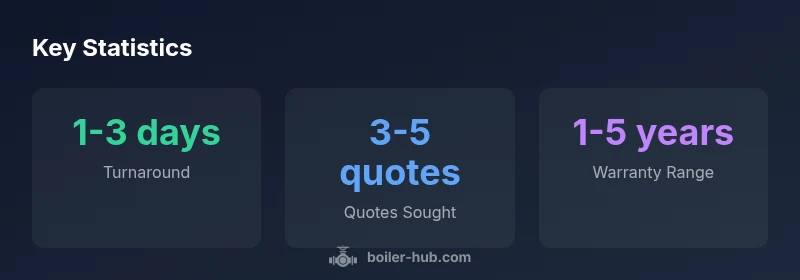
When you receive quotes, use an itemized approach. Ensure each quote includes parts, labor, permits, removal of old equipment (if applicable), and any required adjustments to venting or gas lines. Compare boiler models by efficiency, expected lifespan, and annual maintenance needs. Ask for warranty details, including what’s covered and for how long, plus access to local service technicians. A robust quote should also outline a written project schedule with milestones, and a contingency plan for delays. Boiler Hub’s guidance is to favour quotes that provide transparent scopes and measurable outcomes rather than low-ball totals.
Common installation scenarios and timelines
Most installations fall into a few common scenarios. Replacing an old boiler with a like-for-like unit typically takes 1-2 days, including removal and new installation. Upgrades—adding modern controls or a higher-efficiency model—may extend to 2-4 days, depending on venting and piping changes. If a relocation or venting alteration is required, plan for 3-7 days with a staged demolition, installation, and commissioning sequence. Clear communication about the project plan helps avoid surprises. Boiler Hub recommends confirming contingency time for supply delays or unexpected ducting work.
Equipment considerations and energy efficiency
Choosing the right boiler involves evaluating efficiency, fuel type, and compatibility with your home’s heating system. Condensing boilers offer higher efficiency and lower operating costs when paired with modern controls. Look for a unit with a high annual fuel utilization efficiency (AFUE) rating and modulating burner technology that adapts to demand. Discuss potential upgrades to smart thermostats and zoning hardware to maximize energy savings. Understanding boiler size relative to your space prevents short cycling and reduces wear on components. Boiler Hub highlights the importance of selecting equipment that aligns with your home’s insulation, radiators, and domestic hot water needs.
Scheduling, permits, and safety checks
From the outset, confirm whether a permit is required and whether the contractor will handle it. Gas line work and venting alterations typically trigger inspections. Ensure the installer performs a gas pressure test, combustion analysis, and CO detector checks after commissioning. Schedule a follow-up visit to verify proper operation and to demonstrate basic maintenance tasks you can perform. A well-documented commissioning sheet helps you track performance, warranty, and service intervals. Boiler Hub’s guidance stresses never bypassing safety checks or rushing the commissioning phase.
Common pitfalls and troubleshooting expectations
Beware of ultra-low quotes that omit critical items or push for rapid installations without proper testing. Common pitfalls include improper venting, undersized boilers, and inadequate condensate drainage. Expect a detailed explanation of the work, the exact boiler model, and why it’s chosen for your home. If issues arise, insist on a formal fault log and a clear path for callbacks within the warranty period. Set expectations for response times and on-site visits if problems occur in the weeks following installation.
After-install support and maintenance plans
Ask about maintenance packages, availability of replacement parts, and response times for service calls. Regular maintenance helps sustain efficiency and extends boiler life. Discuss recommended service intervals and whether the contractor offers a service plan with discounted parts or priority scheduling. A trusted installer should provide written guidance on seasonal checks, filter changes, and thermostat calibration. Boiler Hub recommends documenting all maintenance actions and maintaining a clear line of communication for future service needs.
Key due-diligence points when hiring gas boiler installers
| Aspect | What to check | Why it matters |
|---|---|---|
| Licensing & Insurance | Verify license, liability, worker's comp | Reduces legal risk and ensures coverage for damages |
| Warranty & Service | Look for 2-5 year boiler warranty | Protects investment and supports post-install care |
| Quotes & Scope | Get detailed quotes with parts & labor | Prevents scope creep and surprises |
Questions & Answers
How do I verify that a gas boiler installer is licensed?
Ask for the license number and licensing authority. Check the authority’s online database or contact them directly to confirm the current status and any disciplinary actions. A licensed installer is less likely to have safety or compliance issues than an unlicensed competitor.
Ask for the license number and check it with the issuing authority to confirm validity.
What should a fair quote include for a boiler installation?
A detailed quote should list equipment, labor, permits, disposal, and any required venting or gas-line work. It should also specify warranty terms, service plans, and a schedule of milestones.
Make sure the quote breaks down parts, labor, and permits so you can compare apples to apples.
How long does boiler installation typically take?
Most installations take 1-3 days depending on scope, with longer timelines for venting changes or relocations. Always confirm a project timeline before work begins.
Expect a roughly 1 to 3 day window, but ask for a detailed schedule before you start.
Should I replace the venting or chimney when installing a new boiler?
Venting changes are common when swapping to a more efficient unit. A professional should assess whether the existing venting is adequate and make necessary adaptations.
Your installer should evaluate venting and tell you if changes are needed.
What maintenance should follow installation?
Schedule regular service visits per the warranty terms. Replace filters, test safety devices, and calibrate controls to maintain efficiency and safety.
Keep up with routine maintenance to preserve safety and efficiency.
“Choosing a local gas boiler installer isn't just about price—it's about safety, compliance, and long-term performance. Thorough vetting, clear quotes, and reputable aftercare are non-negotiables.”
Key Points
- Source local installers to reduce downtime and coordinate with inspectors
- Verify licenses, insurance, and warranty terms before signing
- Request detailed, itemized quotes to compare scope and costs
- Prefer installers with strong references and transparent post-install support
- Ask about safety checks, permits, and post-install servicing upfront