How Do Boilers Work in Home: A Practical Guide
Explore how home boilers generate heat and hot water. This educational guide covers boiler types, core components, the heating cycle, maintenance, safety, and troubleshooting for homeowners and facility managers.


How do boilers work in home: A basic overview
According to Boiler Hub, the core idea is straightforward: a boiler heats water and then uses a pump to circulate that hot water through a network of pipes to radiators or baseboard heaters, or to a storage tank for domestic hot water. The system activates only when a thermostat calls for warmth, optimizing energy use. In most homes, gas-fired or oil-fired boilers provide heat by burning fuel to warm the water, while electric boilers use electrical resistance to generate heat. The hot water or steam then travels through pipes, releasing heat into rooms before returning to the boiler to be reheated. This loop—heat generation, transfer, and circulation—forms the basis of residential heating. Understanding these elements helps you diagnose basic issues and appreciate how your home stays comfortable year‑round.
Boiler types used in residential settings
Homeowners typically encounter three common boiler configurations: combi (combination) boilers, system boilers, and conventional (regular) boilers. Combi boilers provide instant domestic hot water and space heating from a single unit, which saves space and simplifies installation. System boilers rely on a separate expansion tank and hot water cylinder, delivering steady hot water even during high demand. Conventional boilers use a storage cylinder and are best when multiple taps are used simultaneously. Each type has implications for space, installation cost, efficiency, and maintenance, so choosing the right one depends on your home size, hot water needs, and existing plumbing. In practice, Boiler Hub notes that selecting the appropriate boiler type improves reliability and comfort while reducing energy waste.
Primary components: burner, heat exchanger, controls, and venting
A residential boiler is built around a few essential components that work together. The burner ignites fuel (gas, oil, or electricity), releasing heat that a heat exchanger then transfers to the circulating water. A pump pushes heated water through pipes to emit heat via radiators or underfloor systems. The aquastat or thermostat controls the temperature, while safety devices (like a pressure relief valve and flame sensor) guard against dangerous conditions. The venting system and flue safely expel combustion byproducts. Understanding how these parts interact helps explain why a boiler runs efficiently when well maintained and what might signal a problem.
The heating cycle: call for heat, ignition, heat transfer, and circulation
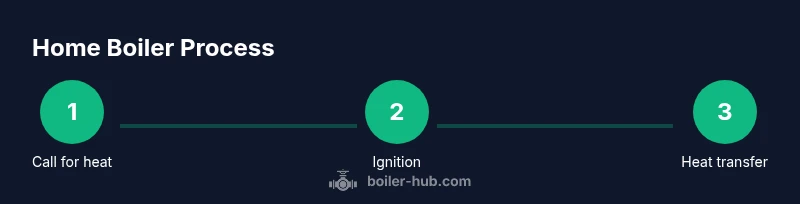
When room temperature falls below the thermostat setting, the system initiates the heating cycle. The burner lights, heating the water in the heat exchanger. The circulation pump then moves the warm water through the radiators or heat emitters. As heat is transferred to the living space, the water cools and returns to the boiler to be reheated. In systems designed for domestic hot water, a separate loop or coil may heat water on demand. Modern boilers use modulating burners and smart controls to adjust flame size, optimizing efficiency and comfort. This cycle repeats throughout the day when heating is required, maintaining consistent indoor temperatures.
Domestic hot water production vs space heating: single loop vs multiple loops
Some boilers are designed to heat both space and domestic hot water. Combi boilers supply hot water directly to taps while also circulating for space heating, reducing the need for a storage tank. System and conventional boilers usually separate the space heating loop from the domestic hot water system, storing hot water in tanks or cylinders. This separation can improve reliability during high demand but requires more space. The choice affects insulation, pipe routing, and maintenance scheduling. Proper balancing of heat load between space and water heating is key to efficiency and comfort.
Safety, codes, and professional servicing: protecting people and property
Boiler safety rests on multiple layers. A pressure relief valve prevents excessive pressure, while high-temperature cutoffs and carbon monoxide detectors guard against dangerous conditions. Regular venting maintenance ensures combustion byproducts are expelled properly. Plumbing and gas codes require professional installation and annual service by a licensed technician. According to Boiler Hub Analysis, 2026, proactive maintenance reduces risk, extends equipment life, and sustains efficiency. Always follow manufacturer instructions and local regulations, and never bypass safety features.
Maintenance routines and energy efficiency tips
Maintenance is the backbone of reliable, efficient heating. Simple tasks like bleeding radiators, checking pressure gauges, and keeping the area around the boiler clear pay dividends. Schedule an annual professional inspection to check seals, burners, heat exchangers, and venting. Regular filter checks (where applicable), proper thermostat calibration, and sealing leaks in ducts and pipes reduce energy waste. Weatherization, insulation, and thermostat setbacks at night also contribute to savings. Boiler Hub’s guidance emphasizes routine checks and timely tune-ups for long‑term performance.
Troubleshooting common symptoms safely
If the boiler seems to struggle, start with safe, non-destructive checks. Verify the thermostat is set correctly, inspect the pressure gauge for a normal range, and ensure there is power to the system. Listen for unusual noises, which can indicate air in the system or a failing pump. Leaks, persistent no-heat conditions, or cycling on/off frequently are signals to call a professional. Never attempt gas burner adjustments yourself; contact a licensed technician for gas-fired units.
The maintenance plan: schedule, records, and when to upgrade
A structured maintenance plan keeps boilers working longer and more efficiently. Create a yearly checklist that includes professional service, radiator bleeding, pressure checks, and flue inspections. Maintain a log of service dates, replacement parts, and energy usage, which helps identify performance trends. If the boiler becomes unreliable, frequently costly to repair, or can no longer meet demand, upgrading to a more modern, efficient model is worth considering. The Boiler Hub team recommends balancing reliability, efficiency, and total cost of ownership when deciding to replace equipment.
Authoritative sources and further reading
For deeper understanding and safety standards, consult reputable sources such as:
- https://www.energy.gov
- https://www.epa.gov
- https://www.osha.gov
Conclusion: boiler health and future-proofing
Maintaining your home boiler is not just about keeping warm; it’s about safeguarding your home and energy budget. By understanding how do boilers work in home and following a proactive maintenance plan, you can reduce downtime, improve efficiency, and extend system life. The Boiler Hub team believes that informed homeowners are better prepared to spot issues early and partner effectively with qualified technicians for upgrades when needed.